
Mixue Brings Affordable Tea Experiences to America's Growing Tea Culture
Source: PR Newswire
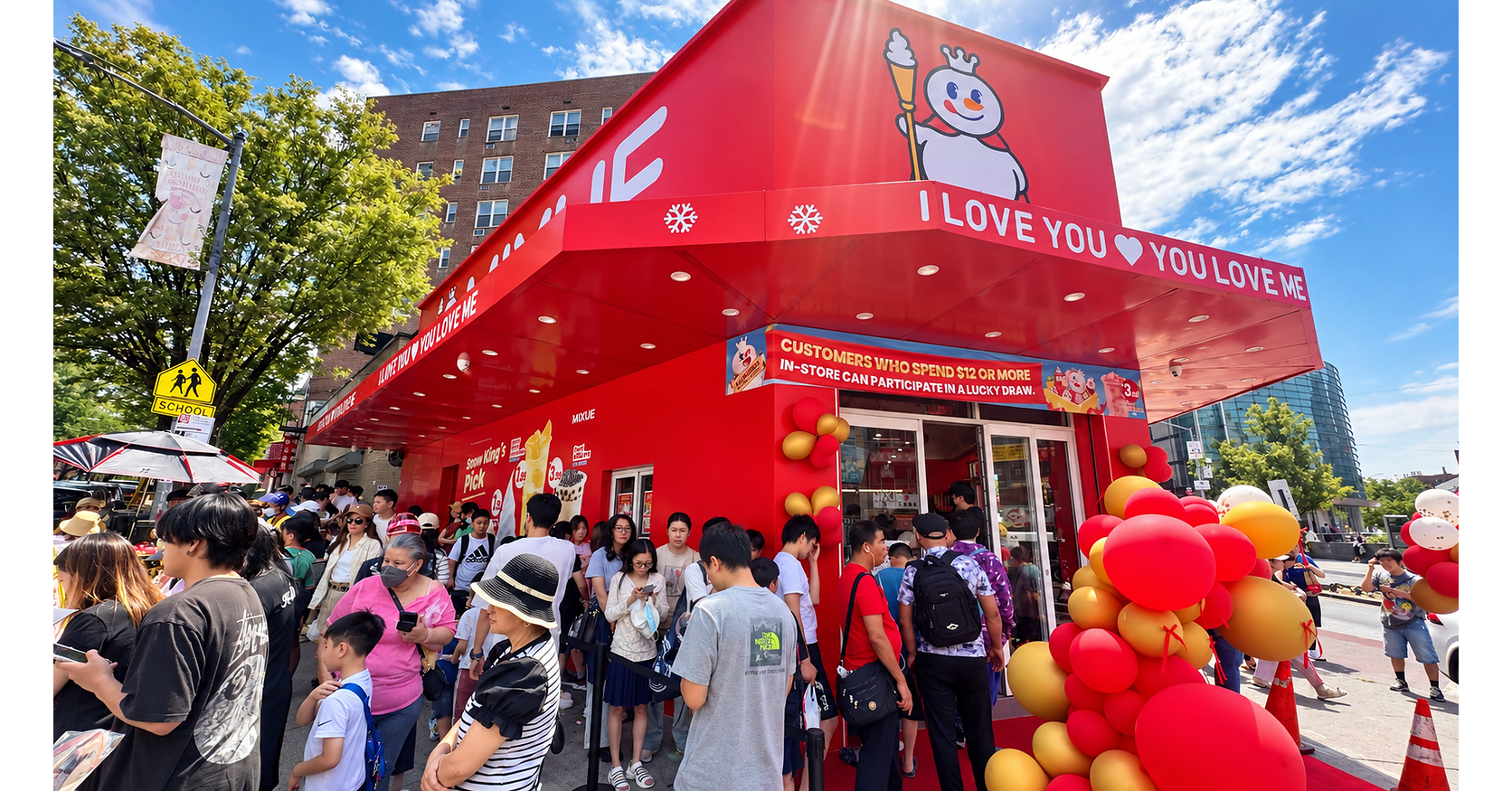
Mixue launched six seasonal U.S. menu items this summer, including the U.S. debut of Green Lemon Tea and Green Lemonade, and reported positive consumer feedback, social-media engagement and increased store traffic. The company attributes its affordable pricing to global supply-chain scale, integrated sourcing and operating efficiency, and plans further U.S. store openings and menu innovation. The announcement provides no quantified sales, traffic, revenue, or expansion targets.
Analysis
The investable issue is not a single menu cycle but whether MIXUE Group (02097.HK) can transplant its China-developed low-ticket, franchise-led model into a U.S. market with materially higher labor, occupancy, compliance, and cold-chain costs. If local pricing remains meaningfully below Starbucks (SBUX), Dutch Bros (BROS), and premium bubble-tea concepts, it can create traffic pressure at the entry end of specialty beverages; however, U.S. unit economics could require franchisees to absorb lower store-level returns before the parent captures meaningful royalty and supply-chain profit. Without disclosed U.S. store count, average unit volumes, franchisee payback, or local sourcing mix, social engagement is not a usable earnings signal.
Near term, the effect on listed U.S. beverage incumbents is immaterial. The more relevant 1-3 month catalyst is evidence of repeatable store openings outside initial urban clusters, accompanied by franchise demand and stable product pricing; that would justify treating the U.S. as a potential incremental growth option for 02097.HK rather than marketing spend. Over 6-18 months, a scaled value entrant could pressure promotional intensity and traffic at regional tea chains, while SBUX and BROS are protected by convenience, loyalty ecosystems, and higher-ticket food attachment.
The non-obvious risk is that the integrated supply chain that supports the valuation narrative becomes a U.S. constraint rather than an advantage. Tariffs, customs disruption, food-import requirements, or a shift to domestic procurement could raise input costs faster than menu prices, particularly for fruit concentrates, packaging, and branded equipment. A sustained gap between new-store growth and franchisee-level profitability would ultimately impair the asset-light multiple; conversely, disclosed U.S. supply-chain localization and store contribution margins would sharply reduce that risk.
AllMind Terminal
AI-powered research, real-time alerts, and portfolio analytics for institutional investors.
Request TrialMarket Sentiment
Overall Sentiment
mildly positive
Sentiment Score
0.32
Key Decisions for Investors
- No immediate directional trade from this release: treat 02097.HK as a watch-list name until management discloses U.S. store count, net openings, average unit volumes, franchisee payback, and U.S. sourcing exposure. Reassess after the next results release; a credible U.S. pipeline with no deterioration in group gross margin is the entry trigger.
- For Asia consumer exposure, consider a small 6-12 month long 02097.HK only against a short basket of higher-multiple China consumer-franchise peers after verifying that overseas revenue and supply-chain sales are accelerating. Thesis fails if same-store sales weaken, franchise closures rise, or gross-margin guidance is cut; size as an option on internationalization rather than a core earnings trade.
- Do not short SBUX or BROS on competitive concerns. Any localized traffic effect is unlikely to move consolidated earnings; a more actionable alert is U.S. beverage promotional intensity or evidence that value-oriented chains are taking low-income customer visits, which could matter only if it coincides with broader discretionary-consumption weakness.
- Monitor U.S.-China trade-policy developments and food-import enforcement over the next 6-18 months. A material tariff or localization requirement would be negative for 02097.HK if management cannot demonstrate price pass-through or domestic sourcing; this is the clearest catalyst for multiple compression.
More News
- What next for France as riots rattle markets? Three questions facing investors ahead of more protests
- Energy markets are adapting to the Iran war as a ‘forever conflict’ while oil producers keep supplies flowing and avoid ‘mutually assured destruction’
- Looters hit 3,000 French businesses. Within hours, the haul was trending on Vinted under the riot’s date
- Kinder Morgan, Energy Transfer and Williams could benefit from cheap natural gas
- Vertex reports positive IgAN trial data, FDA decision due Nov. 30
- The real test for Moderna’s cancer vaccine isn’t about beating Keytruda. It’s keeping cancer from coming back in the long term.