
HiTHIUM lanza una solución integrada de almacenamiento de energía de iones de sodio de próxima generación
Source: PR Newswire
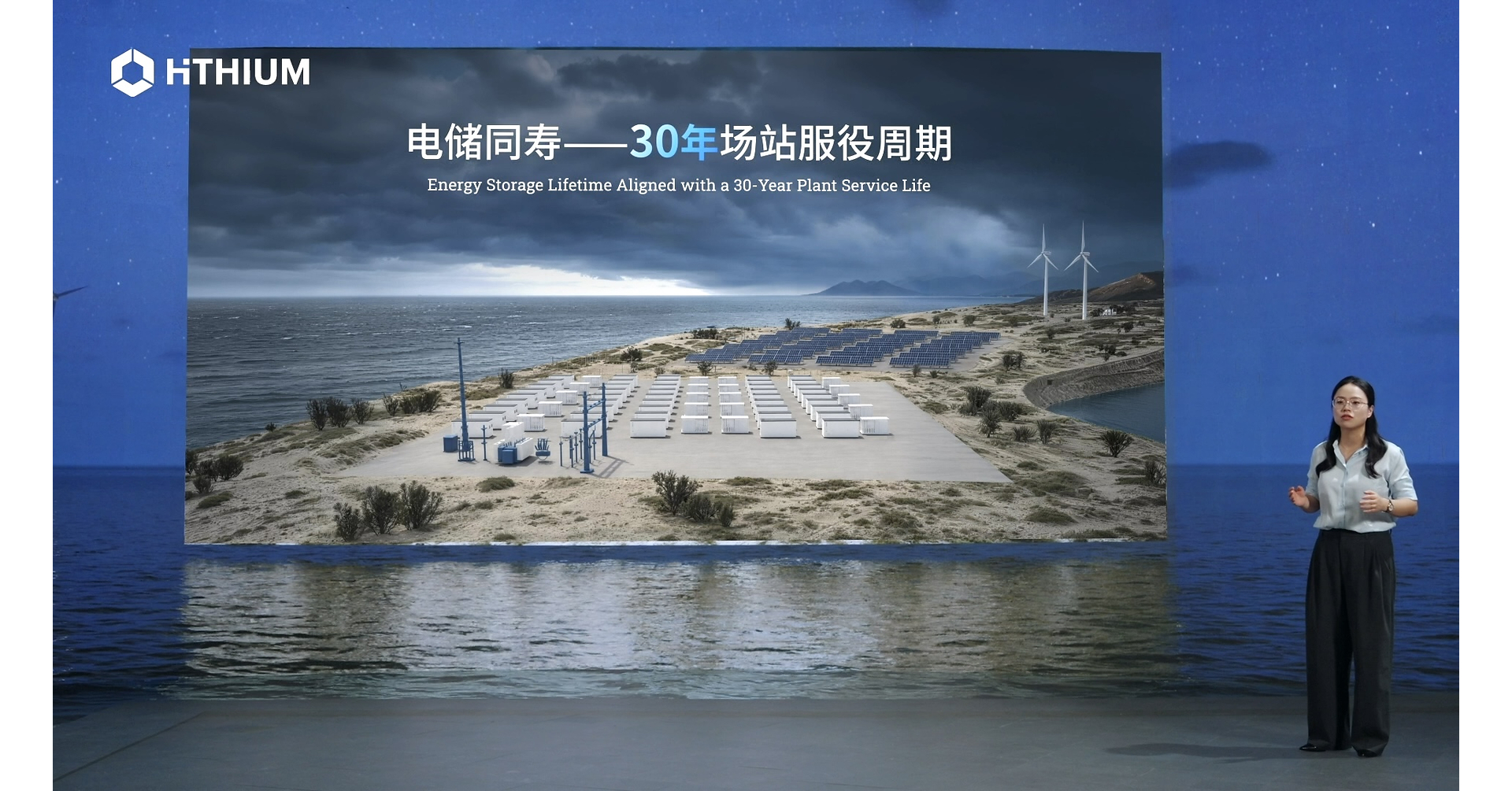
HiTHIUM launched its ∞Power N4.0MWh sodium-ion energy-storage system, incorporating a 785Ah cell rated for 20,000 cycles and a 30-year design life, with mass production and deliveries targeted for 2027. The system supports 2-8 hour storage durations, reduces station footprint by 30%, delivers more than 88% 24-hour system efficiency, and increases rated PCS utilization by over 20% versus HiTHIUM's prior sodium-ion system. AI-based thermal management and hybrid air-liquid cooling are designed to lower operating auxiliary power consumption by 30% and standby auxiliary consumption by 50%, while the company targets LCOS of RMB0.1/kWh for future extreme-environment solutions.
Analysis
This is not yet a lithium-displacement event; it is an execution signal that sodium-ion is moving from pilot chemistry toward bankability testing in stationary storage. The relevant gating variables over the next 12-18 months are independently verified round-trip efficiency, delivered $/kWh, degradation under cycling, warranty reserves, and project-finance acceptance—not headline cell capacity or design life. If sodium systems achieve a material installed-cost discount in 4-8 hour applications, they could reduce the marginal demand pull for lithium iron phosphate (LFP) cells, pressuring the stationary-storage portion of the lithium value chain before affecting EV demand.
The second-order beneficiary is grid deployment rather than cell makers: lower raw-material volatility and less exposure to lithium pricing can improve bid certainty for developers and utilities such as NEE and AES, while increasing addressable projects for integrators including FLNC. Conversely, CATL (300750.SZ), BYD (1211.HK), ALB and SQM face a narrative risk if sodium-ion procurement wins emerge, although their earnings exposure is unlikely to be meaningful until 2028 given qualification cycles and the announced production timeline. The market may overreact to a press-release cost target: a 30-year asset claim has no value to financiers until field data establishes usable capacity retention, safety performance and service-cost assumptions.
Near term, treat this as a watch catalyst rather than a directional commodity trade. The decisive 1-3 month datapoints are named customer orders, contracted project economics and third-party performance validation; over 6-18 months, follow whether EPCs and utilities specify sodium-ion in tenders rather than merely run demonstrations. The thesis is falsified if delivered sodium-ion systems cannot undercut LFP on LCOS after accounting for lower energy density, balance-of-plant costs and financing haircuts.
AllMind Terminal
AI-powered research, real-time alerts, and portfolio analytics for institutional investors.
Request TrialMarket Sentiment
Overall Sentiment
strongly positive
Sentiment Score
0.58
Key Decisions for Investors
- Do not initiate a standalone short in ALB or SQM on this announcement. Set an alert for disclosed sodium-ion utility-scale purchase orders and independently audited installed-cost data; reconsider a 2028 lithium-demand downside basket only if sodium wins commercially financed 4-8 hour projects.
- Build a 6-12 month watchlist long in FLNC and AES versus a short XLB hedge: commercialization of lower-cost storage can expand project volumes and utilization, but execution risk remains high. Enter only after backlog or margin guidance incorporates sodium-compatible deployments; exit if storage gross-margin guidance deteriorates or project cancellations rise.
- Monitor CATL (300750.SZ) and BYD (1211.HK) for competitive response rather than assume disruption. A rapid sodium product roadmap or customer qualification announcement would reduce the case for share loss; absence of one alongside third-party HiTHIUM orders would make stationary-storage mix pressure more credible.
- For NEE, use utility-scale storage procurement disclosures over the next 12 months as a catalyst screen. Incremental storage capacity contracted at lower capex without a corresponding return-on-equity concession would support a long; higher financing costs or lack of lender acceptance would invalidate the benefit.
More News
- 'Hostile act': Trump threatens EU with tariffs over Canada associate-membership proposal
- US military claims Strait of Hormuz remains open amid ongoing blockade
- Oil prices extend losses as fears of Middle East supply disruptions ease
- US official says upcoming spectrum auctions could generate more than $100 billion
- Shares tick higher as Fed hikes rates, dollar jumps with short-term yields
- Investors react to Fed hike and market sell-off: Brace for 'higher for longer' rates