
UMC and AP Memory Collaborate to Enable Advanced Power Delivery Solutions for AI and HPC Systems
Source: PR Newswire
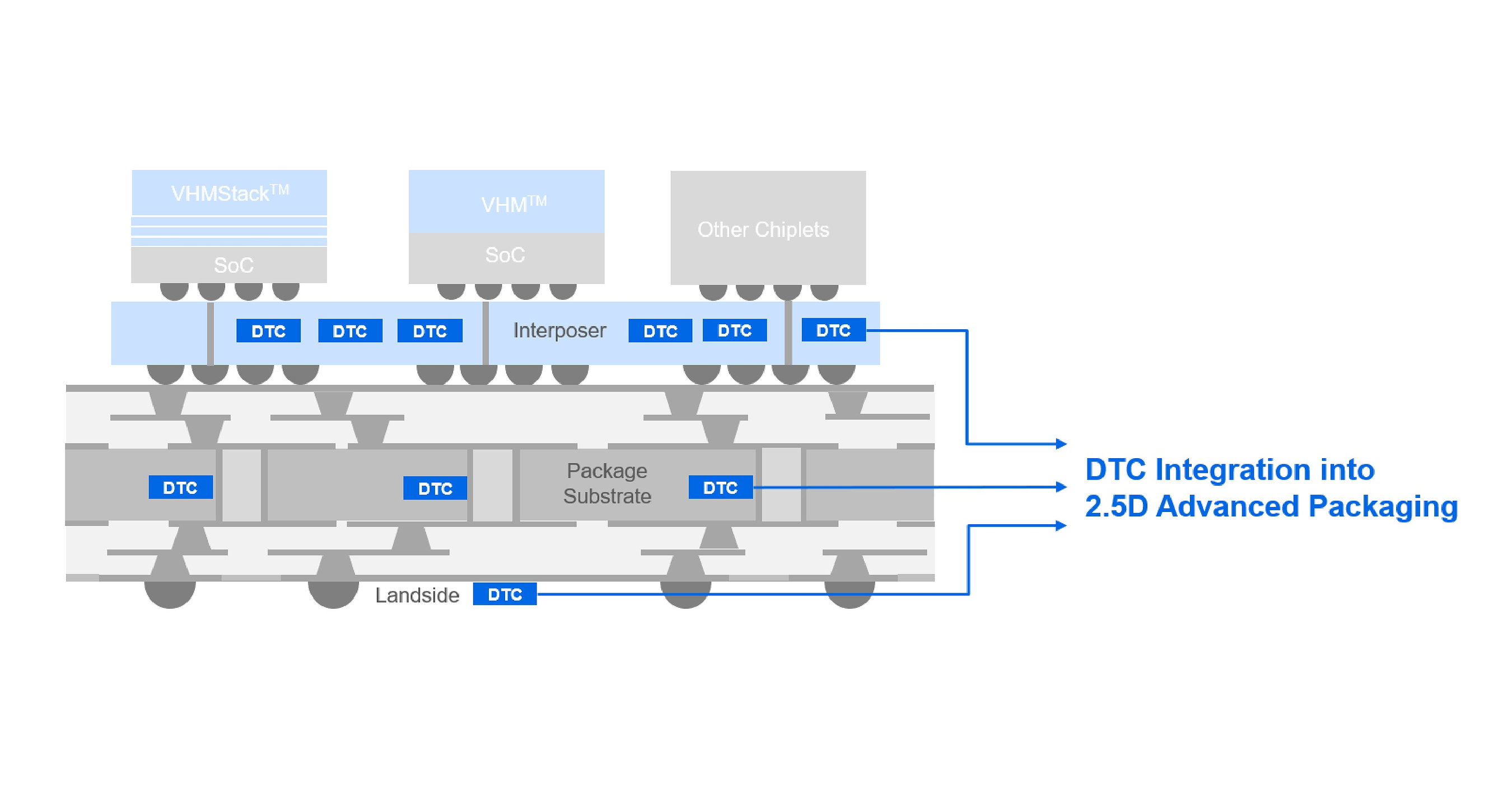
UMC and AP Memory announced a collaboration on silicon-capacitor power delivery for AI and HPC systems, combining UMC’s deep-trench-capacitor manufacturing with AP Memory’s designs. AP Memory’s S-SiCap Gen2D designs completed tape-out and initial functional validation in Q3 2026; system-level performance and reliability testing is next. The companies are also exploring embedded capacitor products, while UMC says it is investing in manufacturing capacity for power delivery and heterogeneous integration.
Analysis
The investable signal is an option on a new packaging-adjacent business, not evidence yet of material AI revenue for UMC. Tape-out and initial validation reduce design-manufacturability uncertainty, but system-level reliability testing and customer qualification remain the gating steps; without disclosed orders, capacity commitments, or economics, this should not change near-term earnings assumptions. If embedded silicon capacitors gain adoption, value could accrue across the packaging stack: UMC may monetize specialty process and manufacturing capability, while substrate and advanced-packaging suppliers may face redesign demands and qualification costs. The offset is that capacitor integration competes with existing board-level power components and other package-level approaches, so adoption need not be additive to the broader supply chain.
Near term (days), the AI association may attract attention, but the announcement is unlikely to support a durable re-rating by itself. Over 1–3 months, watch for reliability results, named customer programs, and evidence of volume production. Over 6–18 months, the key question is whether UMC can turn this collaboration into repeatable, commercially meaningful manufacturing rather than a technology showcase. The contrarian risk is treating a validated design milestone as proof of customer adoption; the upside risk is underestimating the value of securing a position in power delivery as package-level integration expands. UMC’s actual revenue contribution and unit economics are not provided.
AllMind Terminal
AI-powered research, real-time alerts, and portfolio analytics for institutional investors.
Request TrialMarket Sentiment
Overall Sentiment
mildly positive
Sentiment Score
0.30
Ticker Sentiment
Key Decisions for Investors
- Do not chase UMC on this announcement alone; treat it as a modest strategic positive, not an earnings revision. Reassess only if UMC discloses customer qualification, production timing, or measurable capacity/revenue implications.
- Set a 1–3 month watch item for system-level reliability testing and customer adoption. A delay, failed qualification, or absence of follow-on commercial milestones would weaken the thesis; disclosed production orders would strengthen it.
- Avoid a thematic long in AP Memory based solely on the release: verify qualification status, customer concentration, commercialization timing, and expected economics before sizing. The announcement does not establish volume demand.
- Track substrate and packaging suppliers for design wins or qualification costs; potential beneficiaries and losers depend on which power-delivery architecture customers select. Do not assume board-level components are displaced until system designs and sourcing are disclosed.
More News
- US tech stocks tumble as investors fret over AI spending
- Asian shares wobble as tech rout boosts bonds, dents rate hike bets
- Asia stocks fall as AI rout batters S.Korea; Japan spooked by strong CPI
- AI debt and French bonds face a stress test — why it may not be over
- Nasdaq 100 Drops as Oil Rise Fuels Risk-Off Mood
- SK Hynix shares slide after chipmaker scraps Solidigm IPO plans
From AllMind Research
- Anthropic IPO Preview: Valuation, Timing, and What to Watch
- Shein After the IPO: Venue, Valuation, and What Must Be Proved
- What AI Research Tools Should a Small Hedge Fund Buy First?
- Can ChatGPT or Claude Replace a Research Platform?
- How the 2026 Milan-Cortina Winter Olympics Will Reshape Company Revenues and Stock Performance