
Stock Market Today, Nov. 4: Amazon Jumps 6% From New Perspective on AWS Growth and AI Strategy Following Election Results
Source: fool.com
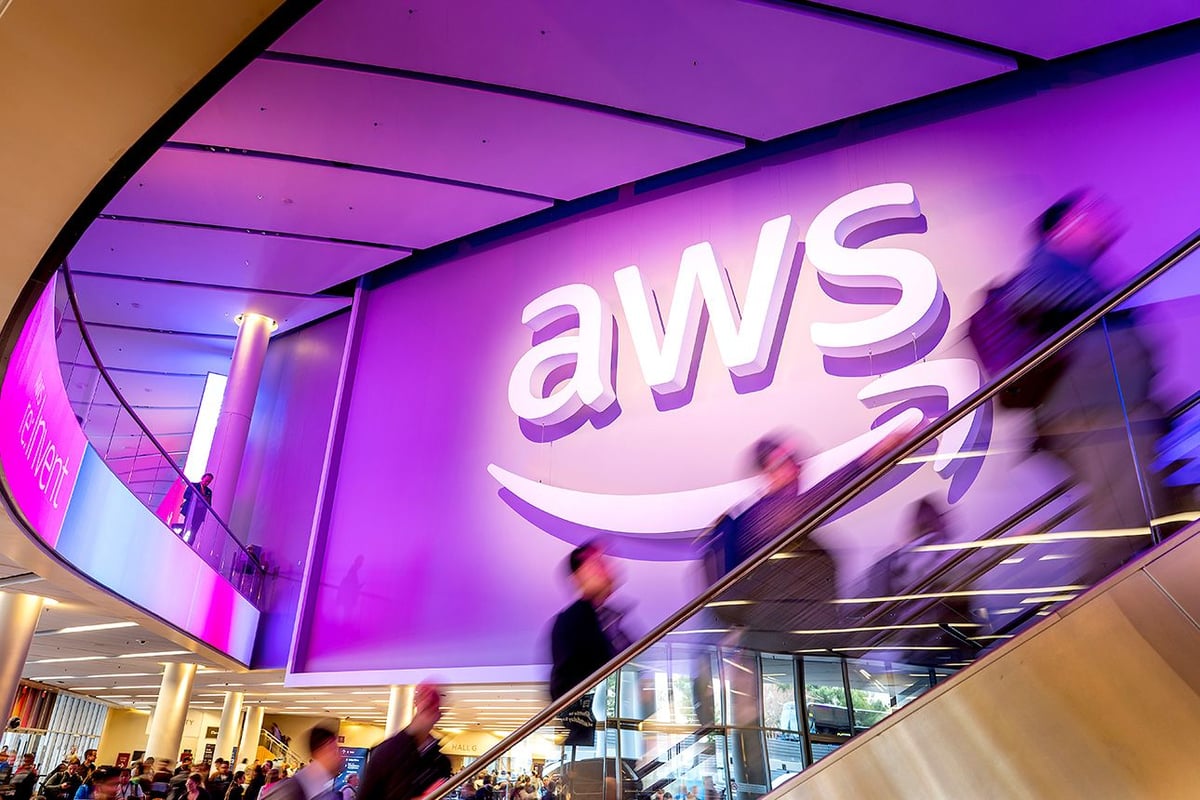
Amazon rose 6.12% to $266.03 on volume of 92.8 million shares, about 142% above its three-month average, as investors reassessed last week's earnings and the midterm-election implications for data-center development. AWS sales grew 39% to $46 billion in Q3; the article says tighter data-center growth could steer more business to large hyperscalers such as Amazon. Goldman Sachs chief economist Jan Hatzius said state and local moratoria could affect about 45% of planned U.S. data-center capacity expansion, while the federal-level outlook is unlikely to change.
Analysis
The market is pricing local permitting friction as a moat for installed hyperscaler capacity. That is only true where AWS has available power, networking and usable capacity in the constrained markets; compute demand cannot automatically migrate across regions without latency, data-residency and customer-architecture costs. Moratoria could therefore raise utilization and pricing for incumbents in some locations while also delaying AWS’s own expansion and limiting its ability to convert demand into revenue. The cited 45% applies to planned U.S. capacity expansion, not necessarily operating capacity or Amazon’s specific projects; verify the underlying geography, timing and project exposure before treating it as an earnings tailwind.
Near term, the high-volume repricing can extend if investors continue rewarding existing infrastructure, but one session does not establish a durable policy-driven earnings revision. Over 1–3 months, watch AWS growth, capacity/utilization and capex commentary, plus actual state and local permitting actions. Over 6–18 months, permitting and power constraints could widen the advantage of scaled operators—but also redirect demand to regions where Amazon may face new build, transmission or water constraints. Microsoft’s stronger daily performance argues against assuming this is an Amazon-specific rerating.
Contrarian risk: investors may be capitalizing scarcity while overlooking that capacity constraints can suppress the volume AWS can serve. The thesis weakens if restrictions do not materially delay projects, AWS growth or backlog conversion slows, or management signals constrained capacity rather than better utilization/pricing.
AllMind Terminal
AI-powered research, real-time alerts, and portfolio analytics for institutional investors.
Request TrialMarket Sentiment
Overall Sentiment
moderately positive
Sentiment Score
0.55
Ticker Sentiment
Key Decisions for Investors
- Consider a measured long AMZN / short data-center development exposure as a relative-capacity theme, not a broad claim that regulation benefits all hyperscalers. Initiate only after confirming the short exposure is meaningfully tied to delayed projects; cap risk because the article provides no company-specific permitting data.
- Avoid chasing the one-day rally with unhedged upside exposure. If adding AMZN, scale in around confirmation from AWS capacity, utilization and capex disclosures rather than treating election headlines as earnings evidence.
- Track state/local moratoria against Amazon’s project locations and AWS regional capacity, alongside power availability and AWS backlog conversion. Reassess the thesis if restrictions prove temporary or geographically immaterial, or if AWS growth decelerates despite constrained competitor supply.
- Relative performance is a key check: if AMZN gives back the move versus the Nasdaq while AWS growth/capacity commentary weakens, reduce the scarcity-premium thesis; if AWS maintains growth and evidence shows competitors’ projects are delayed, the relative trade has stronger support.
More News
- Voters rebuff data centers in every ballot measure except one during the 2026 midterms
- After the midterms, a bigger clash over data centers could be coming
- After the midterms, Big Tech’s AI data center problem is only getting bigger
- What Democrats’ midterm sweep means for your investments
- A blue wave sends futures into the green
- Democrats may go after data centers. That's not a reason to dump all your AI stocks