
China's BCI Race Accelerates: Gestala Raises US$84 Million in Six Months
Source: PR Newswire
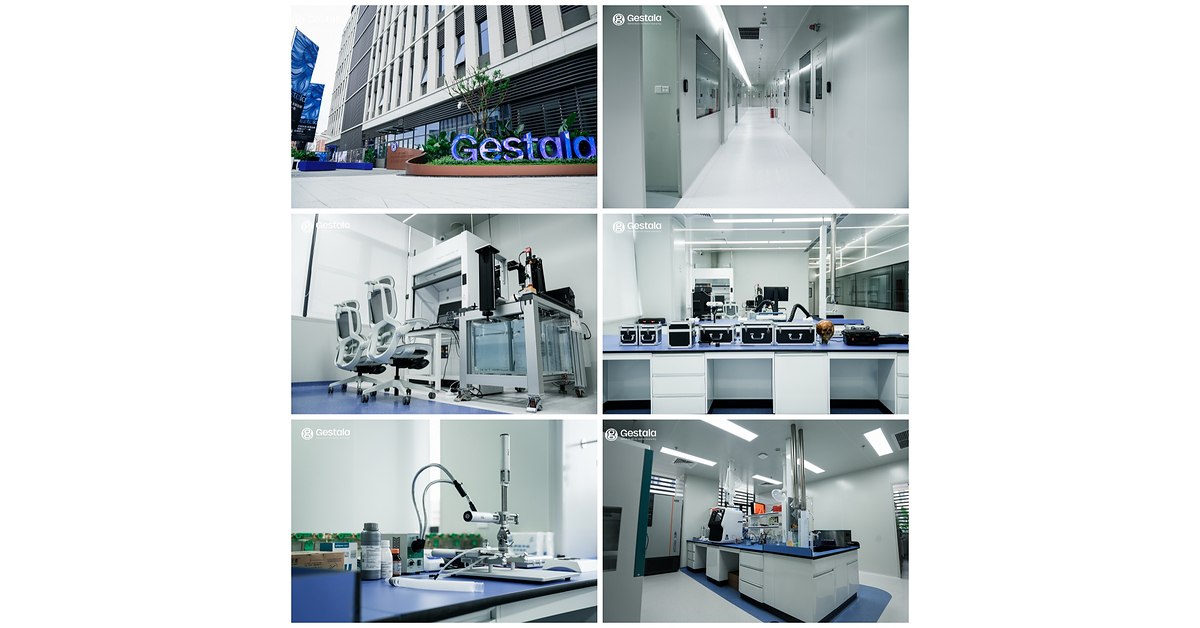
Gestala, a China-focused ultrasound BCI developer, raised RMB 570 million (≈$84 million) across two rounds in six months (RMB 150M angel in March and RMB 420M Angel+ in July). The company is building an end-to-end stack—research, ultrasound engineering/manufacturing, clinical trials planning, and AI—aiming to unveil its first ultrasound BCI product and brain foundation model by end-2026 for chronic pain, with subsequent clinical trials and device registration. While capital momentum is strong, clinical and AI validation tests are only beginning, leaving material execution and safety/generalization risk ahead.
Analysis
This is primarily a capital-allocation signal, not a near-term public-equity catalyst. The economic value sits years out, so the first-order market reaction should be in private-market valuations and China innovation sentiment, while listed med-tech names likely see little fundamental change unless the platform starts generating reproducible human data. The only near-term beneficiaries are the enabling layers: precision manufacturing, ultrasound components, and clinical-service ecosystems that can monetize R&D spend before any product revenue exists.
The bigger second-order effect is competitive framing. If ultrasound-based neuromodulation ever works, it expands the addressable market beyond today’s electrode-constrained niches and could pressure established neuromodulation franchises, but that substitution risk is 6-18 months away at the earliest and probably years from commercial relevance. In the next 1-3 months, the market should focus on whether the team can show repeatable signal extraction across anatomies; without that, the story stays in venture-land and the premium should remain confined to optionality.
The contrarian point is that investors may be underwriting an "AI + brain" platform while the actual product is still a noisy physiological measurement stack. Hemodynamic readout and skull variability make this much harder than consumer BCI narratives imply, so the first monetizable indications are likely narrow and clinical, not a broad interface layer. That argues for fading any hype-driven extrapolation into existing med-device leaders; the immediate impact on listed incumbents is more headline noise than earnings risk.
AllMind Terminal
AI-powered research, real-time alerts, and portfolio analytics for institutional investors.
Request TrialMarket Sentiment
Overall Sentiment
mildly positive
Sentiment Score
0.15
Key Decisions for Investors
- Stay flat on direct public-equity exposure for now; set a watch alert for first human efficacy data or registration filings in 1H26. Falsifier: reproducible multi-patient decoding/modulation results with a credible safety profile would justify revisiting a long.
- If you want a lightweight expression, run a 3-6 month pair long IHI / short XBI. The trade leans on devices having a clearer regulatory monetization path than platform biotech; cut if XBI outperforms IHI by more than 5 percentage points on a broad risk-on biotech tape.
- Do not short MDT, BSX, or ABT on this headline. If they sell off on 'BCI disruption' rhetoric, use it as a fade opportunity; the substitution window is too long to impact 2026 earnings.
- Use CQQQ only as a sentiment basket for China innovation optionality, not as a direct bet on this company. Add on weakness only if Chinese policy support for medtech/AI spending broadens; otherwise keep it as a watch item.
More News
- Nvidia GPUs are everywhere. Here are the ways companies are accessing them
- Bank of America is bullish on these top stocks ahead of earnings
- Why Nvidia’s stock is dodging the AI credit scare that is crushing Broadcom and Oracle
- As companies pour billions into Earth-based AI infrastructure, Google is taking the data center race off-planet
- How U.S. know-how is fracking Australia into a gas boom, from Texas oilmen to Trump’s energy secretary
- The world needs Ukraine’s grain. Its farmers are running out of reasons to plant
From AllMind Research
- Anthropic IPO Preview: Valuation, Timing, and What to Watch
- Shein After the IPO: Venue, Valuation, and What Must Be Proved
- What AI Research Tools Should a Small Hedge Fund Buy First?
- AllMind's Data Standardization Methodology: Our Approach to Fundamentals
- What Makes Financial Data Ready for AI Research?