
Aura Launches Trusted Family Access to Help Families Protect Aging Loved Ones from Online Crime--Without Compromising Independence
Source: PR Newswire
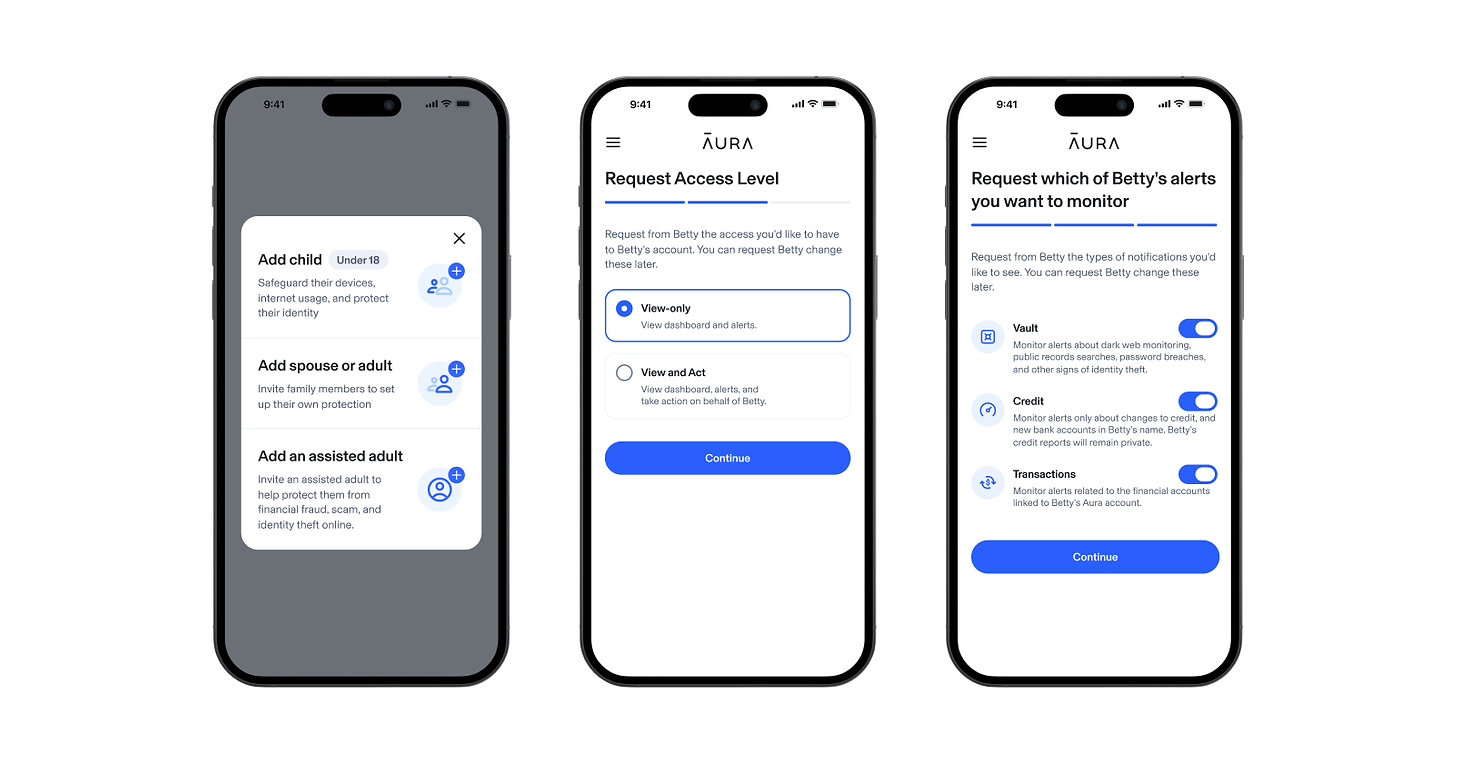
Aura launched Trusted Family Access, a consent-based feature allowing caregivers to monitor identity-theft, fraud, credit-change, suspicious-transaction, password and dark-web alerts for aging relatives. The launch addresses a growing fraud burden: Americans aged 60+ reported $7.7 billion in fraud losses in 2025, up 59% year over year, while 65% of surveyed caregivers said an older loved one faced a scam attempt in the past year. Aura will offer the feature through direct-to-consumer channels and expand it to employee benefits, with additional account-management capabilities planned in coming weeks.
Analysis
This is primarily a retention and ARPU feature rather than a near-term revenue event. Consent-based multi-user access can reduce household churn by embedding the product into caregiving workflows; the more family members receiving alerts, the higher the switching cost and the greater the opportunity to convert an individual subscription into a family plan. The employee-benefits channel is strategically more important than direct-to-consumer rollout because it could lower CAC and create employer-sponsored distribution, but neither pricing nor attach-rate data is available to underwrite an earnings impact.
The feature validates a broader shift from passive identity monitoring toward intervention-oriented fraud prevention. That raises competitive pressure on Gen Digital (GEN), Experian (EXPGY), TransUnion (TRU), Equifax (EFX), and LifeLock-adjacent offerings: incumbents with credit-data access have the clearest ability to replicate monitoring permissions, while consumer-security vendors without financial-data integrations risk being relegated to lower-value endpoint protection. Financial institutions may ultimately be the larger beneficiaries, as scam-related losses and reimbursement scrutiny create incentives to bundle trusted-contact controls and anomaly alerts into checking products.
Near term, there is no liquid, clean Aura-linked trade and the company’s survey claims are not independently sufficient to change sector estimates. Over 6-18 months, the investable signal is whether family fraud tools become a paid bundle rather than a commoditized feature; pricing, benefit-channel wins, and measurable reduction in fraud incidents are the relevant proof points. The contrarian risk is that shared access increases privacy liability and customer-support costs, while a high-profile false positive or caregiver-abuse incident could invite regulatory constraints and undermine adoption.
AllMind Terminal
AI-powered research, real-time alerts, and portfolio analytics for institutional investors.
Request TrialMarket Sentiment
Overall Sentiment
mildly positive
Sentiment Score
0.20
Key Decisions for Investors
- No immediate directional trade: treat this as a watch item until Aura discloses family-plan pricing, subscriber conversion/retention, and employer-benefits contract economics.
- Monitor GEN versus EFX/TRU over the next 1-3 earnings cycles: favor long EFX or TRU against GEN only if credit-monitoring attach rates or trusted-contact functionality accelerate, as bureau data and regulated workflows provide a more defensible moat than standalone consumer cyber bundles.
- Set an alert for CFPB, FTC, or bank-regulator actions on authorized third-party access and scam reimbursement. A restrictive consent or liability framework would be negative for consumer-monitoring vendors and positive for banks with established identity, authentication, and transaction-control infrastructure.
- For a 6-18 month thematic basket, monitor long cybersecurity/identity incumbents GEN, EFX, and TRU against short broad consumer discretionary exposure only if fraud-protection subscription growth demonstrably holds up during consumer-spending weakness; the thesis fails if paid identity-protection churn rises or products are bundled free by banks and credit-card issuers.
More News
- Australia’s central bank chief warns inflation risks materialising
- This AI-picked stock jumps 18% on Amazon’s $8 billion power deal
- Asian stocks rise as oil retreat eases inflation fears, BOJ in focus
- California AG Bonta on Paramount-Warner Bros., Meta and AI
- A breakout in the 10-year Treasury yield could hold back stocks if it reaches this level
- How record diesel prices will rip through the U.S. economy. Trucks and rails are only the start