
Carter's Growth Supported by Brands, Digital Efforts & Cost Savings
Source: zacks.com
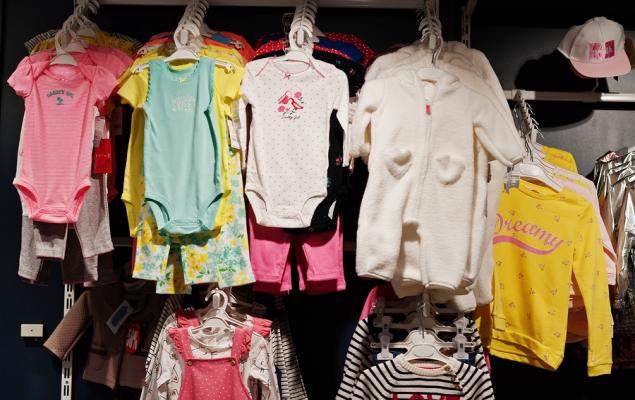
Carter's is pursuing brand investment, e-commerce personalization, store optimization, pricing and sourcing efficiencies to support growth and offset tariff-related cost pressures. CRI shares are down 4.9% over six months, versus a 37% decline for its industry, and trade at 8.91x forward earnings compared with the industry's 16.84x average. Consensus EPS is expected to decline 5.5% in 2026 before rising 5% in 2027, although estimates for both years increased over the past 30 days.
Analysis
CRI’s discount valuation is only actionable if management can convert cost actions into gross-margin stabilization without sacrificing unit demand. Children’s apparel is unusually exposed to trade-down behavior because purchases are recurring but non-discretionary; price increases can shift volume toward Walmart (WMT), Target (TGT), Amazon (AMZN) private labels, and off-price channels rather than preserve branded elasticity. Digital investment is therefore a mixed signal: better first-party data and repeat purchasing can lift lifetime value, but fulfillment and performance-marketing costs can dilute the benefit unless direct-channel mix rises meaningfully.
The near-term catalyst is an earnings setup in which improved estimates leave room for a beat if freight, sourcing, and promotional expense are controlled. Over the next 1-3 months, watch gross-margin guidance, inventory turns, wholesale order cadence, and comparable sales—not promotional claims—as proof that pricing and supply-chain actions are working. The thesis fails if margins require deeper discounting to clear inventory, or if tariffs force incremental price increases while units deteriorate; in that case, the low multiple is a value trap rather than rerating opportunity.
Contrarian view: CRI’s relative resilience versus a weak apparel complex may already reflect its defensive category exposure, making a broad multiple catch-up less likely than bulls expect while earnings remain pressured. RL is the cleaner consumer-upgrade expression, with higher pricing power and less dependence on value-oriented family budgets; COLM offers a more cyclical recovery trade but carries greater weather and wholesale-inventory risk. DLTH’s earnings-surprise history is not sufficient support for a long without evidence that declining profit expectations have bottomed.
AllMind Terminal
AI-powered research, real-time alerts, and portfolio analytics for institutional investors.
Request TrialMarket Sentiment
Overall Sentiment
mildly positive
Sentiment Score
0.25
Ticker Sentiment
Key Decisions for Investors
- Maintain CRI as a watch-list long rather than initiate on this article alone; enter only after the next report confirms stable-to-up gross margin and inventory growth below sales growth. Target a 3-6 month rerating from ~9x forward earnings toward 10-11x; exit if management cuts full-year EPS or indicates materially higher promotional intensity.
- Express a quality consumer-apparel preference through long RL / short CRI over 3-6 months if discretionary demand softens: RL’s premium pricing power should defend margins better, while CRI is more exposed to value-channel substitution. Close if CRI delivers two consecutive quarters of accelerating comparable sales and margin expansion.
- Use COLM only as a tactical post-earnings long if wholesale inventories normalize and forward bookings improve; avoid pre-emptive positioning because weather-sensitive demand and retailer destocking can overwhelm a low-expectations setup. Risk limit: abandon on a cut to annual sales or gross-margin outlook.
- Monitor WMT, TGT and AMZN apparel/private-label commentary as leading indicators for CRI. Evidence of share gains in kids’ basics or intensified price investment would weaken CRI’s ability to pass through sourcing costs and should block any long entry.
More News
- Microsoft offers buyouts to nearly 30% of workforce in ongoing AI shift
- From Wall Street to Silicon Valley, Anthropic IPO poised to have massive 'trickle-down effect'
- Federal Reserve is likely to hold interest rates steady in October. Here's what that means for consumers
- Anthropic’s IPO filing shows explosive growth, risks and staggering costs
- EQT becomes the nation’s leading natural gas ‘juggernaut’ with a $13B deal as data center, export demand surges
- Meta announces $95 billion stock offering to fund AI expansion