
University of Benghazi Reopens After 11 Years in Historic Milestone, Breaking Three Guinness World Records
Source: PR Newswire
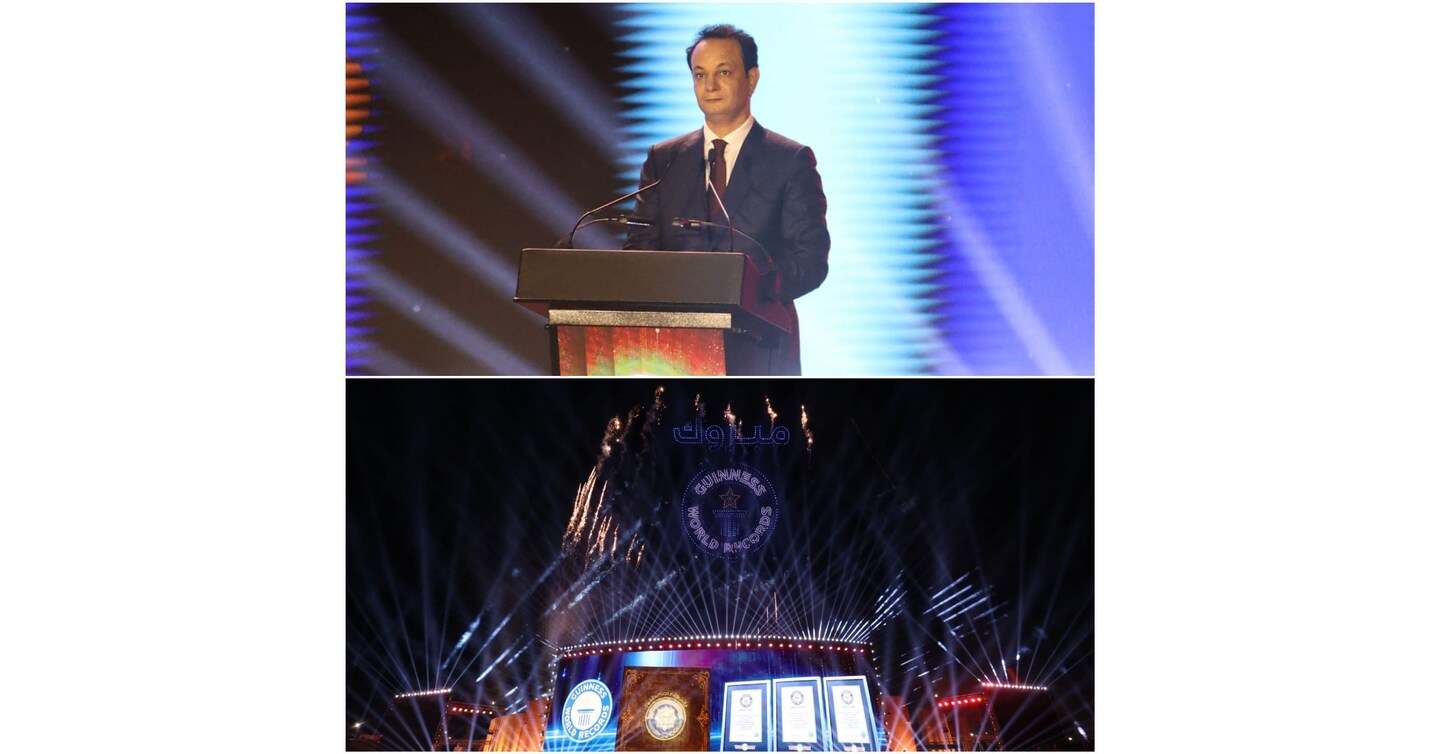
The University of Benghazi reopened all faculties and facilities on September 4 after more than 11 years of closure caused by war-related destruction, following a three-year reconstruction project led by Libya's Development and Reconstruction Fund. The rebuilt campus serves nearly 100,000 students and includes major faculties, laboratories, residences, infrastructure and roads; the fund has also sent more than 1,000 students abroad and is pursuing over 2,300 development projects across eastern and southern Libya. The reopening signals a positive reconstruction milestone but is unlikely to have material near-term financial-market implications.
Analysis
This is primarily a political-capital signal rather than an investable earnings event. The reconstruction program may reinforce eastern Libya's administrative legitimacy and improve local operating conditions, but it does not by itself change the central constraints on foreign capital: fragmented fiscal authority, opaque procurement, security risk and uncertainty over nationally unified institutions. The most relevant market transmission is indirect—greater stability around Benghazi could eventually lower logistics and labor frictions for oilfield services, construction and telecom operators—but this remains a 6-18 month possibility, not a near-term catalyst.
The non-obvious risk is that highly visible, centrally directed projects can increase the probability of parallel economic governance rather than national reconciliation. That would preserve the discount applied to Libya-related assets even if localized infrastructure improves, because contract enforceability, payment certainty and hydrocarbon-revenue allocation remain unresolved. A meaningful rerating would require independently observable progress on budget unification, oil-revenue distribution and durable security arrangements, not additional ceremonial project announcements.
There is no clean liquid equity expression with sufficient direct revenue sensitivity to justify a new trade. ENI (ENI IM) and Saipem (SPM IM) have Libya exposure, but their valuation is driven materially more by global oil, Italian energy policy and broader offshore activity; treating this development as a catalyst for either would be overfitting. The better use is as a qualitative input to a Libya-stability watchlist ahead of any tender pipeline, sovereign-finance normalization or material expansion in internationally recognized hydrocarbon investment.
AllMind Terminal
AI-powered research, real-time alerts, and portfolio analytics for institutional investors.
Request TrialMarket Sentiment
Overall Sentiment
moderately positive
Sentiment Score
0.45
Key Decisions for Investors
- No immediate position: do not trade ENI IM, SPM IM, or broad European construction proxies on this announcement alone; the direct revenue linkage and procurement economics are unverified.
- Create a 1-3 month alert for independently confirmed eastern-Libya infrastructure tenders, contractor awards, payment guarantees, or internationally recognized budget allocations. A disclosed, funded multiyear contract would be the minimum threshold for evaluating SPM IM or Italian engineering/construction exposure.
- For existing ENI IM exposure, treat any improvement in Libyan operating continuity as modest downside protection rather than upside thesis. Reassess only if production guidance attributes a measurable uplift to Libya or if oil-revenue settlement reduces disruption risk; renewed field outages or political fragmentation would falsify the stability signal.
- Monitor Brent and Libya National Oil Corporation production data rather than reconstruction headlines. A sustained production recovery with no escalation in revenue disputes over 3-6 months would be the investable confirmation; disruption-related supply losses would favor crude exposure, not local reconstruction beneficiaries.
More News
- What next for France as riots rattle markets? Three questions facing investors ahead of more protests
- AI Doubts Spread Cracks in Equities, Credit Markets: Evening Briefing Americas
- Stocks Fall as Oil Rally Keeps a Lid on Treasuries
- Energy markets are adapting to the Iran war as a ‘forever conflict’ while oil producers keep supplies flowing and avoid ‘mutually assured destruction’
- Kinder Morgan, Energy Transfer and Williams could benefit from cheap natural gas
- CrowdStrike CEO's alarming prediction — plus, the sell-off spreads beyond tech