
Putin Can Afford to Wait for Gifts From Trump
Source: Bloomberg
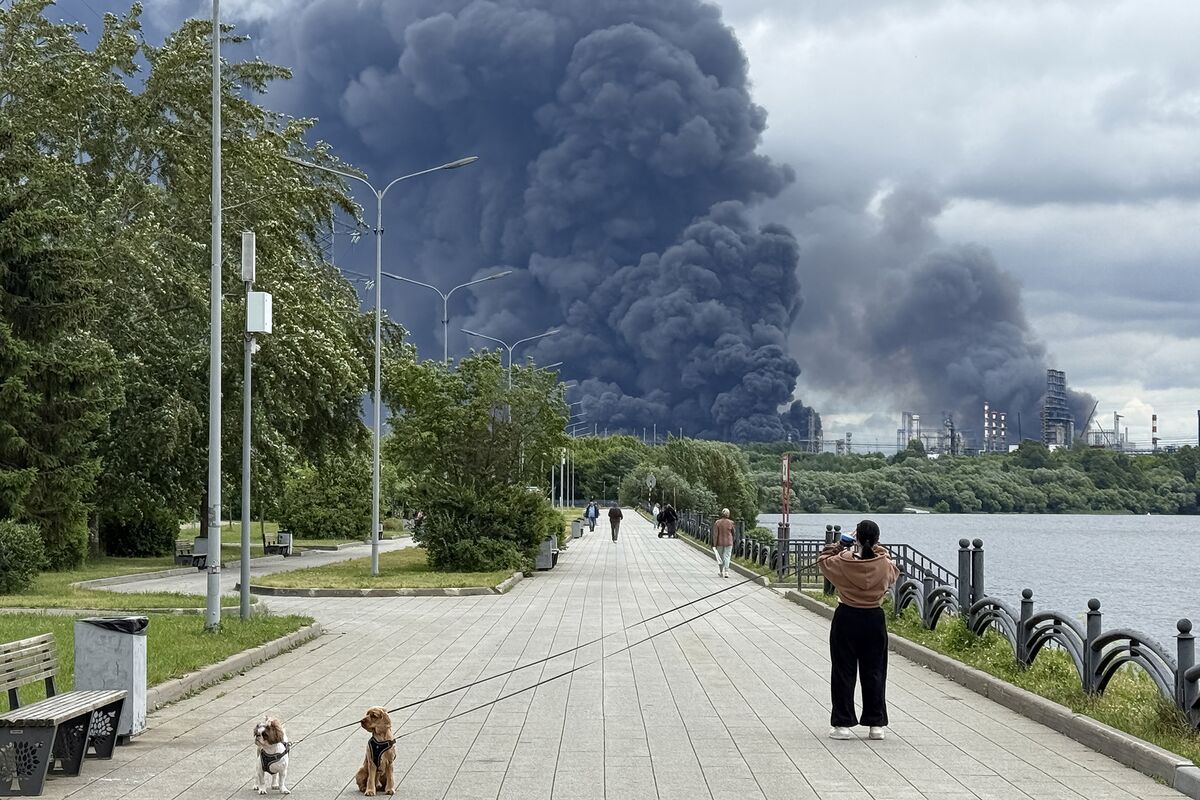
A diesel deal between Donald Trump and Vladimir Putin has not brought Russia closer to ending its war on Ukraine. The article says the Kremlin may test Trump’s willingness to ease additional war-related sanctions; it gives no deal terms or market reaction.
Analysis
The market-relevant question is whether this is a narrow diesel arrangement or a precedent for broader, enforceable sanctions relief. A limited carve-out could redirect trade without adding much global supply: watch for displaced non-Russian barrels, changes in freight/insurance costs, and regional diesel differentials before extrapolating to lower benchmark prices. Broader relief could pressure distillate cracks and weaken sanctions-related shipping premia, but only if it produces incremental, sustained exports.
The political asymmetry creates headline volatility: if Washington signals further concessions without a credible path to de-escalation, markets may price relief while the underlying war-risk premium remains. Conversely, a breakdown in talks or tighter enforcement could reverse any relief trade quickly. EU alignment, US legal authority, and the actual scope and duration of any waiver are key constraints—not details to assume away.
Contrarian view: a diplomatic headline is not equivalent to a durable reduction in energy risk. The likely near-term mistake is trading broad crude lower before verifying flows; the more direct exposure is regional diesel pricing and sanctions-sensitive logistics. Over 1–3 months, assess realized export volumes and enforcement. Over 6–18 months, repeated exemptions could erode sanctions leverage and encourage more trade through intermediary routes.
AllMind Terminal
AI-powered research, real-time alerts, and portfolio analytics for institutional investors.
Request TrialMarket Sentiment
Overall Sentiment
mildly negative
Sentiment Score
-0.15
Key Decisions for Investors
- No broad crude position on the headline alone. Verify the deal’s legal scope, duration, eligible counterparties, export volumes, payment terms, and whether it creates genuinely incremental supply.
- Conditional trade: if verifiable Russian diesel exports rise materially and persist, consider a risk-defined short in the relevant regional diesel crack or distillate exposure; exit if flows fail to increase or regional inventories tighten. Avoid assuming a specific price target without the volume and market data.
- Watch freight, insurance, and regional diesel differentials for evidence of trade diversion or lower sanctions friction; those may move before benchmark crude and distinguish a logistics repricing from a supply shock.
- Falsifiers: no broader waiver or sustained flow increase, renewed sanctions enforcement, a diplomatic breakdown, or a material escalation in the conflict. These would undermine the relief thesis and could restore risk premia.
More News
- US fines Bank of America $1.2bn for money laundering, sanctions violations
- Taiwan agrees to buy 30% of gas from Alaska LNG project, Trump says
- Oil rises amid growing Mideast tensions between Iran-backed Houthis and Saudi Arabia
- Houthis Hit Saudi Aramco Headquarters in Missile Attack
- Applied Materials’ $5 billion AI lab aims to cut chip development time in half—and restore Silicon Valley’s edge
- China's exports likely grew by double-digits in September
From AllMind Research
- Anthropic IPO Preview: Valuation, Timing, and What to Watch
- Shein After the IPO: Venue, Valuation, and What Must Be Proved
- What AI Research Tools Should a Small Hedge Fund Buy First?
- AI for Sell-Side Models, Estimates, and Internal Data
- How to Write an Investment Memo with AI: A Decision-Record Template