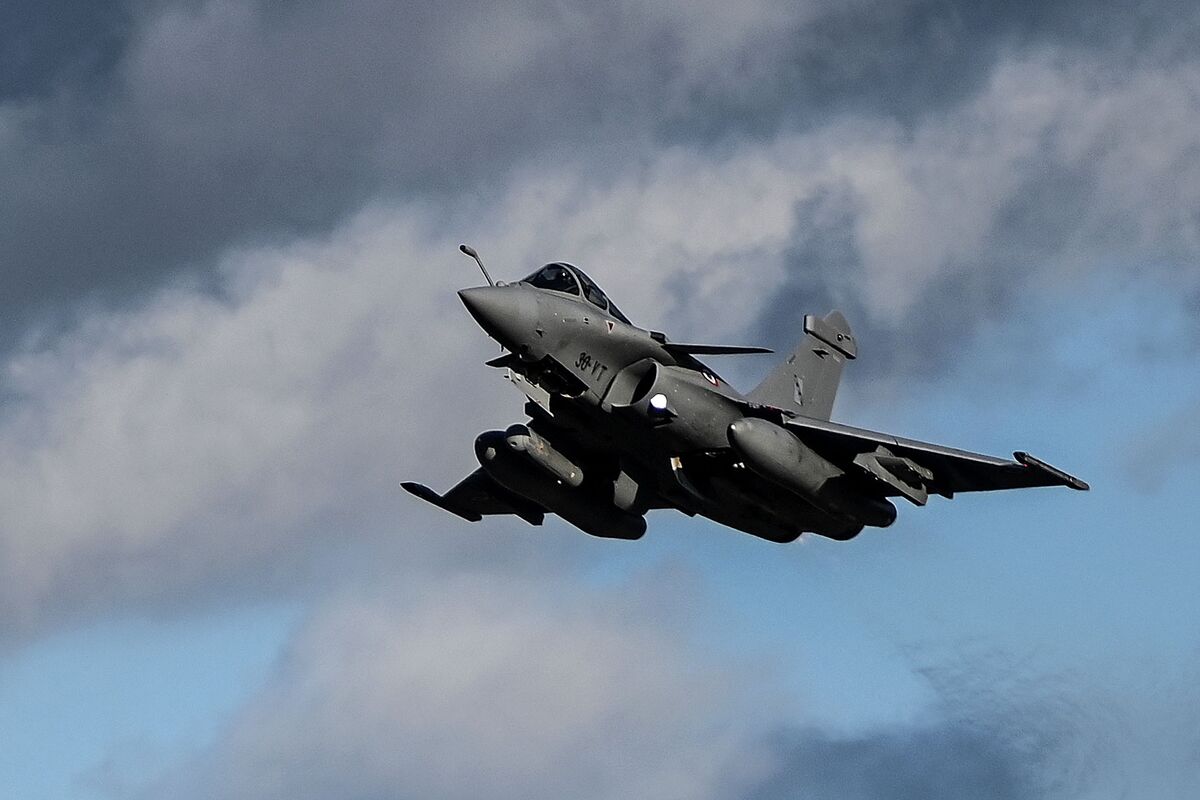
NATO jets shot down a drone that entered Latvia’s eastern airspace, with the defense ministry saying Russian “electromagnetic warfare” caused the incursion. The object was destroyed by French jets, underscoring elevated regional security risks along NATO’s eastern flank. The event is geopolitically negative but appears contained, with limited immediate market impact beyond defense and regional-risk sentiment.
This is less about the single drone than about the signaling value of a NATO kinetic response inside allied airspace. The market implication is a modest but non-zero increase in the probability of a broader Baltic security premium: higher demand for air defense, ISR, jamming, and short-range counter-UAS systems, with the cleanest beneficiaries being European primes and niche electronics suppliers rather than legacy platform names. The second-order effect is budget acceleration—incidents like this help defense ministries justify faster procurement cycles and emergency replenishment, which tends to show up first in booking growth before it appears in revenue.
The more important lens is operational: electromagnetic interference implies a contest in the spectrum, not just in the air. That raises demand for EW, resilient comms, and hardened infrastructure across Eastern Europe, and it also creates procurement spillover into airports, ports, and border systems that need passive detection and rapid attribution. For industrials, this is mildly negative for any Central/Eastern European logistics node with Baltic exposure, but the bigger trade is in defense capex beneficiaries over the next 6–18 months.
The contrarian risk is that one-off interceptions can be mistaken for regime change in threat levels. If this resolves without a repeat, the equity market may fade the move; what keeps it alive is frequency, not severity. A cluster of similar incidents over the next 2–8 weeks would likely pull forward funding and widen valuation multiples for European defense names, while also putting pressure on insurers and operators of critical infrastructure to raise security spend.
From a positioning standpoint, this is a buy-the-dip catalyst for selected defense exposures, but not a broad risk-off thesis unless escalation becomes repetitive. The better expression is to own the names that sell sensors, EW, and ammunition rather than the large diversified primes most exposed to program timing risk.
AI-powered research, real-time alerts, and portfolio analytics for institutional investors.
Request TrialOverall Sentiment
mildly negative
Sentiment Score
-0.20
