
Congo Ebola Outbreak: Health Worker ‘Ghost’ Pay Disputes Hamper Response
Source: Bloomberg
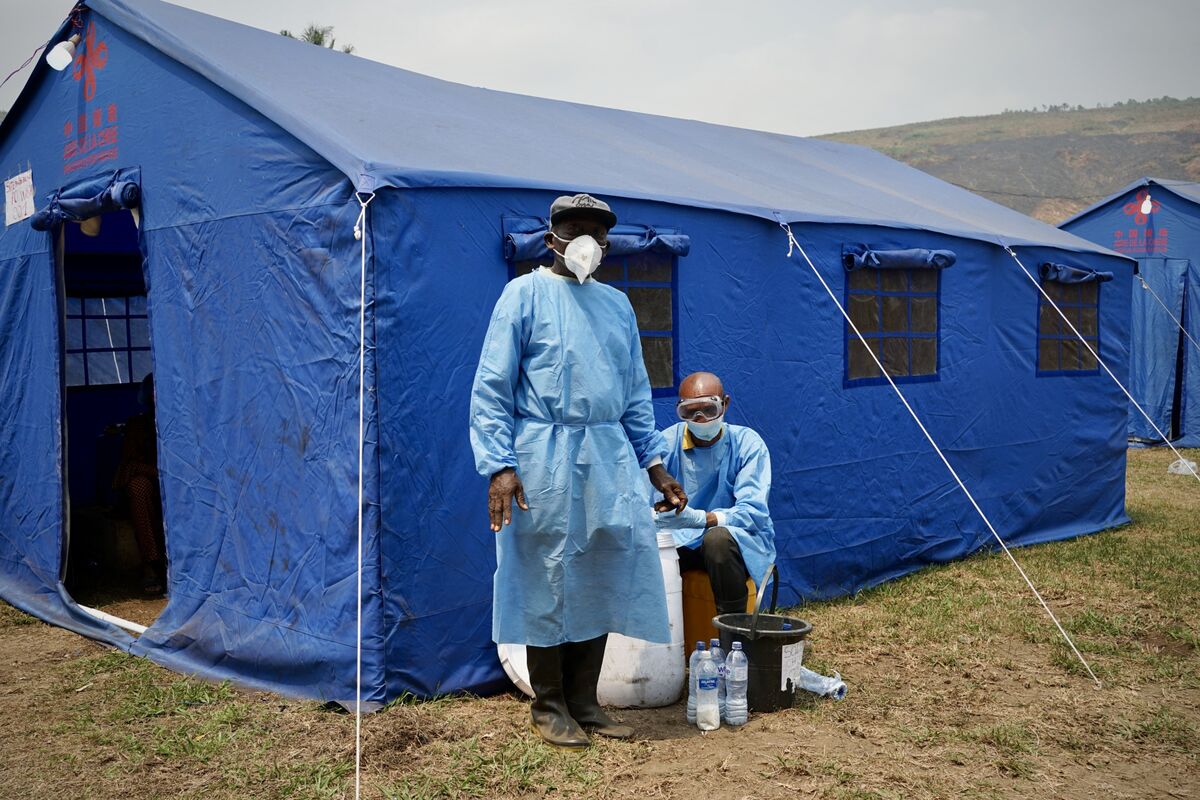
Ebola response capacity in the Democratic Republic of Congo is deteriorating: six checkpoints in the northeast stopped reporting after staff weren’t paid, and an audit of 240 listed Ebola-center workers found only 40. The immediate headwind is reduced outbreak-management effectiveness due to financing and payment failures.
Analysis
This reads as an execution failure, not a market-moving pathogen shock. The immediate implication is low tradable alpha because the bottleneck is local payroll/administration, which usually delays containment but does not by itself imply cross-border spread or a global demand shock.
The second-order risk is persistence: when frontline staffing is unpaid, outbreak response becomes episodic and under-resourced, raising the odds of recurring flare-ups over 1-3 months rather than a one-off event. That is more relevant to frontier Africa risk premia, NGO/contractor execution risk, and any supplier dependent on reliable public-health logistics than to broad healthcare equities.
Contrarian view: the consensus tends to overtrade Ebola headlines as binary pandemic hedges. Here the more important signal is weak state capacity, which is bearish for containment reliability but still usually not enough to justify a blanket short in travel, airlines, or broad risk assets unless case counts begin to expand beyond the current footprint. The falsifier is simple: if WHO reporting and staffing normalize over the next 4-6 weeks and case growth stays contained, this is noise; if not, the event shifts from headline risk to a genuine regional risk-off catalyst.
AllMind Terminal
AI-powered research, real-time alerts, and portfolio analytics for institutional investors.
Request TrialMarket Sentiment
Overall Sentiment
moderately negative
Sentiment Score
-0.35
Key Decisions for Investors
- No immediate standalone equity trade: do not short JETS or buy broad risk-off hedges on this headline alone; the base-rate impact is too local and the payoff is poor unless cross-border spread appears.
- Conditional watch on MRK for a 3-6 month call-spread only if outbreak data worsens or emergency procurement expands; asymmetry is acceptable, but premium should stay small because revenue impact is likely immaterial without escalation.
- Avoid long/shorting XBI on Ebola headlines absent confirmed case growth outside the current region; the signal is more about operational failure than biotech demand, so the move is likely overdone in public markets.
- Set a trigger on WHO escalation and neighboring-country case counts before taking any risk-off position in EEM/AFK; if the event remains localized for 4-6 weeks, fade any market overreaction.
More News
- Iran says two tankers catch fire after hitting mines in Strait of Hormuz
- ‘France, truly, is on the brink’ and just days away from a make-or-break moment in its debt crisis, analyst warns, as protests turn into riots
- Why Marco Rubio’s visit to Mumbai has ruffled feathers in India
- US and Iran both claim control of Strait of Hormuz amid attacks on vessels
- U.S. debt interest payments hit $3 billion a day and jumped 8% in fiscal 2026 — faster than total federal spending, revenue and GDP growth
- AI rapidly improving, could vastly boost U.S. GDP, Anthropic's Clark tells policymakers
From AllMind Research
- Anthropic IPO Preview: Valuation, Timing, and What to Watch
- Shein After the IPO: Venue, Valuation, and What Must Be Proved
- What AI Research Tools Should a Small Hedge Fund Buy First?
- How to Evaluate AI Report Writers for Financial Analysis
- Weekly Update: Sector Analysis, Improvements on Research Data, and Performance Enhancements