
All Kids Bike Announces Upcoming Price Increase and Program Enhancements
Source: PR Newswire
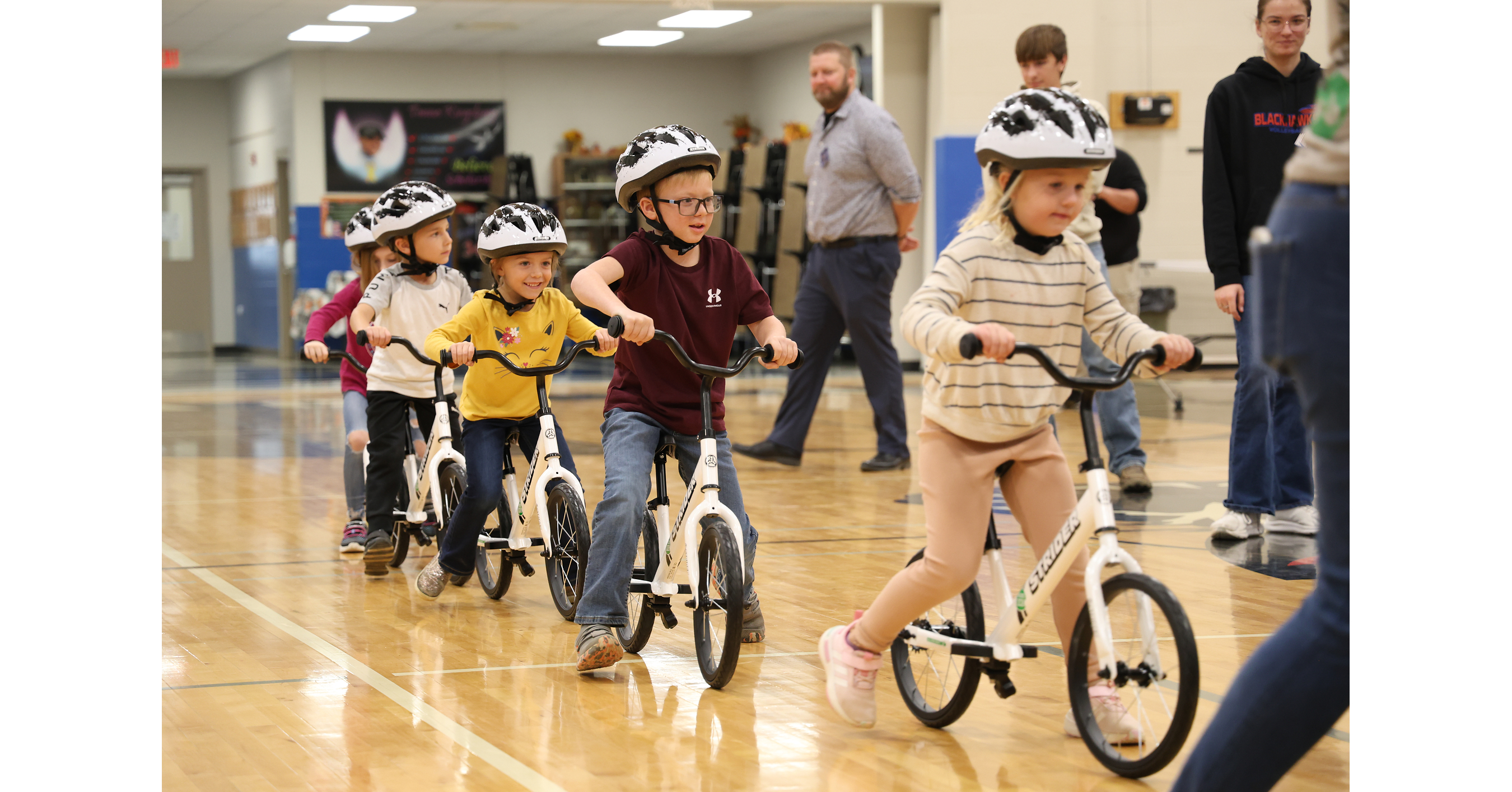
All Kids Bike increased the price of its Kindergarten PE Learn-to-Ride program from $9,000 to $10,000 effective October 1, citing a vendor price rise from Strider Sports International and higher fuel/transportation costs. The company will add STEM lesson plans for participating schools while honoring existing grants and purchase orders at the $9,000 rate through current agreements, and crowdfunding access remains available at $9,000 through Dec. 31, 2026.
Analysis
This is a classic low-signal, high-noise price pass-through event: the economic impact is too small to matter for broad markets, but it does reveal that even grant-supported, quasi-nonprofit education products are not insulated from logistics and supplier inflation. The immediate risk is not demand collapse; it is that school procurement is budget- and calendar-driven, so the first real test is the next enrollment window, not the press release date. If adoption holds through Q4 despite the 11% sticker increase, the market should infer fairly inelastic demand for hands-on STEM enrichment.
The second-order issue is competitive positioning. If the bundled STEM content actually lifts classroom utility, the price hike may be partly value-accretive rather than purely inflationary, because it raises the program’s attach rate against alternative PE/curriculum spending. The bigger losers would be smaller school-based enrichment vendors without procurement lock-in or a grant pipeline, since they will have less ability to pass through transport and input cost increases without cutting adoption. Any public-market readthrough is therefore more about K-12 discretionary budget sensitivity than about bikes specifically.
Contrarian view: the consensus may over-interpret this as a sign of weakening demand. The existence of price protection for existing grants and crowdfunding through year-end suggests management is trying to avoid churn at the exact point where schools are already committed, which reduces near-term downside. What would falsify the bullish interpretation is a visible slowdown in new applications or grant conversions after Oct. 1; that would imply the price point is closer to the budget ceiling than management believes.
AllMind Terminal
AI-powered research, real-time alerts, and portfolio analytics for institutional investors.
Request TrialMarket Sentiment
Overall Sentiment
mildly negative
Sentiment Score
-0.12
Key Decisions for Investors
- No direct equity trade: the revenue footprint is too small and there is no listed pure-play beneficiary; treat this as a watch item rather than a portfolio position.
- Set an alert on school-application cadence through Q4 2026: if new submissions fall materially after Oct. 1, infer price sensitivity and avoid extrapolating this as a broader K-12 spend tailwind.
- If looking for a proxy trade, stay neutral on education/service names most exposed to discretionary school budgets until budget season data confirms resilience; there is not enough signal here to justify a long consumer-discretionary basket.
- Monitor freight/fuel-sensitive input-cost commentary from adjacent small-cap education suppliers over the next 1-3 months; this is a micro sign that pass-through is still happening at the low end of the market.
More News
- Why is T-Mobile stock tumbling today?
- Why is Verizon stock sliding today?
- SpaceX wants to become a 'major mobile carrier' with low-band spectrum acquisition
- OpenAI projected to bring in $20bn less in revenue than expected
- Soitec climbs 7% as BofA turns bullish on silicon photonics demand
- Schott Pharma drops after Deutsche Bank downgrades on demanding valuation