
StimCardio Closes Oversubscribed $30 Million Series A Financing to Advance Wearable Therapeutic for Atrial Fibrillation
Source: PR Newswire
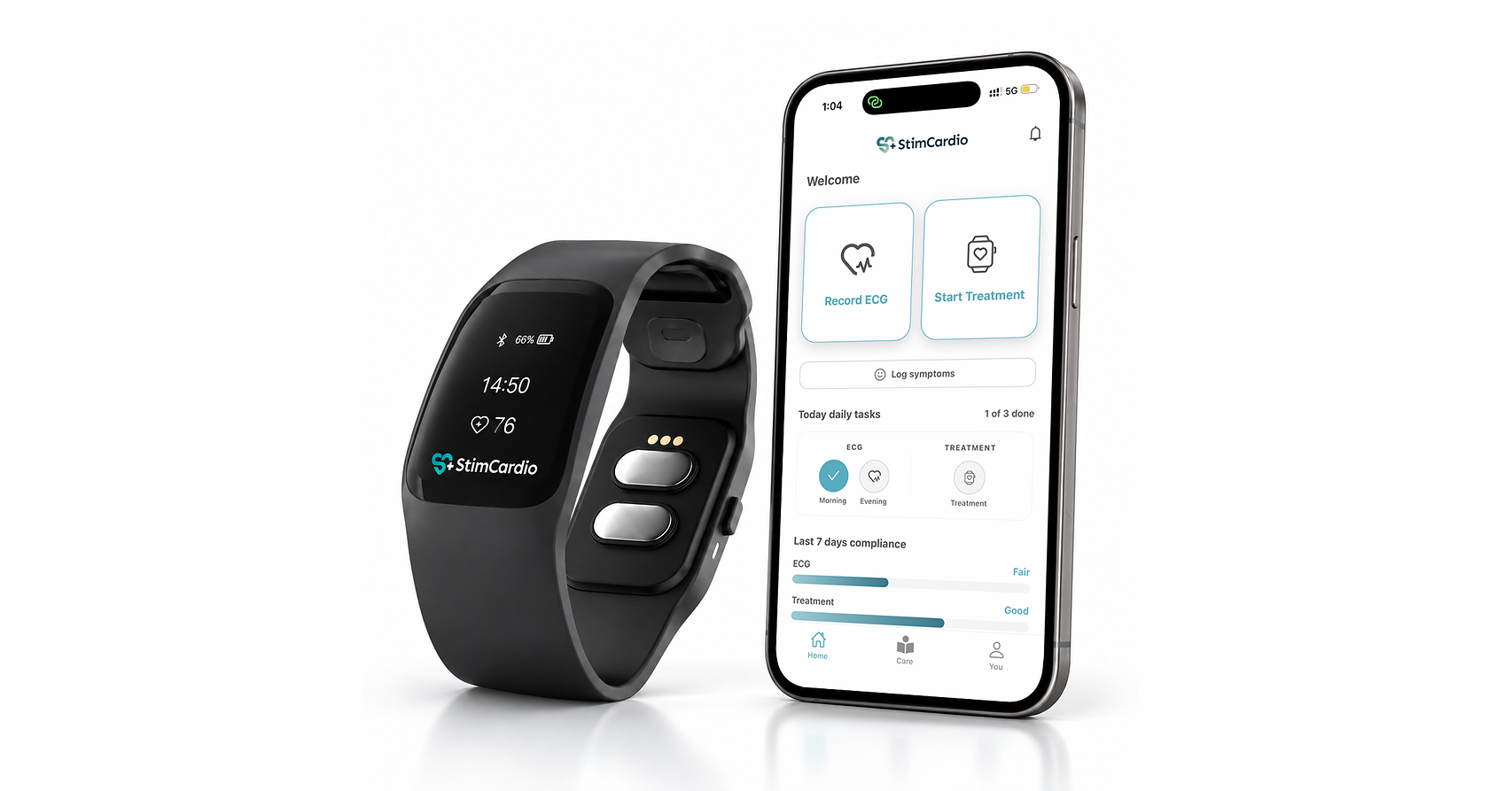
StimCardio closed an oversubscribed $30 million Series A led by Metis Medtech to fund its planned NeuroPulse 2 multicenter pivotal trial and preparation for an FDA De Novo submission. The financing follows a peer-reviewed, randomized NeuroPulse 1 pilot study that reported a statistically significant reduction in recurrent atrial-arrhythmia events after ablation with active median nerve stimulation versus sham; the investigational wearable has not yet established efficacy in a pivotal trial.
Analysis
The investment case is now a clinical-execution option, not a near-term commercial read-through. A controlled pilot can justify funding a pivotal trial, but it does not establish a durable effect size, home-use adherence, or a clinically meaningful endpoint that regulators and electrophysiologists will accept. The key valuation step-up—if any—depends on NeuroPulse 2 design quality, enrollment, follow-up duration, and results, none of which are specified here. The Series A reduces the immediate financing overhang only conditionally: verify the company’s burn, trial budget, and whether the stated runway includes FDA-submission preparation.
Competitive impact is more likely complementary than displacement: if the device reduces recurrence after ablation, it could strengthen the value proposition of ablation platforms rather than replace them. That could benefit established electrophysiology suppliers such as Boston Scientific, Medtronic, Abbott, and Johnson & Johnson indirectly, although the clinical and commercial linkage is too remote for a trade today. Conversely, a proven home adjunct could shift some differentiation from procedure-room hardware toward post-procedure care and create a new adoption hurdle for ablation providers.
Near term, the financing headline may lift private-market sentiment, but there is no listed StimCardio security and no clean public-market proxy. Over 1–3 months, focus on pivotal protocol, enrollment initiation, and endpoint details. Over 6–18 months, the binary risks are trial execution, reproducibility beyond the pilot, usability/adherence, FDA pathway, and reimbursement. The contrarian point: a large unmet need and positive pilot are not equivalent to addressable revenue; the market may over-credit early efficacy before pivotal evidence and workflow economics are known.
AllMind Terminal
AI-powered research, real-time alerts, and portfolio analytics for institutional investors.
Request TrialMarket Sentiment
Overall Sentiment
moderately positive
Sentiment Score
0.45
Key Decisions for Investors
- No direct public-equity trade: StimCardio is private and the article supplies no ticker. Do not treat the financing or pilot result as an earnings catalyst for ablation-device companies.
- Add StimCardio to a clinical watchlist; request the NeuroPulse 2 protocol, primary endpoint, planned sample size and follow-up, enrollment timeline, and an independently reviewable pilot effect-size and safety profile before assigning meaningful probability of success.
- Use pivotal-study milestones as the next decision points. A protocol or enrollment delay, a less rigorous endpoint, or evidence that the claimed runway excludes trial completion would weaken the thesis; a well-powered design and timely enrollment would improve it but would not resolve efficacy risk.
- Reassess only after pivotal readouts: a missed primary endpoint or materially weaker effect than the pilot falsifies the efficacy thesis; positive results still require evidence of adherence, clinical relevance, FDA acceptance, and a workable reimbursement pathway.
More News
- DoorDash offers $17 billion for Instacart: ‘the largest companies are only eating more and more of the pie’
- Alphabet Erases $500 Billion as ChatGPT, Google AI Cut into Search
- Alphabet just had its worst day as a public company. BofA now values Google search at a lower multiple than fossil fuel stocks
- Alphabet’s stock has worst day in over 20 years, dragging the S&P 500 to first loss in four days
- Warren urges DOJ criminal probe of Bank of America over anti-money-laundering violations
- PC chip plunge wipes out a quarter of Intel’s value
From AllMind Research
- AllMind Platform Feature Updates - Fall 2026
- AI Credit Covenant Monitoring: From Clause to Review
- AI-Led Expert Interviews vs. Transcript Libraries
- AI for Investment Thesis Validation: A Claim-Ledger Method
- Capital Intensity as Gravity: The AI Trade Enters Its Industrial Era (Looking at Q3 2025 Earnings in Tech)