
Переосмысление ценности сетей для нового роста в эпоху искусственного интеллекта
Source: PR Newswire
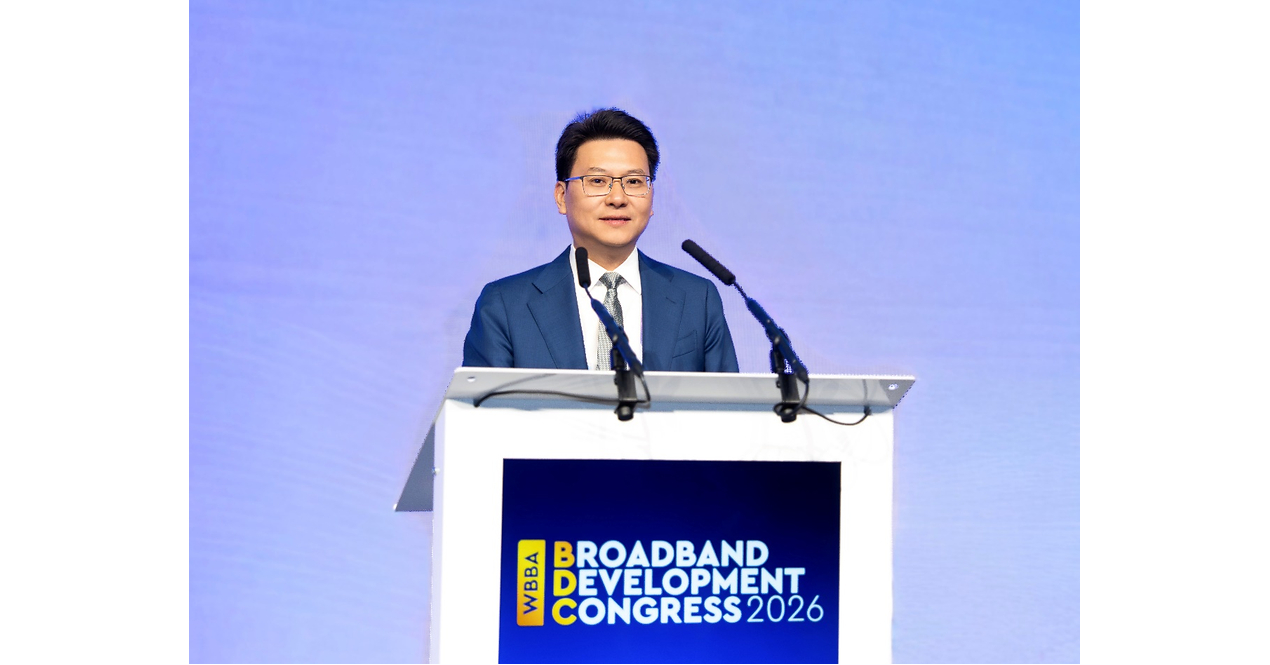
At the WBBA Broadband Development Congress in Vienna, Huawei optical-products business president Bob Chen urged telecom operators to rebuild network architecture around AI data centers, reshape offerings beyond bandwidth, and use AI for network operations. The article says AI data-center numbers have increased nearly 10-fold and AI token consumption nearly 50-fold over the past year; Huawei examples include about 20% higher Wi-Fi speeds under interference and more than 20% lower equipment power consumption using AI. The remarks outline industry opportunities but disclose no financial results or specific commercial commitments.
Analysis
The investable signal is a possible mix shift from commoditized bandwidth toward optical interconnect, low-latency services and network automation—not proof of an industry-wide AI capex cycle. If data-center-to-data-center traffic becomes the planning anchor, optical transport and routing suppliers (including Ciena, Nokia and Cisco) could gain; traditional access and regional-network spend may lose share. Operators benefit only if customers pay for latency/reliability guarantees or bundled compute: otherwise they absorb upgrade costs while bandwidth remains price-competitive. AI-driven O&M could improve margins, but vendor-reported efficiency gains need independent operator evidence; savings may also be competed away through lower prices.
Near term, this is promotional conference commentary, not an order or guidance signal. Over 1–3 months, watch operator capex plans, optical-network order trends and evidence of paid enterprise SLAs. Over 6–18 months, successful monetization could support better network returns; failure to secure premiums leaves operators with higher capital intensity and uncertain returns. A second-order risk is that more efficient routing and O&M defer replacement spend, partly offsetting new AI interconnect demand. The contrarian point: traffic growth does not automatically translate into telecom pricing power. Treat the thesis as conditional; the claims and examples cited by Huawei are not independent proof of realized savings or customer willingness to pay.
AllMind Terminal
AI-powered research, real-time alerts, and portfolio analytics for institutional investors.
Request TrialMarket Sentiment
Overall Sentiment
mildly positive
Sentiment Score
0.15
Key Decisions for Investors
- No immediate trade on this announcement alone. Keep optical transport and networking suppliers, including Ciena, Nokia and Cisco, on a watchlist; seek confirmation in orders and operator capex guidance before adding exposure.
- Consider a relative-value tilt toward optical transport/networking over legacy access equipment only if multi-quarter orders show AI/data-center interconnect spending is incremental rather than a reallocation of existing budgets. Reassess if supplier guidance or operator capex plans weaken.
- For telecom operators, treat AI connectivity as a margin catalyst only where paid latency/reliability SLAs or compute-network bundles are disclosed. Track service mix, realized pricing and capex intensity; rising traffic without premium pricing would falsify the monetization thesis.
- Verify the cited O&M energy and Wi-Fi improvements with operator deployments and reported opex outcomes. If savings fail to appear, or are passed through as lower prices, do not underwrite margin expansion.
More News
- Why did CoreWeave stock get crushed this week? Look to this corner of the debt market for clues
- AI stock sell-off ramps up over debt-fueled data center spending fears: ‘Full-blown crisis of confidence'
- Dow falls 189 points as AI stocks slide and oil prices surge
- Wall Street Anxiety Spreads as AI Rout Meets $110 Oil Shock
- Wall Street's fear gauge is ripping. Traders see it going even higher
- All the news about the iPhone Duo
From AllMind Research
- Anthropic IPO Preview: Valuation, Timing, and What to Watch
- Shein After the IPO: Venue, Valuation, and What Must Be Proved
- What AI Research Tools Should a Small Hedge Fund Buy First?
- Can ChatGPT or Claude Replace a Research Platform?
- How the 2026 Milan-Cortina Winter Olympics Will Reshape Company Revenues and Stock Performance