
Insurance Expert Kathy Powell Explains When You Actually Need Life Insurance in HelloNation
Source: PR Newswire
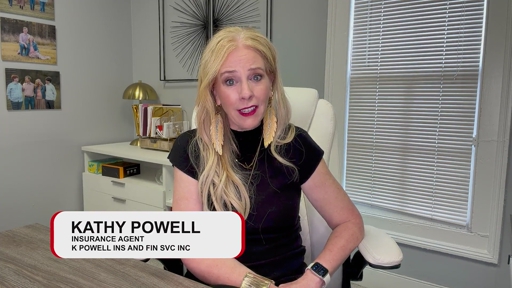
HelloNation published an educational article on life-insurance planning, advising consumers to obtain coverage early, assess needs based on debt and income replacement, and review beneficiaries after major life events. The article contrasts lower-cost term policies with permanent insurance that may accumulate cash value, but contains no company-specific financial results, market-moving data, or sector catalyst.
Analysis
This is paid/earned educational content rather than a carrier disclosure, distribution-data point, or underwriting update; it has no independently verifiable read-through to new business volumes, persistency, investment income, or capital returns. The appropriate base case is no market impact. Broad life-insurance demand is driven far more by employment, household formation, mortgage activity, consumer confidence, and distribution capacity than by generic awareness content.
The only plausible second-order implication is modest support for term-life lead generation, where digitally oriented distributors and direct-to-consumer platforms can convert younger households at lower acquisition cost. That benefit would be diffuse and immaterial absent evidence of search-traffic growth, quote starts, conversion rates, or carrier application volume. Permanent-life carriers face the opposite sensitivity: sales depend materially on crediting rates, illustrated returns, agent incentives, and affordability, none of which this item changes.
Over 6-18 months, a sustained shift toward earlier policy purchases would be structurally favorable for mortality-risk writers because younger issue ages typically produce longer-duration premium streams and better underwriting selection. But it could also increase competitive pressure in simplified-issue term products, where online aggregators and insurtech distributors commoditize pricing and raise marketing spend. A meaningful thesis would require confirmation in LIMRA application data, carrier sales disclosures, or digital lead-cost trends; until then, treating this as a demand catalyst risks confusing promotional reach with insurance purchasing intent.
Contrarian view: the likely investor mistake is extrapolating consumer-finance education into a carrier-volume signal. In a pressured consumer environment, awareness may increase quote shopping rather than bind rates, benefiting comparison/distribution channels before underwriters. Falsify the neutral stance only if multiple public carriers report accelerating individual-life sales and stable acquisition costs in the next two earnings cycles.
AllMind Terminal
AI-powered research, real-time alerts, and portfolio analytics for institutional investors.
Request TrialMarket Sentiment
Overall Sentiment
neutral
Sentiment Score
0.05
Key Decisions for Investors
- No standalone trade: do not alter positions in life insurers or insurance distributors based on this item; the stated impact lacks a measurable revenue or margin transmission mechanism.
- Create a 1-3 month watchlist around MET, PRU, LNC and protective peer RGA for quarterly disclosures on individual-life sales, new-business margins, lapse rates and distribution expense; act only on a broad-based acceleration rather than a single-company marketing claim.
- Monitor insurance-shopping indicators and digital customer-acquisition costs for SelectQuote (SLQT) and eHealth (EHTH). A sustained rise in quote traffic coupled with declining CAC would support a distribution-led long thesis; rising traffic with flat conversion would instead signal intensified price shopping and no actionable carrier read-through.
- For a macro-linked expression rather than an article-driven trade, revisit long RGA versus short a higher-expense direct-distribution proxy only if application volumes improve while underwriting margins remain stable for two consecutive reporting periods; thesis fails if adverse mortality or lapse deterioration offsets volume growth.
More News
- Meta announces new lightweight virtual reality glasses to one-up Apple’s Vision Pro
- Here's what happens to the economy when Treasury yields soar like they are now
- Oil industry warns a diesel export ban will raise fuel prices as Trump weighs restrictions
- Meta's standoff with Amazon over Muse could be a sign of things to come
- Why ASEAN’s coming digital economy trade agreement deserves your attention
- How a Diesel Export Ban Could Impact US Fuel Prices