
BloodCOMM®: The Digital Infrastructure Powering the Next Generation of Blood Management
Source: PR Newswire
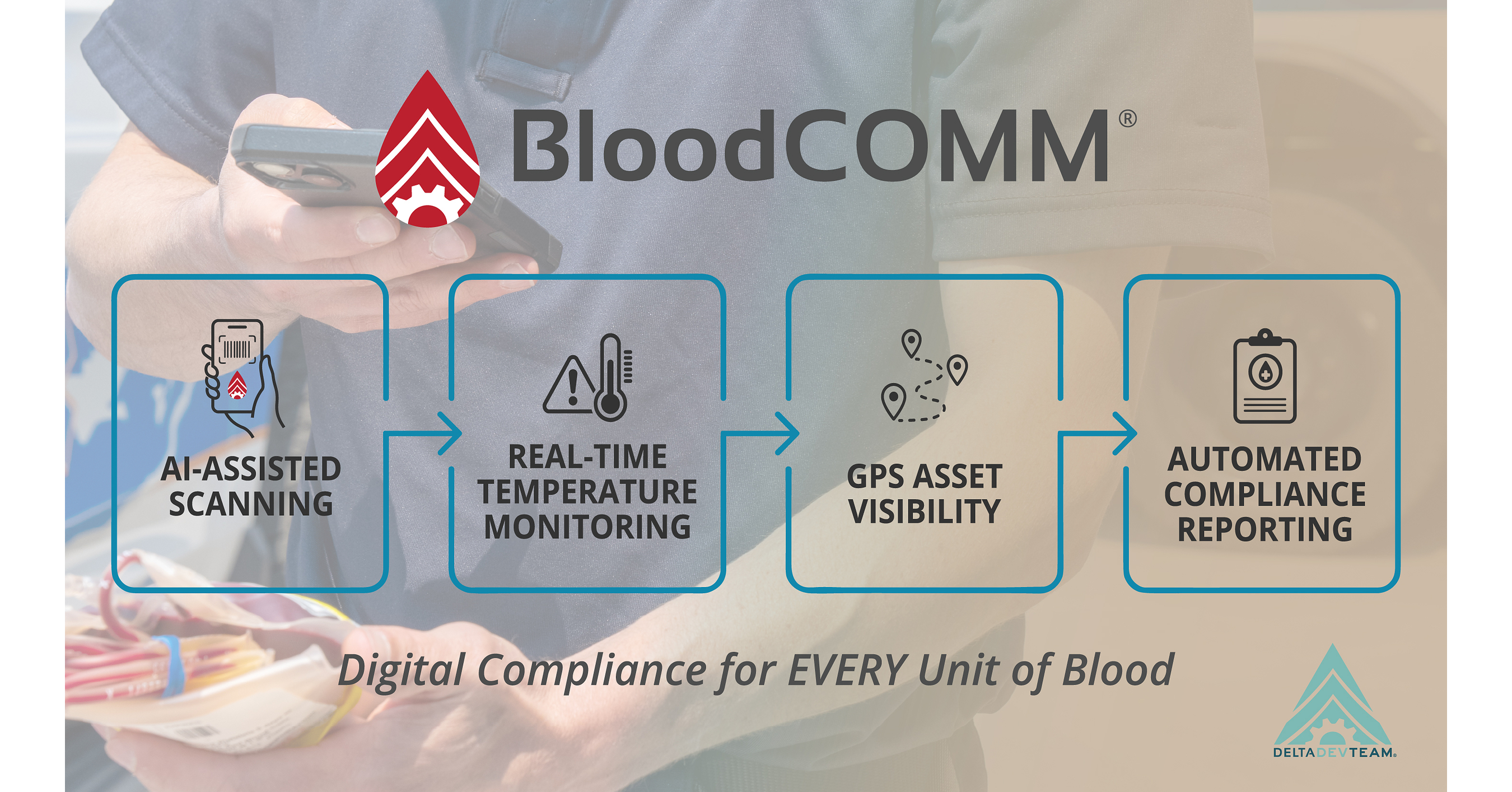
Delta Development Team promoted BloodCOMM, a cloud-based blood-management platform that tracks blood units from collection through disposition using AI-assisted scanning, automated workflows, real-time monitoring, GPS-enabled visibility, and cold-chain intelligence. The company says the platform can reduce manual documentation, improve compliance and traceability, and help hospitals, EMS providers, air-medical programs, and statewide networks manage blood inventory and reduce waste; no financial metrics, customer wins, or deployment figures were disclosed.
Analysis
This is a private-company product announcement with no disclosed customer contracts, pricing, recurring-revenue metrics, validation data, or integration partnerships; it is not independently investable in its current form. The nearer public-market read-through is modestly favorable for healthcare workflow digitization, but the addressable prehospital blood-management niche is unlikely to move earnings for broad EHR vendors such as ORCL or VEEV within the next 12-18 months.
The more relevant second-order implication is procurement: connected custody, temperature, and audit trails shift value from standalone storage hardware toward interoperable software-plus-device ecosystems. That can create pressure on pure-play cold-chain equipment vendors if hospital systems increasingly specify unit-level tracking and network compatibility, but adoption will be constrained by integration with blood-bank information systems, cybersecurity review, and fragmented EMS purchasing cycles. Reimbursement or trauma-outcome claims should not be underwritten without peer-reviewed evidence linking the platform itself to reduced wastage, labor expense, or compliance events.
No immediate trade is warranted. Over the next 1-3 months, monitor whether DDT discloses statewide contracts, named blood-center integrations, FDA/regulatory milestones where applicable, or quantified reductions in expired-unit waste; those datapoints would determine whether this is a credible category expansion rather than routine product marketing. Over 6-18 months, broader digitization could favor scaled hospital IT incumbents if they bundle traceability into existing workflow platforms, while small proprietary-device vendors face customer-concentration and procurement-cycle risk.
AllMind Terminal
AI-powered research, real-time alerts, and portfolio analytics for institutional investors.
Request TrialMarket Sentiment
Overall Sentiment
mildly positive
Sentiment Score
0.28
Key Decisions for Investors
- No position: do not treat the release as a catalyst for ORCL, VEEV, or healthcare IT ETFs; the financial linkage is too indirect and the disclosed impact is immaterial.
- Create a watch alert for disclosed multi-state EMS or blood-center deployments and quantified annual recurring revenue or unit-economics data; revisit only if adoption demonstrates repeatable network effects rather than individual-device sales.
- For any future public comparables in blood-storage/cold-chain hardware, diligence interoperability requirements and software attachment rates before underwriting revenue: a shift to integrated procurement could compress hardware-only multiples over 6-18 months.
- Thesis falsifier for the digitization read-through: lack of named integrations, security approvals, or conversion from pilots to enterprise contracts over the next 12 months would indicate that operational complexity remains a sales barrier rather than a demand catalyst.
More News
- Here’s the ‘core economic flaw’ in the AI bull case as stock and bond trades unravel, according to a top economist
- 5 big analyst AI moves: ’Uniquely catalyst-rich’ months ahead for SpaceX
- The experience economy keeps defying expectations. Maybe we’ve been looking at it all wrong
- Brookfield to open Qatar office as it expands Middle East operations
- Xencor reports phase 1 data for cancer drug XmAb819
- The U.S. military and NASA have power problems. Nuclear microreactors might solve both
From AllMind Research
- Anthropic IPO Preview: Valuation, Timing, and What to Watch
- Shein After the IPO: Venue, Valuation, and What Must Be Proved
- What AI Research Tools Should a Small Hedge Fund Buy First?
- Alternative Data Due Diligence for Institutional Investors
- Introducing AllMind: A New Data & AI Workspace for Institutional Investors