
Pie Medical anuncia los resultados del ensayo LIPSIA-STRATEGY en revascularización
Source: PR Newswire
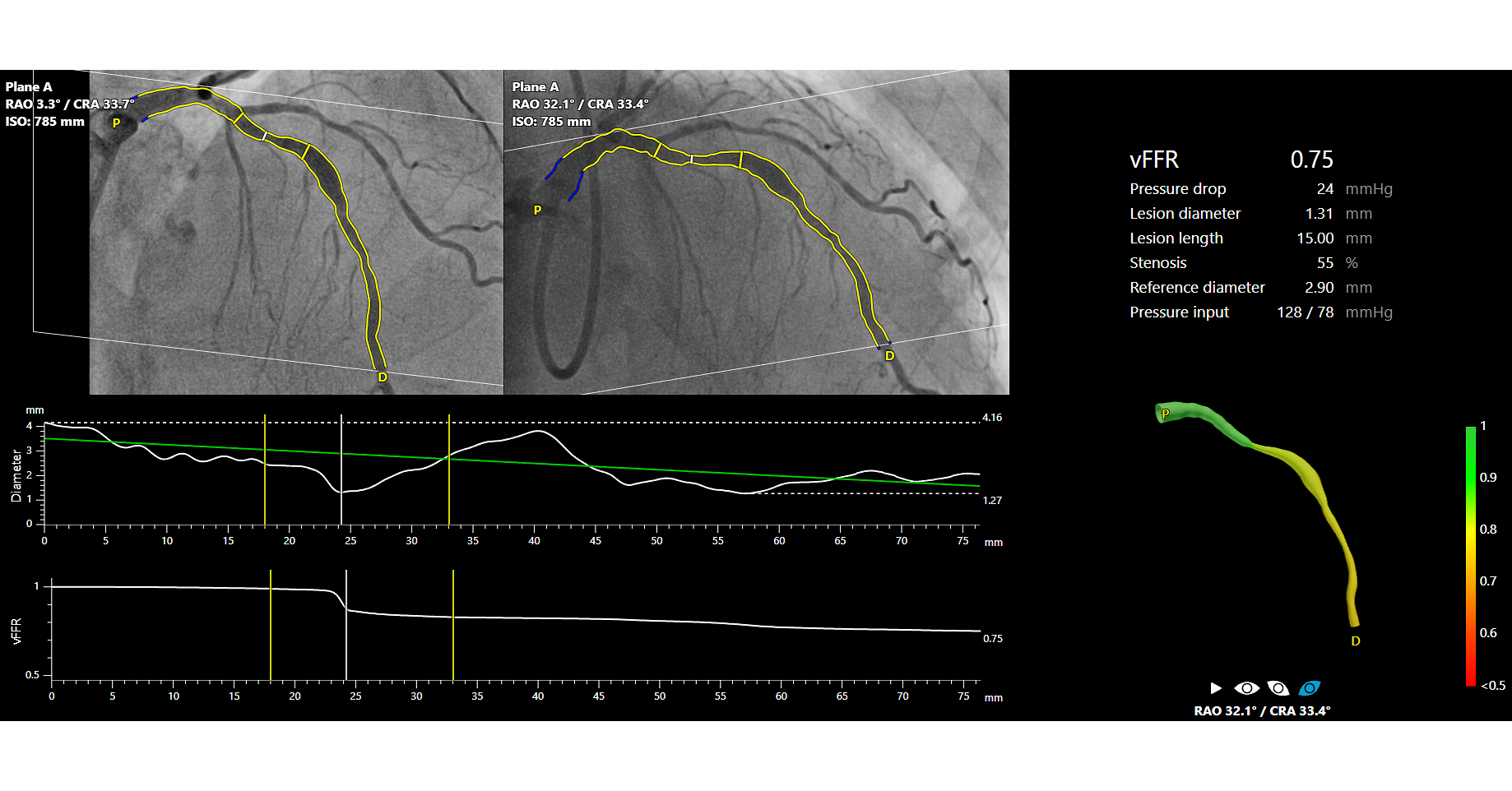
El ensayo aleatorizado LIPSIA-STRATEGY, con 1.053 pacientes, alcanzó su objetivo principal y demostró que la revascularización guiada por CAAS vFFR no fue inferior a la guiada por FFR mediante guía de presión en los resultados clínicos a un año. Los hallazgos, presentados en TCT 2026 y publicados en JACC, refuerzan de forma independiente la evidencia previa de FAST III. Pie Medical Imaging también destacó un flujo de trabajo menos invasivo, con menor duración del procedimiento y menor tiempo de fluoroscopia; el artículo no cuantifica las diferencias en resultados ni el impacto comercial.
Analysis
The commercial implication is lower procedural friction, not proof of a near-term revenue step-change. If clinicians can make the same revascularization decision without a pressure wire, angiography-derived physiology could reduce equipment use and procedure time while making physiological assessment easier to deploy. That may pressure pressure-wire suppliers such as Abbott at the margin, but any lost wire sales could be partly offset if simpler assessment expands testing or PCI planning. The trial does not establish that broader adoption will follow: noninferiority is not superiority, and one-year outcomes do not resolve performance across complex lesions, centers, or longer follow-up. The workflow advantages are company-reported; independent evidence on procedure duration, radiation, total cost, and real-world utilization should be verified.
Near term, expect attention rather than a clean earnings catalyst. Over 1–3 months, watch guideline or conference interpretation, reimbursement, and hospital procurement decisions. Over 6–18 months, the key question is whether software integrates into existing cath-lab workflows and captures recurring placements or licenses. Pie Medical Imaging is part of Esaote, but the supplied data provides no listed-company mapping or financial exposure; do not translate clinical validation into a public-equity earnings estimate. The contrarian risk is that investors overread a positive trial: entrenched workflows, competing angiography-derived tools, and limited reimbursement differentiation could blunt adoption.
AllMind Terminal
AI-powered research, real-time alerts, and portfolio analytics for institutional investors.
Request TrialMarket Sentiment
Overall Sentiment
moderately positive
Sentiment Score
0.50
Key Decisions for Investors
- No immediate directional trade: the clinical signal is constructive, but the article provides no adoption, pricing, reimbursement, or revenue data to size a public-market earnings impact.
- Set an adoption watch on Pie Medical Imaging and Esaote: seek evidence of guideline inclusion, reimbursement coverage, hospital conversions, recurring software revenue, and independent real-world workflow or cost outcomes.
- Monitor Abbott and other pressure-wire suppliers for any indication that angiography-derived physiology is reducing wire utilization; treat this as a gradual competitive risk, not a near-term earnings short.
- Falsification check: if follow-up data, guideline reviews, or real-world studies reveal weaker outcomes in relevant patient subsets—or if hospitals do not adopt despite favorable evidence—the expected workflow-driven substitution thesis weakens.
More News
- Binance co-CEO Richard Teng says hackers used fake job interviews, AI tool to steal $6.3 billion in crypto 108511116
- AMD stock jumps 7% on earnings as data center revenue nearly doubles
- Marvell-Lumentum Deal Puts Optical Networking at the Center of the AI Boom
- Marvell Technology could plunge on latest multibillion-dollar acquisition
- Disney Plans Thousands of Layoffs Companywide
- AI Inference Startup Fal Raises Capital at $16 Billion Valuation