
FROM FOREST TO FREEZER: JENI'S DEBUTS APPALACHIAN ACORN PIE AFTER FIVE YEARS OF INNOVATION
Source: PR Newswire
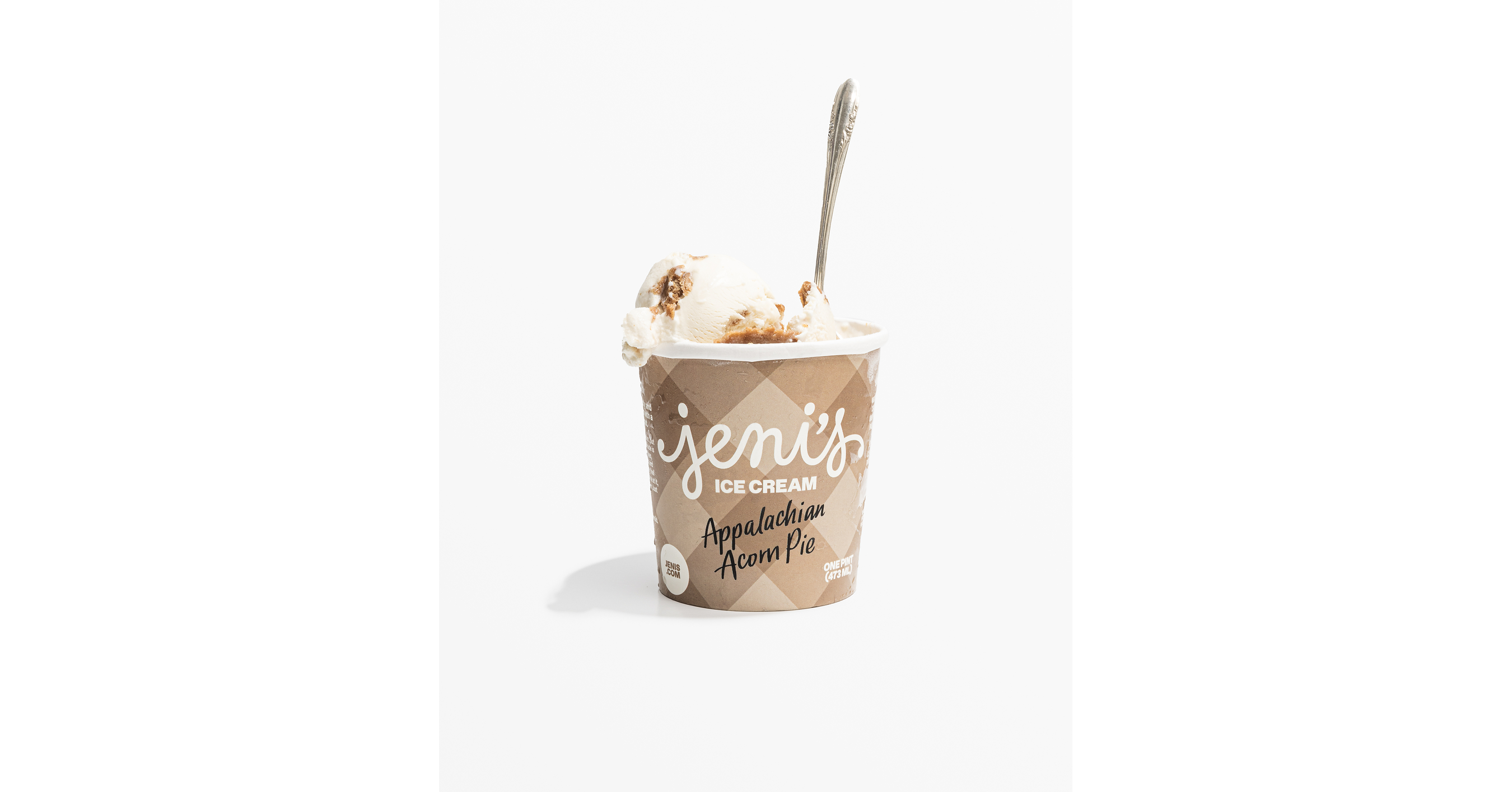
Jeni's Ice Creams launched Appalachian Acorn Pie, a very limited-edition fall flavor made with flour from foraged and locally milled Ohio acorns. The product follows a five-year development effort in which Jeni's built a new supply chain with Ohio agricultural cooperative Route 9 Action Network after international sourcing failed. The flavor is available from October 1 online and across Jeni's nationwide scoop shops while supplies last.
Analysis
This is not investable as a standalone catalyst: Jeni's is private, the product is supply-constrained, and the input is unlikely to move dairy, packaged-food, or retail earnings. The more relevant read-through is that premium food brands are increasingly using localized, traceable inputs as a customer-acquisition and pricing-power tool rather than as a scalable cost advantage. For public peers, this supports the premiumization narrative at McCormick (MKC), The J. M. Smucker Co. (SJM) and Mondelez (MDLZ), but the economic contribution from similarly experimental launches is immaterial absent evidence of sustained velocity or repeat purchase.
The second-order risk is operational rather than demand-led: bespoke agricultural inputs create variable yield, processing, food-safety, and labor-cost exposure that cannot be efficiently hedged. If consumers reward provenance but reject price increases, these products become marketing expense disguised as innovation; this matters most to smaller premium brands with less procurement scale. Over 6-18 months, successful consumer response could encourage grocers to allocate more shelf space to differentiated regional brands, marginally raising competitive pressure on mainstream frozen-dessert portfolios, including Unilever (UL) and The Hershey Company (HSY).
Contrarian view: investors often over-credit artisanal launches as proof of broad premium-consumer resilience. A sellout in a deliberately limited run measures scarcity and earned-media reach, not scalable demand elasticity. The actionable signal would be follow-on evidence that premium frozen-dessert velocity remains resilient despite promotional normalization and that retailers expand permanent distribution; without that data, there is no trade.
AllMind Terminal
AI-powered research, real-time alerts, and portfolio analytics for institutional investors.
Request TrialMarket Sentiment
Overall Sentiment
mildly positive
Sentiment Score
0.25
Key Decisions for Investors
- No position on this release; treat it as a consumer-premiumization anecdote rather than an earnings catalyst.
- Monitor UL and HSY over the next 1-3 months for frozen-dessert category scanner data, retailer shelf-space changes, and gross-margin commentary; consider a tactical underweight only if premium challengers gain distribution while category promotional intensity rises.
- Watch MKC and SJM for evidence that differentiated seasonal launches support mix-led pricing without incremental trade spend. A sustained 100-200 bp improvement in organic sales growth versus volume would validate premiumization; weak volume despite higher mix would falsify it.
- For a broader consumer-demand read-through, use quarterly Nielsen/IRI frozen-dessert velocity and household penetration data rather than limited-run sellout reports; do not extrapolate scarcity-driven online demand into public-equity revenue forecasts.
More News
- US to send third aircraft carrier towards Iran: US official to Al Jazeera
- Trump says US may ask Europe to release diesel reserves
- Latin America most exposed to any US ban on diesel exports, Goldman Sachs says
- Oil holds gains as U.S. weighs more Middle East military presence
- Nvidia Faces Questions Over China AI Chip Smuggling Cases
- ‘They’ll be hit very hard’: Trump sends roughly 9,000 troops and a third aircraft carrier to the Middle East after warning strikes on Iran
From AllMind Research
- Anthropic IPO Preview: Valuation, Timing, and What to Watch
- Shein After the IPO: Venue, Valuation, and What Must Be Proved
- What AI Research Tools Should a Small Hedge Fund Buy First?
- What Is an AI Research Agent?
- Bitcoin's 52% Crash Proves It's a Tech Stock: Here's What That Means for Portfolio Construction