
Hanshow, shopreme und Lucky Cart stellen neue Smart-Cart-Lösung vor, um das Einkaufserlebnis zu verbessern und das Wachstum im Einzelhandel zu fördern
Source: PR Newswire
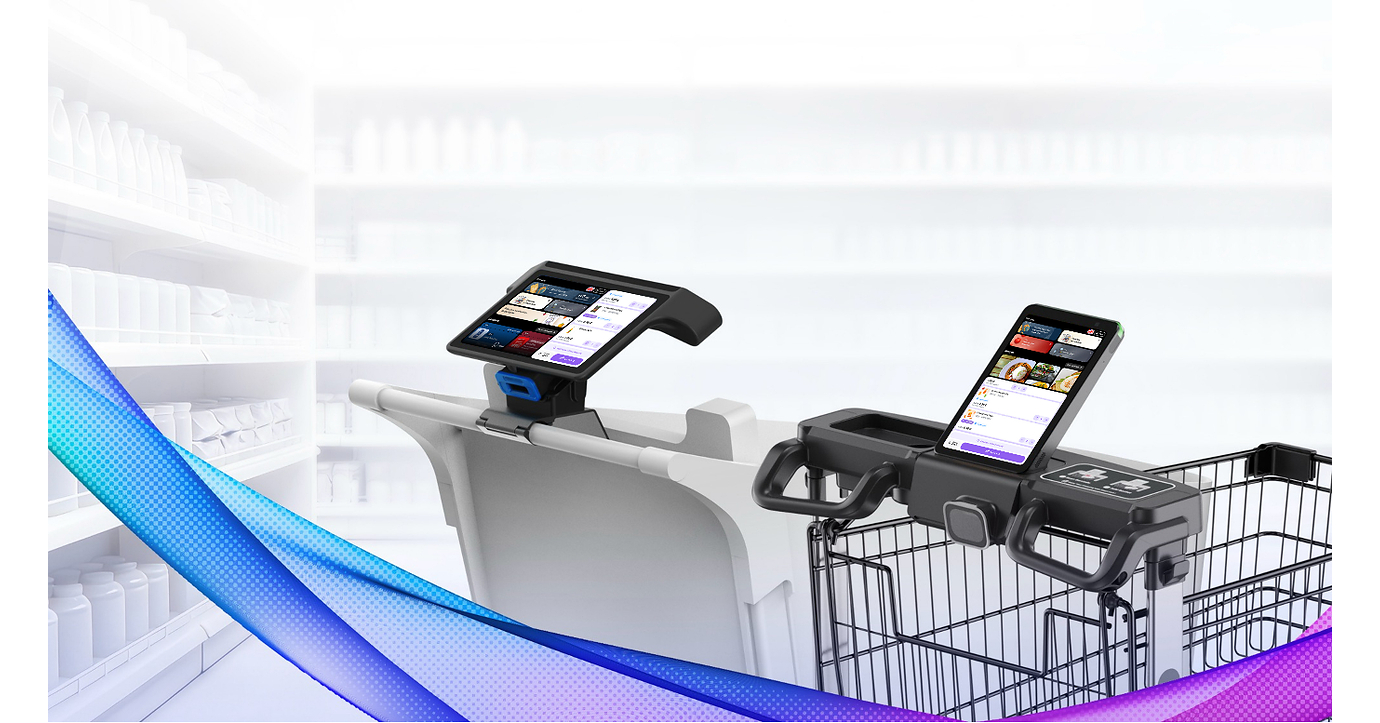
Hanshow, shopreme und Lucky Cart haben eine integrierte Smart-Cart-Lösung für den stationären Handel vorgestellt, die KI-gestützte Einkaufsassistenz, Indoor-Navigation, Self-Checkout, Verlustprävention und Retail Media kombiniert. Die Plattform ist als vollständig integrierter Wagen mit waagenbasierter Verlustprävention oder als Retrofit-Lösung mit KI-Kameras verfügbar; beide Varianten nutzen dieselbe shopreme-Software und Integration. Für Händler zielt das Angebot auf geringere Checkout-Reibung, bessere Betriebsdaten und zusätzliche Retail-Media-Erlöse, während Marken Closed-Loop-Messung und personalisierte Promotions am Point of Purchase erhalten.
Analysis
This is not yet an investable catalyst: the vendors are private and there is no disclosed retailer deployment, unit economics, contracted recurring revenue, or shrink-performance data. The relevant public-market read-through is to grocery and mass merchants with high labor and checkout-friction exposure, but their returns depend on whether loss-prevention accuracy is sufficient to avoid trading labor savings for higher shrink. A smart-cart rollout also shifts store economics from capex-only automation toward a potential recurring retail-media revenue stream, although advertiser demand will require independently verified incrementality rather than closed-loop attribution claimed by the platform.
Near term, this increases competitive pressure on NCR Voyix (VYX), Toshiba Tec (6502 JP), and traditional self-checkout providers: a unified cart can reduce demand for fixed lanes and separate in-store digital-signage stacks. Conversely, Zebra (ZBRA) and Diebold Nixdorf (DBD) could participate only if retailers favor retrofit hardware and open integrations; proprietary end-to-end deployments risk disintermediation. For retailers such as Kroger (KR), Ahold Delhaize (AD.AS), Carrefour (CA FP), and Tesco (TSCO LN), the strategic value is strongest where loyalty penetration and supplier-funded media are already mature, but adoption will be constrained by fleet maintenance, sanitation, battery logistics, accessibility, customer opt-in, and organized-retail-crime exposure.
The consensus error would be to extrapolate online-style retail-media margins to carts before utilization is proven. Screen inventory has little value if customers bypass carts, suppress personalization permissions, or perceive promotions as intrusive; meanwhile, any highly publicized theft failure can halt a rollout across an entire chain. Over 6-18 months, the more important implication is data ownership: retailers with integrated loyalty/POS data can monetize the shopper journey, while smaller grocers may face higher technology costs and weaker media fill rates—potentially accelerating share gains for scaled chains.
AllMind Terminal
AI-powered research, real-time alerts, and portfolio analytics for institutional investors.
Request TrialMarket Sentiment
Overall Sentiment
mildly positive
Sentiment Score
0.32
Key Decisions for Investors
- No directional position on the launch. Set an alert for named pilot customers, store count, cart utilization, shrink delta, and retailer-funded versus vendor-funded capex; absent these data, financial impact is not underwritable.
- Monitor VYX for a 1-3 month relative-risk setup versus ZBRA: consider short VYX / long ZBRA only if major grocers disclose cart-scale deployments that substitute fixed checkout lanes. Cover if VYX demonstrates equivalent integrated cart contracts or recurring software attachment.
- Watch KR and AD.AS as potential 6-18 month beneficiaries, not immediate buys: initiate only after a disclosed pilot shows lower front-end labor cost without shrink deterioration and incremental retail-media yield. Falsifier: shrink increases, low loyalty opt-in, or rollout economics requiring material retailer subsidy.
- For European retail-media exposure, favor scaled loyalty operators over pure smart-cart hardware narratives; the economic upside accrues to chains that can sell measurable audience access, not necessarily to the technology supplier.
More News
- Australia’s central bank chief warns inflation risks materialising
- This AI-picked stock jumps 18% on Amazon’s $8 billion power deal
- Asian stocks rise as oil retreat eases inflation fears, BOJ in focus
- California AG Bonta on Paramount-Warner Bros., Meta and AI
- A breakout in the 10-year Treasury yield could hold back stocks if it reaches this level
- How record diesel prices will rip through the U.S. economy. Trucks and rails are only the start
From AllMind Research
- Anthropic IPO Preview: Valuation, Timing, and What to Watch
- Shein After the IPO: Venue, Valuation, and What Must Be Proved
- What AI Research Tools Should a Small Hedge Fund Buy First?
- How the 2026 Milan-Cortina Winter Olympics Will Reshape Company Revenues and Stock Performance
- Can Hedge Funds Use ChatGPT? A Control Framework