
Business leaders rethink capital planning amid shifting investment conditions
Source: PR Newswire
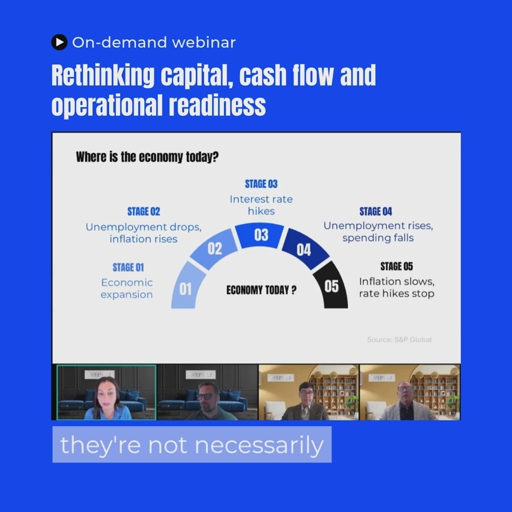
The Wipfli webinar emphasizes disciplined capital allocation in uncertain environments, focusing investments on measurable business outcomes and return. It highlights operational readiness (people, processes, data, and change management) and reliable shared metrics as prerequisites for capturing value from initiatives, including new technology spending. AI is framed as a strategic sequencing decision tied to business lifecycle and workforce/process impacts rather than a standalone tech project; overall guidance is constructive but not market-moving.
Analysis
The real market signal here is not a fresh AI spend surge; it is a tightening of the hurdle rate for AI and tech budgets. That tends to reward vendors that can sit inside existing workflows and prove payback quickly, while punishing names whose valuation depends on broad enterprise adoption or large upfront infrastructure cycles. In practice, this is a dispersion trade: quality platforms and implementation winners should hold up better than “AI story” names if procurement gets more selective.
Second-order, this favors consultative software/services models that help clients clean up data, rework processes, and measure ROI before adding new tools. It is mildly constructive for large incumbents with embedded distribution and cash flow, and less friendly to smaller pure-plays that need multiple quarters of spend to justify their TAM narrative. If budget owners start demanding quantified payback, revenue visibility becomes more important than headline AI exposure.
The catalyst path is 1-3 months, not years: earnings calls, budget resets, and 2026 planning cycles will show whether this discipline is real or just management rhetoric. The thesis is falsified if AI-related bookings, net retention, or capex commentary reaccelerate across the platform cohort, or if falling rates make financing easier and loosen spending discipline. Over 6-18 months, the structural winner should be the companies that convert AI from a line-item into workflow savings, not those selling generic transformation.
AllMind Terminal
AI-powered research, real-time alerts, and portfolio analytics for institutional investors.
Request TrialMarket Sentiment
Overall Sentiment
neutral
Sentiment Score
0.05
Key Decisions for Investors
- Long MSFT / short SMCI for 3-6 months: express the view that AI budget discipline shifts spend toward embedded software and away from hardware-driven capex intensity; target a 10-15% spread if enterprise buyers stay ROI-focused.
- Long IBM or ACN on pullbacks versus a basket of speculative AI names (e.g., AI, PATH) over the next earnings cycle: best risk/reward if clients keep favoring implementation and process redesign over greenfield AI projects.
- Do not chase broad AI beta until next quarter’s guidance confirms actual monetization; treat any rally in high-multiple AI beneficiaries as sellable if sales cycles or deal sizes soften.
- Watch KBWB/KRE only as a follow-on trade: if middle-market clients improve cash-flow visibility and control, bank credit quality can stabilize, but there is not enough direct evidence yet for a position.
More News
- CoreWeave credit default swaps hit distress levels as investors sour on AI debt
- Treasuries Soar as Tech Slump Threatens Growth
- Penske Automotive agrees to be taken private by Penske, Mitsui
- Faraday Copper completes acquisition of BHP’s San Manuel project
- Supermicro promised a new CFO in December 2024. A $2.5 billion smuggling case and a co-founder’s arrest later, it has one
- Blackstone President Jon Gray Bets Big on AI Boom