
India’s Biofuel Mandate Spurs Rush for Waste Cooking Oil to Fuel Trucks to Jets
Source: Bloomberg
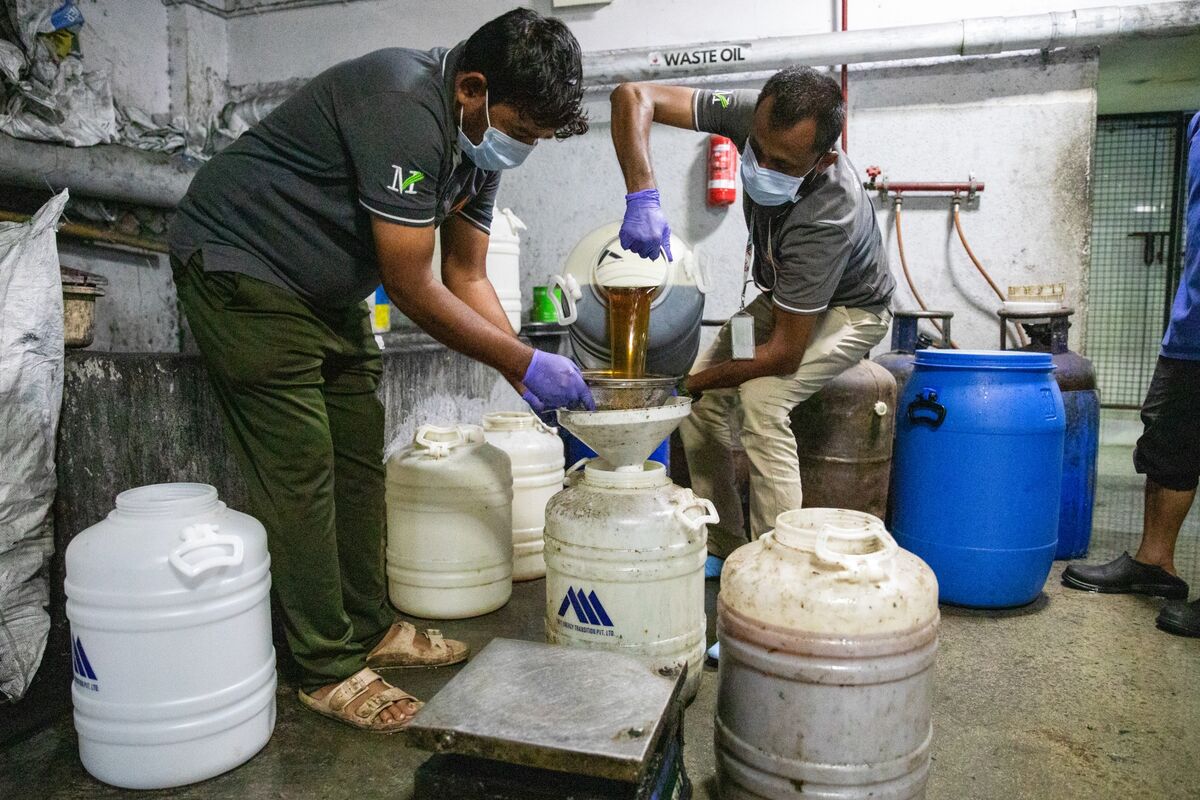
India’s biofuel mandate, aimed at reducing heavy dependence on imported crude, is increasing competition among refiners for used cooking oil. Collectors in Bengaluru are gathering waste fryer oil as a potential feedstock for biofuel, including fuel for the country’s jets; the article provides no production or financial figures.
Analysis
The investable issue is not waste-oil availability in isolation; it is whether a fragmented, low-trust collection network can deliver enough traceable feedstock at a cost that leaves conversion economics viable. If refiners bid up used cooking oil, aggregators and restaurants gain bargaining power, while the feedstock advantage over conventional fuel narrows. A second-order risk is leakage and misclassification: stronger demand can incentivize relabeling virgin oil or diverting material from existing uses, inviting tighter verification and undermining claimed emissions benefits.
Near term (days to weeks), this is a thematic signal, not evidence of earnings revision; no producer volumes, realized feedstock prices, conversion costs, or offtake terms are provided. Over 1–3 months, watch for procurement contracts, capacity-utilization disclosures, and policy details that clarify whether incentives support waste-based aviation fuel specifically or biofuels more broadly. Over 6–18 months, scalable collection, chain-of-custody controls, and reliable conversion economics—not the headline potential—determine who captures value. Aviation demand could create a premium outlet, but the article does not establish commercial-scale jet-fuel output.
Contrarian view: the waste stream may be more constrained and expensive to aggregate than the optimistic narrative implies, so the eventual bottleneck could be feedstock rather than refining capacity. There is not enough company-specific or financial evidence for a directional equity position today.
AllMind Terminal
AI-powered research, real-time alerts, and portfolio analytics for institutional investors.
Request TrialMarket Sentiment
Overall Sentiment
mildly positive
Sentiment Score
0.20
Key Decisions for Investors
- No immediate sector trade on this story alone. Screen Indian refiners and fuel producers only where disclosures establish waste-oil sourcing, conversion pathway, contracted offtake, and material economics; do not infer exposure from broad biofuel ambitions.
- Set a 1–3 month watch for verified collection volumes, feedstock procurement prices, plant utilization, and policy eligibility for aviation fuel. These are the indicators that could turn a narrative into earnings sensitivity.
- Potential relative-value setup, contingent on disclosures: favor refiners with demonstrable, traceable feedstock access over capacity announcements without secured supply. Avoid a broad clean-energy basket trade until commercial output and unit economics are evidenced.
- Falsify the constructive thesis if procurement costs rise faster than realizations, projects fail to secure traceable supply or qualified offtake, or policy support excludes the relevant fuel pathway. Reassess if disclosures show repeatable commercial-scale production.
More News
- Federal Reserve is likely to hold interest rates steady in October. Here's what that means for consumers
- EQT becomes the nation’s leading natural gas ‘juggernaut’ with a $13B deal as data center, export demand surges
- Anthropic plans to spend up to $567 billion on compute. Its IPO prospectus reveals plans to set up its own data centers
- Gold Steadies Above $4,000 With Fed Rate Decision in Focus
- Trump says he'll soon decide whether to ‘make a deal’ with Iran or ‘finish it off'
- Can JetBlue still avoid bankruptcy? Analysis says yes, but it won’t be easy