
Internet2 and Cisco Add AI Capacity to the National Research Platform
Source: PR Newswire
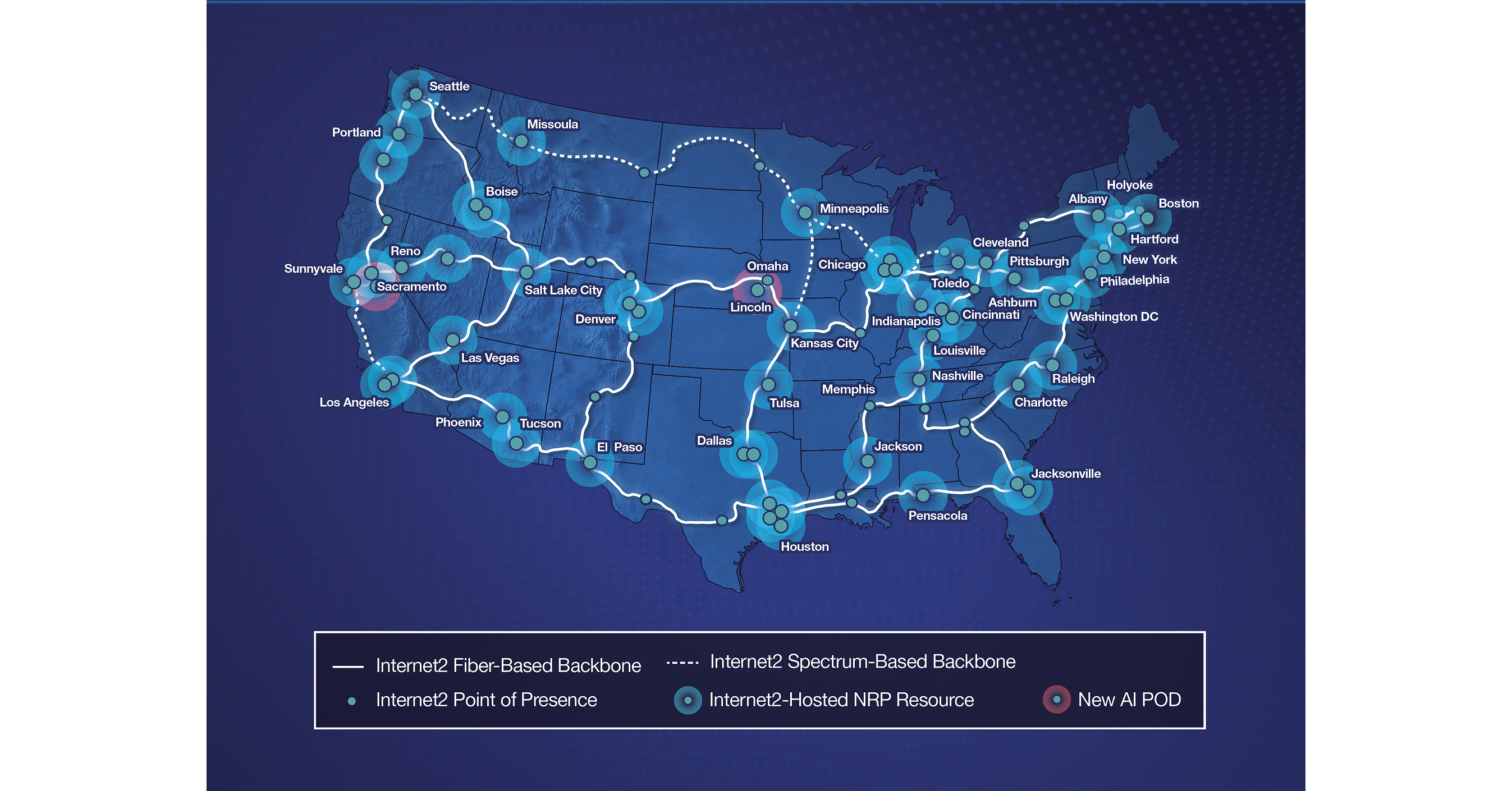
Internet2 and Cisco deployed new AI PODs at the University of Nebraska–Lincoln and Sacramento State, adding shared GPU capacity to the National Research Platform for researchers and students. The modular Cisco infrastructure is intended to reduce deployment and integration complexity for institutions contributing resources to the Kubernetes-based Nautilus platform. The NSF-supported NRP, backed by more than 70 organizations, is expanding distributed AI compute access amid rising research demand and institutional budget constraints.
Analysis
This is strategically positive for CSCO's enterprise-AI positioning but immaterial to near-term revenue or EPS: two academic deployments do not alter the company’s AI infrastructure growth rate. The investable signal is the reference architecture. If the standardized POD model is replicated across Internet2’s member base, CSCO can convert a fragmented, integration-heavy university/HPC procurement cycle into repeatable UCS, Nexus, and Intersight attach revenue—particularly valuable because software, support, and networking raise gross-margin quality versus standalone server sales.
The second-order beneficiary is CSCO’s Ethernet AI-fabric narrative against InfiniBand-centric NVIDIA (NVDA) deployments. Research workloads are heterogeneous, multi-site, and data-movement intensive; that favors Cisco’s installed network footprint and management tooling more than a single-cluster training buildout. But academic budgets are constrained and grant-funded, so adoption is likely lumpy and longer-cycle; this should not be extrapolated into a broad university GPU-capex inflection without evidence of additional funded orders.
Near term, no standalone trade is warranted from a low-dollar press release. Over the next 1-3 months, watch for disclosed GPU configuration, follow-on campus wins, and whether CSCO identifies education/research as a source of AI networking orders on its next earnings call. Over 6-18 months, the thesis strengthens only if Cisco demonstrates that POD deployments create recurring Intersight subscriptions and network expansion rather than one-time discounted hardware bundles. Falsification: AI-related switching growth fails to outpace core campus/networking growth, or gross margin declines as Cisco subsidizes reference deployments to gain share.
AllMind Terminal
AI-powered research, real-time alerts, and portfolio analytics for institutional investors.
Request TrialMarket Sentiment
Overall Sentiment
mildly positive
Sentiment Score
0.35
Ticker Sentiment
Key Decisions for Investors
- Maintain, but do not add solely on this announcement, a modest CSCO overweight versus the broad networking group; reassess after the next earnings call for AI-networking order growth, software attach, and gross-margin commentary.
- Set an alert for three or more additional Internet2/NRP-style deployments or a disclosed multi-campus framework agreement within 90 days; that would justify upgrading the signal from branding/reference value to a scalable vertical-sales catalyst.
- For an AI-infrastructure relative-value expression, prefer long CSCO / short a diversified legacy-campus-networking proxy only if CSCO reports accelerating AI-switching growth while maintaining gross margin; use a 3-6 month horizon and exit if AI orders remain undisclosed or guidance is unchanged.
- Avoid treating this as a negative NVDA read-through: the missing data are GPU vendor, GPU count, and total contract value. Without those, there is no basis to infer incremental accelerator demand or Ethernet share displacement.
More News
- Cisco stock sinks 5% after Piper Sandler cuts price target on growth concerns
- Windows CLOSEDQUORUM malware uses AI models to autonomously select post-compromise actions
- Wall Street’s Nasdaq hits all-time high as AI frenzy gathers pace
- Data-Center Bet Makes ESDS One of India’s Best New Listings
- Asia stocks ride tech wave higher, oil stays subdued
- South Korean solar stocks jump as curbs on Chinese sector expected to remain in place
From AllMind Research
- Anthropic IPO Preview: Valuation, Timing, and What to Watch
- Shein After the IPO: Venue, Valuation, and What Must Be Proved
- What AI Research Tools Should a Small Hedge Fund Buy First?
- AI Tools for CFA Charterholders: An Evidence Standard
- Weekly Update: Unstructured Data Search, Ask AI, and Advanced Futures Data