
Uber, Wayve Launch Robotaxi Service in London to Compete With Waymo
Source: Bloomberg
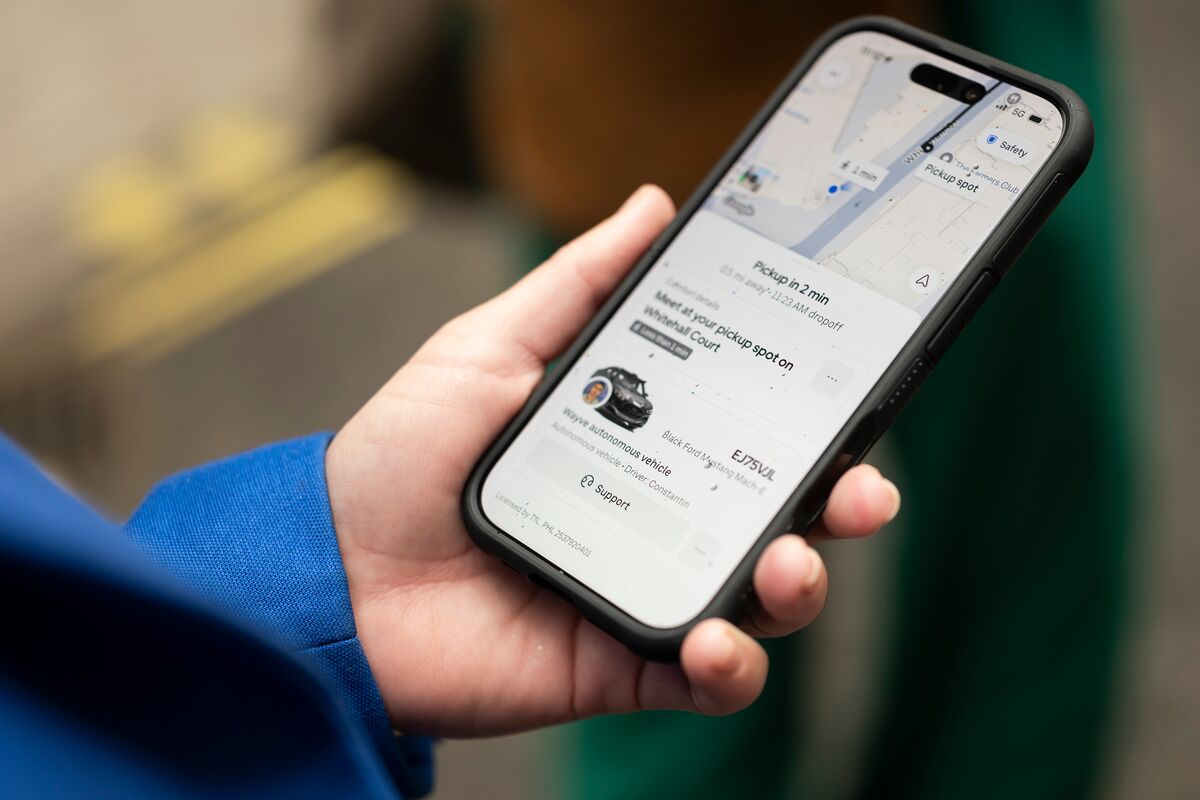
Uber and Wayve are deploying supervised robotaxis across London starting Thursday, marking Wayve’s first commercial public service in the world. The rollout builds on Wayve’s years of testing of AI autonomous-driving software on London’s narrow, rainy streets. While it’s an operational milestone rather than financial results, it supports a more tangible commercialization path for Uber/Wayve’s autonomy strategy.
Analysis
This is more a distribution win for Uber than a near-term autonomy P&L event. The market should read it as Uber monetizing someone else’s AV R&D while preserving the customer relationship, which is the scarce asset if and when autonomy scales. Because the deployment is still supervised, unit economics stay closer to a premium ride-hail pilot than a true driverless margin unlock, so the first-order earnings impact is limited.
The second-order bull case is strategic: if a difficult urban environment works, it raises the odds that regulators and riders view AVs as a product category, not a science project. That helps Uber’s multiple by extending the terminal growth story and weakens the moat of smaller ride-hail names that lack the balance sheet, app traffic, and partnerships to absorb autonomy transitions. The likely loser is Lyft-style scale-challenged dispatch economics; the more subtle loser is any AV pure-play whose value proposition depends on being the sole operator rather than the software layer.
Contrarian view: consensus is prone to overpay for every AV pilot as if it proves a near-term cost takeout. The real bottleneck is not demo success but incident-free utilization, insurance pricing, and regulator tolerance over months, not days. If the rollout remains supervised and highly constrained, the market may eventually treat it as incremental PR rather than a step-change catalyst, which caps upside unless Uber can show materially better take rates or higher-frequency usage.
AllMind Terminal
AI-powered research, real-time alerts, and portfolio analytics for institutional investors.
Request TrialMarket Sentiment
Overall Sentiment
mildly positive
Sentiment Score
0.25
Ticker Sentiment
Key Decisions for Investors
- Maintain or add to UBER on weakness over the next 1-3 months; this is a multiple-support trade, not an earnings trade. Base case: modest upside as autonomy optionality broadens; downside is limited unless safety or regulatory headlines turn negative.
- Pair trade: long UBER / short LYFT for 3-6 months to express that autonomy partnerships and global distribution accrue to the scaled platform. Risk/reward improves if the market starts assigning longer-duration optionality to Uber while Lyft remains structurally boxed in.
- Use UBER 6-12 month call spreads instead of outright stock if you want convexity to a successful Europe rollout. This keeps risk bounded because the current catalyst is narrative-led and could take several quarters to show up in fundamentals.
- Set an alert on any incident, regulator pause, or insurance-related disclosure; that would be the cleanest falsifier and could unwind the autonomy premium quickly. If a setback occurs, hedge or trim UBER rather than trying to buy the dip immediately.
More News
- Billionaire Bill Ackman Has 13% of Pershing Square Capital Management's $19 Billion Hedge Fund in 1 Stock That's 31% Below Its 52-Week High
- Amazon.com vs. Uber Technologies: Analyzing Recent Quarterly Revenue Trends Between Two Consumer Companies
- 2 Monster Stocks to Buy and Hold for at Least the Next 5 Years
- Bill Ackman Has 45% of His New Hedge Fund's Portfolio Invested in Just 3 Incredible Growth Stocks
- Bill Ackman Built a $2.4 Billion Stake in Microsoft, Calling It a "Core Holding" Bought at a "Highly Compelling Valuation." Here's Why He's Betting Big on Big Tech.
- Iran’s military says US preparing to resume strikes