
Lupo Notte Now Open in Nashville
Source: PR Newswire
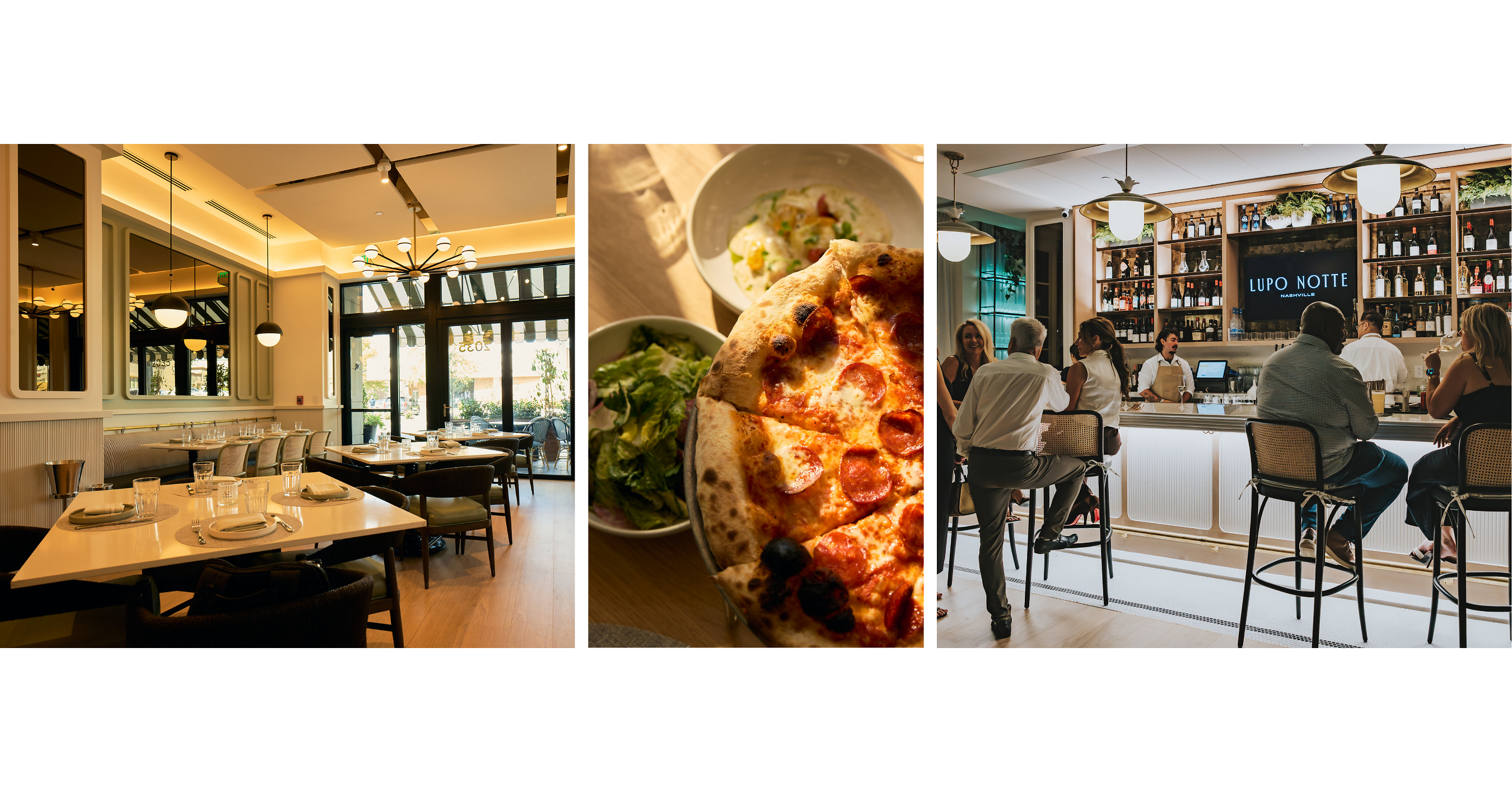
Southern Land Company opened Lupo Notte, its first full-service restaurant, on September 16 at its Vertis Green Hills mixed-use development in Nashville. The upscale Italian restaurant spans nearly 3,100 square feet, seats about 110 guests indoors plus 20 patio seats, and is intended to expand the developer's placemaking and hospitality offering. Lunch service and online ordering are planned for later this fall; the company cites a current development pipeline valued at $5 billion.
Analysis
This is principally an amenity-investment signal rather than a standalone hospitality earnings event. For a privately held developer, the relevant economic test is whether a destination food-and-beverage offering lifts residential absorption, renewal rates, retail foot traffic, and achievable rents enough to exceed the restaurant's typically volatile labor, food-cost, and occupancy burden. A successful format could modestly support stabilized asset valuations through lower vacancy and a stronger mixed-use leasing narrative, but one 130-seat location is immaterial to broader public real-estate pricing.
The second-order risk is that vertically operated restaurants convert a relatively predictable real-estate cash-flow model into an operating business exposed to wage inflation, food inflation, management turnover, and demand cyclicality. Over the next 6-18 months, comparable multifamily owners with Sun Belt mixed-use exposure—MAA, CPT and UDR—could benefit only if the model demonstrates measurable rent premiums or retention gains; there is no basis to extrapolate that outcome today. The near-term catalyst is lunch utilization and resident capture, while falsification would be persistent discounting, weak reservation availability, or an inability to expand service without disproportionate labor costs.
Contrarian view: investors often overvalue "placemaking" announcements as a generic premiumization catalyst. In a higher-end submarket, an upscale restaurant can be a necessary defensive amenity rather than a source of incremental pricing power, particularly if competing dining supply grows and discretionary dining weakens. The absence of disclosed unit economics, tenant-rent data, or lease-up metrics makes this non-actionable for listed securities.
AllMind Terminal
AI-powered research, real-time alerts, and portfolio analytics for institutional investors.
Request TrialMarket Sentiment
Overall Sentiment
mildly positive
Sentiment Score
0.28
Key Decisions for Investors
- No directional trade: Southern Land Company is private and the disclosed project is too small to create a material revenue or NAV read-through for public REITs.
- Add MAA and CPT to a 6-12 month watchlist for evidence that mixed-use amenity investment is translating into rent-growth or renewal-rate outperformance versus Sun Belt peers; require disclosed same-store NOI acceleration or occupancy gains before assigning a premium.
- Do not use BKNG/OpenTable exposure as a proxy trade; any incremental reservation volume from a single venue is economically immaterial to Booking Holdings.
- For existing Sun Belt apartment exposure, monitor wage growth, restaurant closures, and concession trends as a better indicator of whether amenity-rich projects retain pricing power; rising concessions or falling occupancy would invalidate the premium-amenity thesis.
More News
- History shows financial calamities occur when rates rise rapidly like this: 'Something always breaks'
- Here’s the Tesla Semi… again
- 30-year fixed mortgage rate jumps sharply Thursday to 7.45%
- Tesla poised to scale production of heavy-duty Semi trucks with opening of Nevada factory
- Why we like Starbucks’ latest turnaround move — plus, two more wins for Eli Lilly
- Why Fervo Energy Stock Is Up Today