
PuroClean's Franchise Development Momentum Accelerates as a New Generation of Entrepreneurs Fuels 2026 Growth
Source: PR Newswire
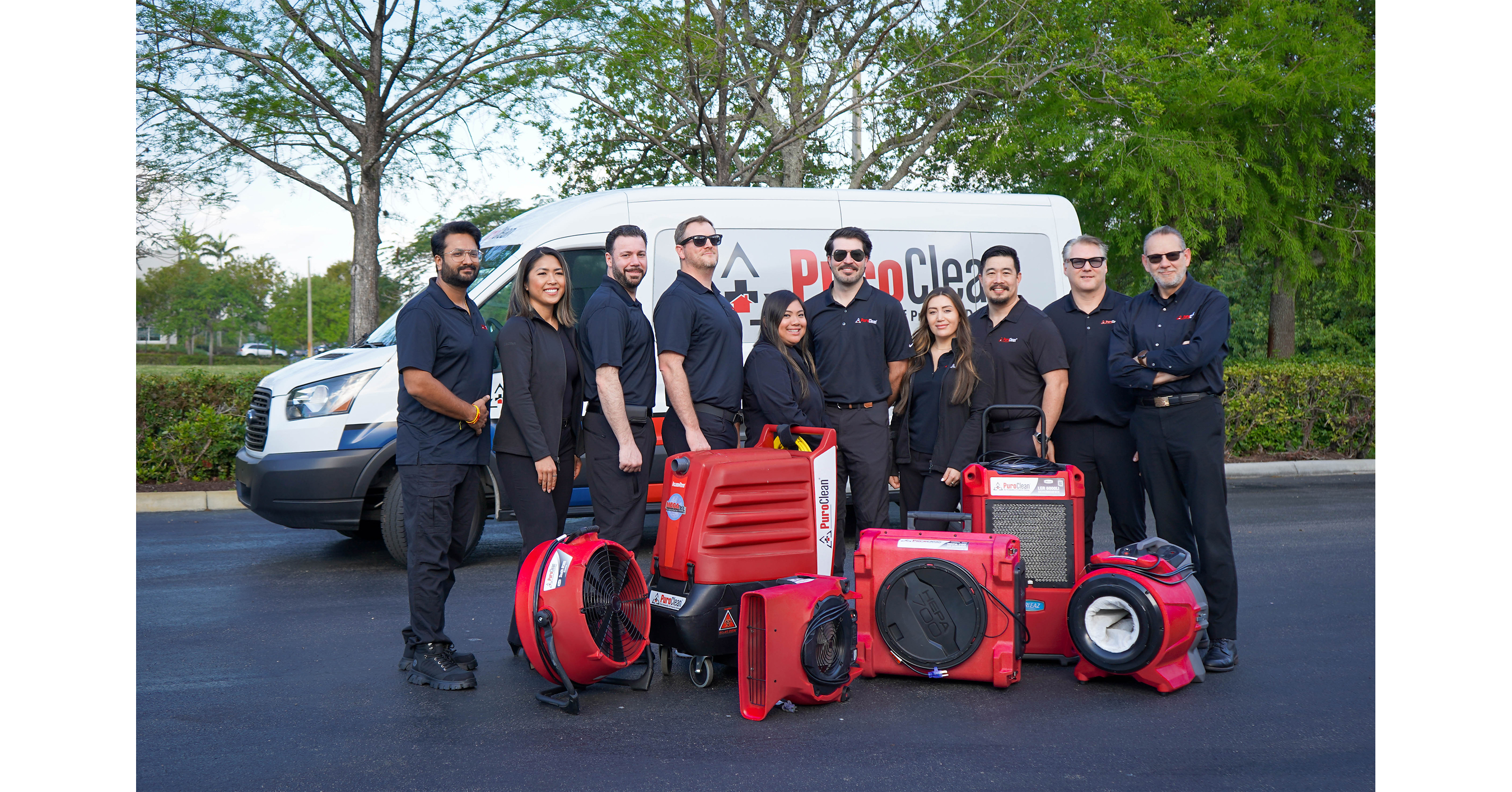
PuroClean reported that 20% of its 2026 unit growth has come from existing franchise owners adding territories, while 44% of owners now operate multiple units. A single franchise location exceeded $20 million in gross sales for the first time; franchisees with dedicated sales representatives average $1.4 million in revenue, with the top 10% averaging $5.9 million. The privately held restoration franchisor is targeting experienced multi-unit operators in QSR, hospitality, retail and home services to support further expansion.
Analysis
This is not directly investable, but it modestly supports the broader restoration-services thesis: scaled operators can convert emergency-response demand into denser local networks, reducing dispatch costs and improving insurer/referral-channel relevance. The more consequential competitive implication is for fragmented independent restoration contractors, whose recruiting and lead-generation costs should rise as well-capitalized franchise systems recruit experienced multi-unit operators and consolidate territory ownership.
Public read-through is most relevant to BELFOR-adjacent private competitors and to ServiceMaster-branded restoration exposure rather than a clean listed pure play. ROL and Ecolab (ECL) have only tangential exposure; their commercial-service multiples should not move on this release. Insurer economics are the more plausible second-order channel: broader vendor-network concentration can improve claims-cycle management but may increase restoration pricing leverage following regional catastrophe events.
The disclosed performance indicators are promotional and are not sufficient to infer network-wide revenue, franchisee EBITDA, royalty yield, same-unit growth, or failure rates. A single exceptional location and sales-representative cohort data can reflect territory mix, catastrophe work, and selection bias rather than repeatable unit economics. Over the next 6-18 months, the structural watch item is whether restoration capacity expands ahead of catastrophe-driven demand, which would pressure independent contractor margins even if franchise-system unit counts grow.
No immediate public-markets trade is warranted. The actionable implication is a private-market diligence alert: restoration-platform valuations should be underwritten against normalized non-cat loss demand, insurer reimbursement terms, technician wages, and franchisee leverage—not peak-event revenue or headline gross-sales benchmarks.
AllMind Terminal
AI-powered research, real-time alerts, and portfolio analytics for institutional investors.
Request TrialMarket Sentiment
Overall Sentiment
moderately positive
Sentiment Score
0.48
Key Decisions for Investors
- No directional equity position based on this release; impact is too low and PuroClean is privately held.
- For private-services screening over the next 1-3 months, track restoration-platform transactions and insurer preferred-vendor contract changes; require system-wide same-unit sales, franchisee EBITDA, closure rates, and catastrophe-adjusted revenue before assigning a premium multiple.
- Monitor ROL and ECL only as commercial-services sentiment proxies, not direct beneficiaries. Do not extrapolate a restoration-franchise growth signal into their estimates absent evidence of incremental commercial remediation demand.
- If evaluating property-and-casualty carriers after a major catastrophe, test whether preferred-vendor concentration is raising severity versus shortening claim duration; a sustained increase in loss-adjustment expense would be the relevant investable signal, not franchise unit growth.
More News
- What next for France as riots rattle markets? Three questions facing investors ahead of more protests
- Looters hit 3,000 French businesses. Within hours, the haul was trending on Vinted under the riot’s date
- Kinder Morgan, Energy Transfer and Williams could benefit from cheap natural gas
- Vertex reports positive IgAN trial data, FDA decision due Nov. 30
- The real test for Moderna’s cancer vaccine isn’t about beating Keytruda. It’s keeping cancer from coming back in the long term.
- With earnings in rearview mirror, SpaceX-Tesla merger chatter takes center stage