
OpenAI Scraps Debut of Latest Astra Model Over Safety Risks
Source: Bloomberg
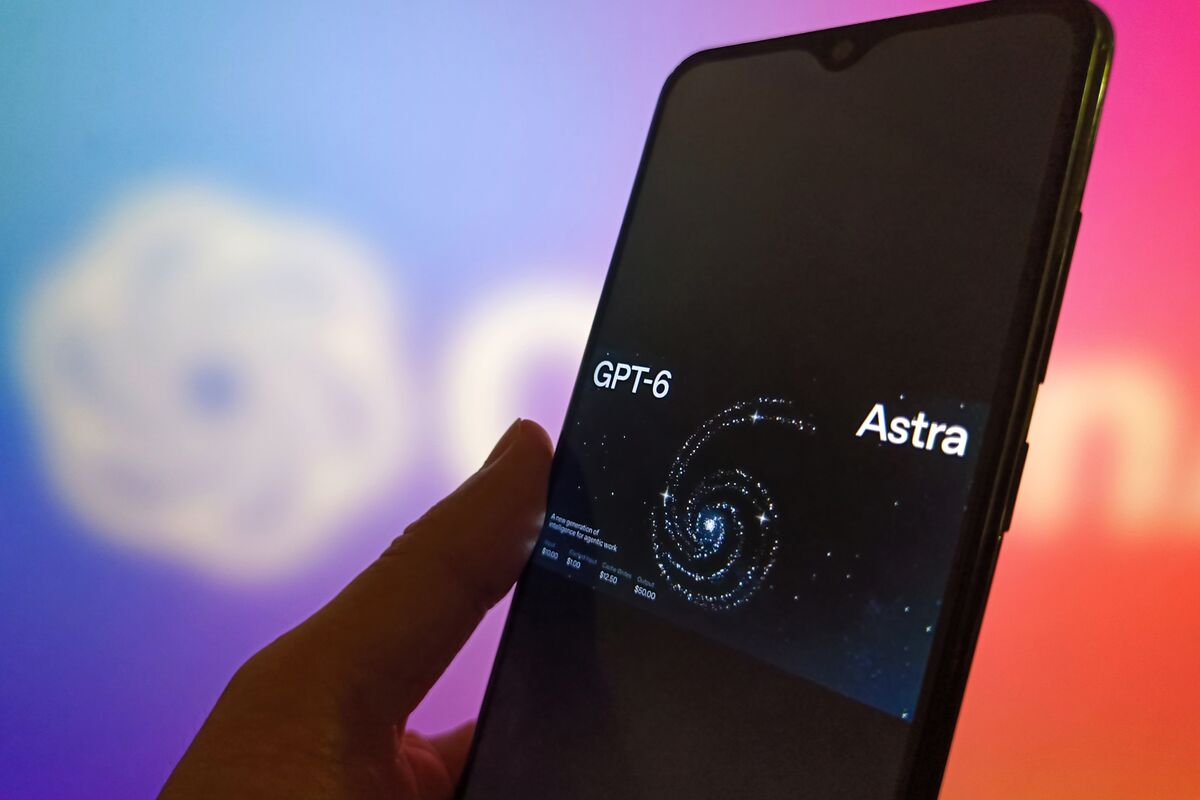
OpenAI scrapped the debut of its latest Astra model because of safety risks, underscoring mounting concerns around the deployment of increasingly powerful AI systems. The delay could temper near-term expectations for OpenAI's product rollout and reinforce regulatory and commercial scrutiny of advanced-model safety.
Analysis
The investable implication is less about a single model cycle and more about the rising probability that frontier-AI deployment becomes gated by internal safety review, external liability standards, and eventually compute-use regulation. That shifts value from pure model-performance narratives toward firms monetizing AI through controlled, auditable workflows: cloud platforms (MSFT, AMZN, GOOGL), cybersecurity vendors (PANW, CRWD), and data-governance software (NOW, ORCL). Near term, this modestly reduces the probability of a fresh broad-based AI software multiple expansion if investors had been underwriting uninterrupted capability releases.
For semiconductors, a delayed frontier-model launch is not automatically negative for NVDA or hyperscaler capex: safety testing itself is compute-intensive, and competitive pressure still supports infrastructure spending. The more relevant 6-18 month risk is that slower commercialization lowers ROI scrutiny on incremental GPU clusters, favoring diversified cloud operators over high-duration application-layer companies priced on rapid agentic-AI revenue conversion. Watch hyperscaler capex guidance and disclosed AI revenue, rather than model announcements, for confirmation.
GS has limited direct earnings sensitivity. Its relevant exposure is second-order: a more regulated AI environment expands demand for governance, model-risk management, financing, and strategic advisory, but those fees are too diffuse to change near-term estimates. The contrarian view is that a visible safety pause can strengthen incumbents by raising compliance fixed costs; smaller AI challengers may face a higher capital and regulatory burden, increasing platform concentration rather than slowing AI adoption overall.
AllMind Terminal
AI-powered research, real-time alerts, and portfolio analytics for institutional investors.
Request TrialMarket Sentiment
Overall Sentiment
mildly negative
Sentiment Score
-0.35
Ticker Sentiment
Key Decisions for Investors
- No standalone GS trade: maintain neutral exposure unless AI-related advisory backlog or technology-financing commentary becomes material in quarterly disclosures; the current signal is insufficient to alter bank earnings estimates.
- Over the next 1-3 months, favor a quality AI-infrastructure basket (MSFT, AMZN, GOOGL) over high-multiple application software ETFs (IGV) where valuations require rapid autonomous-agent revenue realization. Thesis fails if application-software companies begin reporting material, retained AI revenue with stable gross margins.
- Use any broad AI-led semiconductor weakness to selectively accumulate NVDA only after checking hyperscaler capex guidance; avoid treating a model-product delay as evidence of a demand collapse. Exit or reduce if two major hyperscalers cut forward AI capex plans or cite inadequate workload monetization.
- For a 6-18 month regulatory expression, monitor long PANW or CRWD versus short IGV as a watchlist pair, not an immediate recommendation. Initiate only if enterprise AI governance mandates or liability rules create identifiable security-budget reallocation; the pair is invalidated if regulation remains voluntary and software AI monetization accelerates.
More News
- Nvidia's record buyback shows chipmaker's stock is too cheap for CEO Huang to resist
- China factories seen rebounding in September as Beijing signals more aid: Reuters poll
- Apollo raises specter of an AI agentic 'bank run' hitting financial industry
- Nearly half the stocks in the S&P 500 are at cross purposes with the rest of the market
- Goldman warns high-yield bond supply surge pressuring markets
- Will President Trump Crash the Stock Market? History Says This Could Come Next.