
Boise School District to Launch Eight Electric School Buses for 2026-27 School Year
Source: PR Newswire
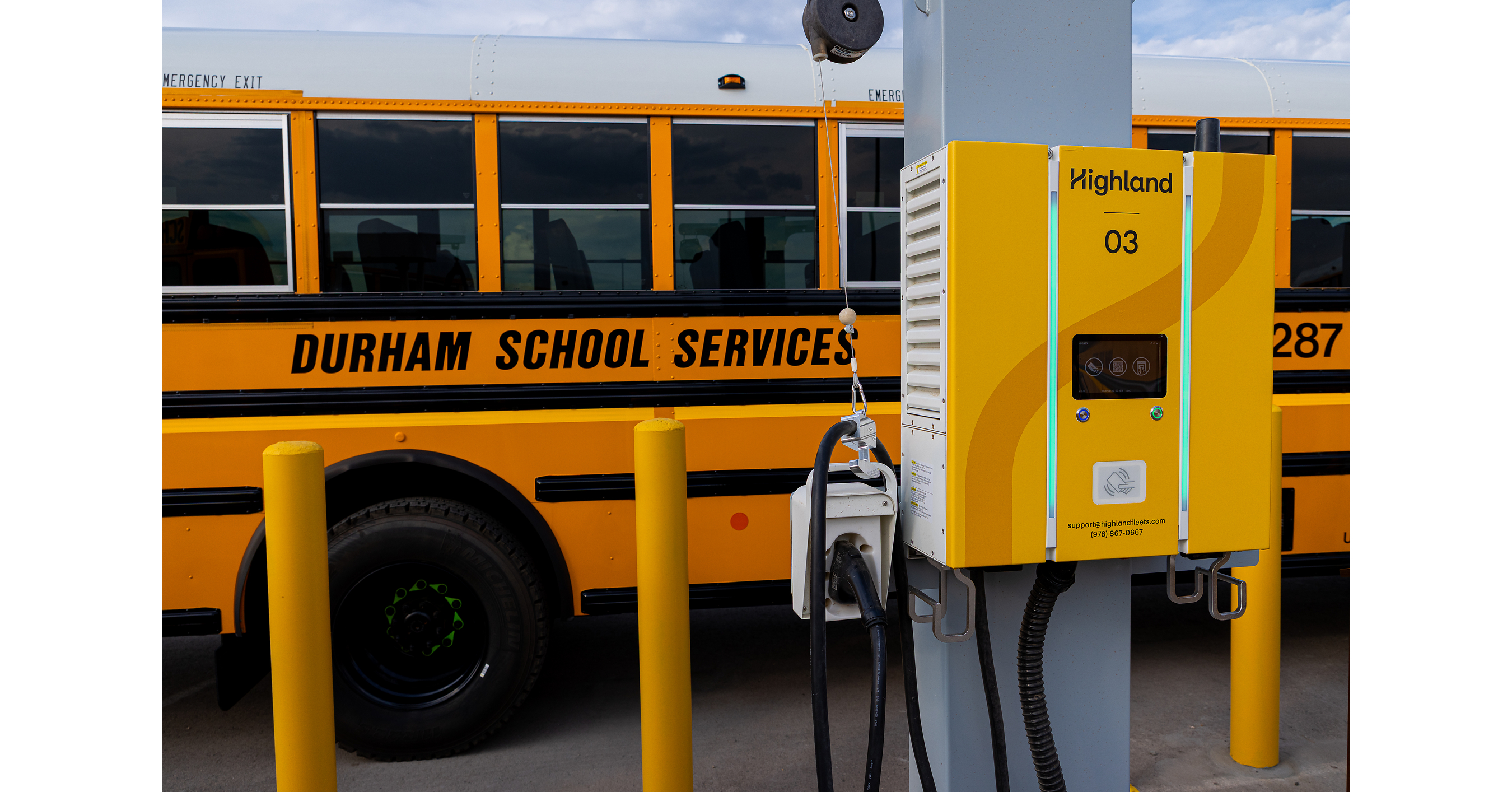
Boise School District will deploy eight IC Bus electric school buses for the 2026-27 school year, supported by a $2.76 million U.S. EPA Clean School Bus Program grant. The project partners with Durham School Services for operations and Highland Electric Fleets for electrification and charging infrastructure, aiming to cut diesel tailpipe emissions for students and reduce maintenance costs via fewer moving parts.
Analysis
This is a procurement-scale proof point, not an earnings-scale catalyst. The economic value sits with the financing-and-operations stack: whoever can bundle capex, charging, uptime, and maintenance into one contract should keep winning share, but the public-market read-through is thin because the demand is grant-gated and lumpy. The real second-order effect is on balance-sheet users of the technology: if districts prefer EaaS, the risk migrates from the school system to the fleet operator/financier, making cost of capital and asset utilization more important than headline unit sales.
Over the next 1-3 months, any sympathy move in small-cap clean-tech names is likely to be more about ESG sentiment than revised fundamentals. The structural question is whether this converts into a repeatable pipeline once federal subsidies slow; if not, the market is overpricing a one-off install as if it were a scalable order book. The longer-term losers are diesel maintenance ecosystems and local fuel demand, but that leakage is gradual and too small to matter at a portfolio level unless adoption broadens across multiple districts.
Contrarian view: the consensus tends to assume "electric bus" equals inevitable adoption, but the bottleneck is usually interconnection, uptime, and replacement-battery economics, not intent. If charging downtime or battery degradation shows up over the next school year, the narrative can reverse quickly. For now, this is better treated as a watch item on grant conversion rates than a high-conviction thematic trade.
AllMind Terminal
AI-powered research, real-time alerts, and portfolio analytics for institutional investors.
Request TrialMarket Sentiment
Overall Sentiment
mildly positive
Sentiment Score
0.35
Key Decisions for Investors
- No immediate trade in CAXPF/CETY/CRMT/IDR; treat this as an immaterial project announcement unless follow-on awards or revenue guidance emerge within 1-2 quarters.
- If CETY trades up >8% on sympathy volume, fade the move with a tactical short/mean-reversion trade over 5-10 trading days; thesis breaks if it holds the gap and prints two closes above event-day high.
- Add a catalyst alert on federal clean-school-bus award cadence for the next 1-3 months; become constructive on the broader EV-fleet/charging complex only if award flow accelerates, not on single-district deployments.
- Watch for operational falsifiers over the next school year: charger uptime, battery replacement cost, and maintenance savings. Any evidence of underperformance would argue for taking profits on any clean-tech momentum trade.
More News
- Nvidia GPUs are everywhere. Here are the ways companies are accessing them
- India unveils tough curbs on dollar demand to defend rupee
- Bank of America is bullish on these top stocks ahead of earnings
- Stocks were up this week. Here are the names that are now overbought
- As companies pour billions into Earth-based AI infrastructure, Google is taking the data center race off-planet
- AI's Supercharging a Scam Economy Bigger Than the Cocaine Trade