
Store brands like Kirkland are winning the war for consumer wallets, squeezing out national brands
Source: MarketWatch
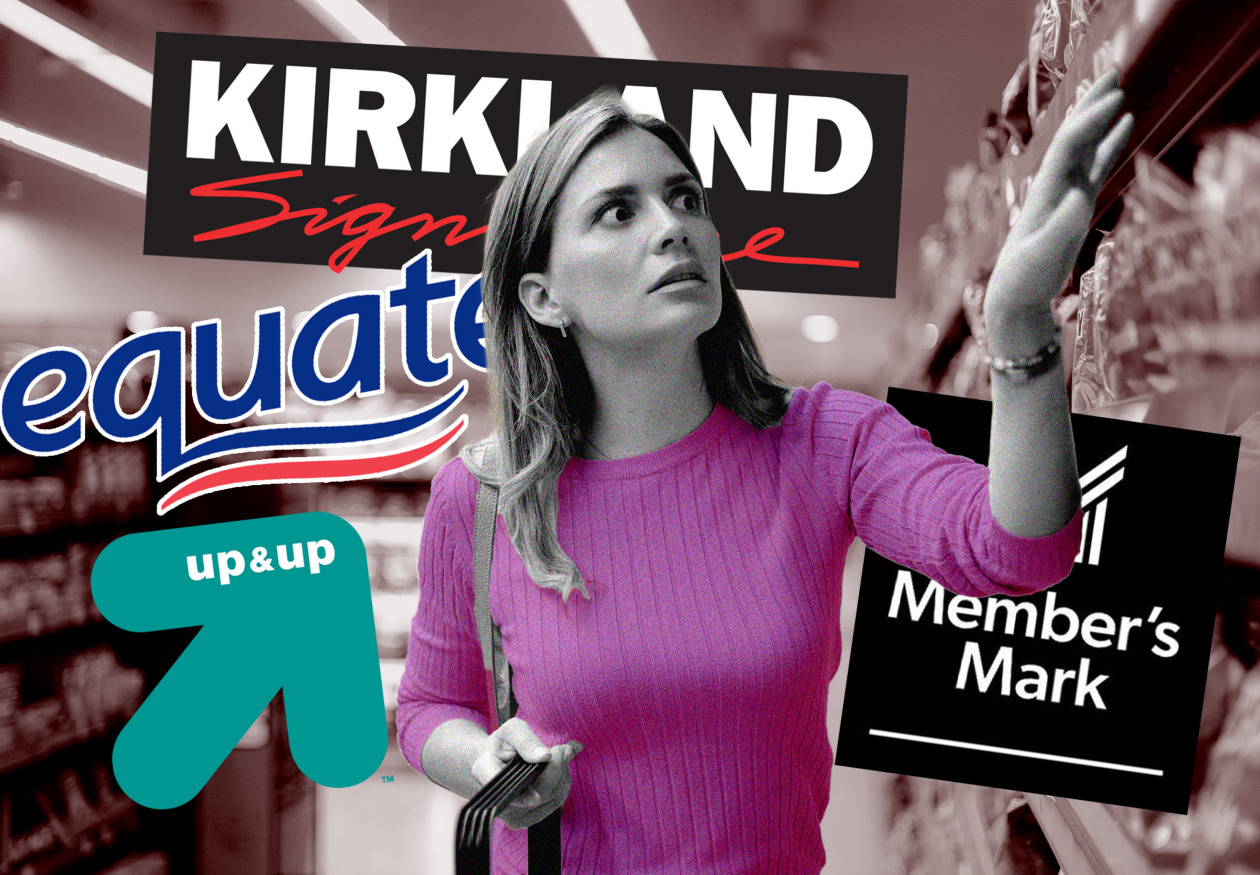
Private-label brands such as Costco's Kirkland, Walmart's Equate and Target's Up & Up are continuing to capture consumer spending from national consumer-packaged-goods brands. Edgewell Personal Care, owner of Schick, is responding by manufacturing retailer-branded razors alongside its own products and consolidating four Americas plants into a single megasite. The shift highlights sustained margin and market-share pressure on branded CPG suppliers, although contract manufacturing offers an offsetting revenue channel.
Analysis
EPC’s strategic value is shifting from brand-owner economics toward being a scale manufacturing partner for retailers. That protects plant utilization and absorbs fixed costs, but it also transfers bargaining power to WMT and TGT: private-label volume can stabilize revenue while structurally capping gross-margin expansion and limiting pricing realization on Schick. The key underwriting question is whether incremental retailer volume lifts utilization faster than mix dilution; absent that, revenue growth may not translate into EPS upside.
The manufacturing consolidation is the near-term swing factor. A successful ramp could create a meaningful fixed-cost benefit over the next 12-18 months and make EPC a more credible supplier across adjacent personal-care categories; a delayed transition would risk service failures, retailer penalties, inventory build, and one-time costs precisely when customer concentration is rising. WMT is the better downstream beneficiary because its traffic and value proposition make private-label penetration self-reinforcing; TGT receives category-margin support but has less certainty that discretionary traffic will sustain comparable unit growth.
Consensus may overstate the threat to EPC’s branded franchise and understate its contract-manufacturing optionality. In blades, technical differentiation, shelf placement, and retailer assortment discipline can preserve a profitable branded tier even as opening-price-point products gain share. Still, this is not automatically a bullish mix shift: retailer-owned brands can use supplier knowledge to negotiate annual cost-downs, making the value creation more likely to accrue to WMT than to EPC unless EPC demonstrates gross-margin expansion during the site consolidation.
AllMind Terminal
AI-powered research, real-time alerts, and portfolio analytics for institutional investors.
Request TrialMarket Sentiment
Overall Sentiment
mildly negative
Sentiment Score
-0.20
Ticker Sentiment
Key Decisions for Investors
- Maintain or initiate a 6-12 month long WMT / short TGT pair, sized beta-neutral: WMT has the cleaner ability to convert private-label penetration into traffic, basket retention, and category-margin leverage. Reassess if TGT shows sustained comparable-sales and traffic acceleration that closes the value-perception gap.
- Keep EPC on a catalyst watch rather than add aggressively before evidence of execution: initiate only if the next two reporting periods show stable service levels and gross-margin improvement despite private-label mix growth. A miss in gross margin, elevated restructuring cash costs, or incremental inventory would falsify the utilization thesis.
- For existing EPC exposure, use a defined-risk hedge into the first full quarter of consolidated-site operation, such as 3-6 month protective puts or a collar. The likely downside is operational rather than demand-led, so guidance on transition costs, fill rates, and working capital matters more than broad consumer-spending data.
- Monitor WMT and TGT private-brand category commentary for a second-order read-through to branded staples suppliers. Broadening retailer control beyond opening-price items would be negative for branded CPG pricing power and supportive of retailers’ gross-margin expectations over the next 1-3 quarters.
More News
- Salesforce suffers global outage amid Dreamforce shindig
- Like Costco, Walmart to sell Medicare Advantage plans
- Salesforce customers see service returning to normal after global outage
- Salesforce staggers back to feet after global outage
- Trump’s tariffs slashed jobs and wage growth. Now companies are funneling their chunk of the $100 billion in refunds to supplement workers’ retirement
- Gen Z is the most online generation but this Christmas, they want gifts to get them outside
From AllMind Research
- Anthropic IPO Preview: Valuation, Timing, and What to Watch
- Shein After the IPO: Venue, Valuation, and What Must Be Proved
- What AI Research Tools Should a Small Hedge Fund Buy First?
- AllMind Fixed Income Compass for October 2025: Navigating Policy Divergence and Political Risk
- AI Equity Research Tools for RIAs and Wealth Managers