
Fed Hikes, Defying Trump’s Calls to Lower Rates
Source: Bloomberg
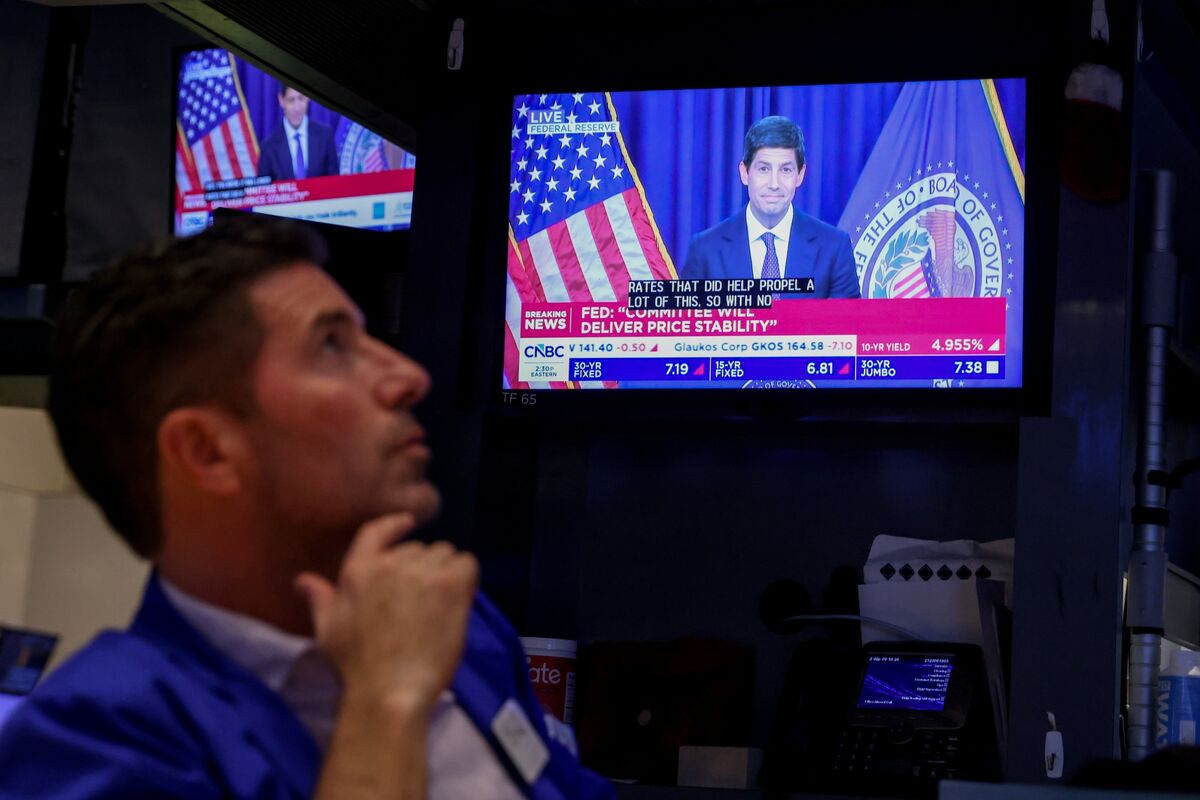
The Federal Reserve raised interest rates by 25bps and projected one additional hike later this year to contain inflation, despite President Donald Trump’s call for US rates of 1% or lower. The decision sets up potential tension between Fed Chair Kevin Warsh and the administration, while bond-market signals indicate increasing investor confidence in the Fed’s inflation-fighting stance.
Analysis
The investable implication is less the additional tightening itself than the repricing of the terminal-rate distribution: assets valued on distant cash flows remain most exposed if real yields rise, while cash-generative, low-duration equities can absorb a higher discount rate. The immediate vulnerability is in long-duration growth (ARKK, unprofitable software, small-cap biotech) and leveraged balance sheets (IWM, HYG); regional banks (KRE) are a more nuanced case, benefiting from reinvestment yields but facing renewed unrealized-loss, deposit-beta and credit-cost pressure if the curve stays inverted.
Over the next 1-3 months, the key transmission channel is financial conditions rather than the policy rate: a stronger dollar and higher front-end yields tighten conditions for commodity demand, emerging markets and refinancing-dependent issuers. Credit is likely underpricing a scenario in which inflation proves sticky enough to prevent the expected easing cycle; that would widen CCC/high-yield spreads before it materially affects large-cap equity earnings. Favor quality balance sheets and pricing power over cyclicals whose consensus margins assume falling financing costs.
The contrarian point is that a hawkish policy surprise is not automatically bearish for all equities. If the move lifts nominal yields because growth and inflation resilience persist rather than because of a policy error, banks with stable deposit franchises, exchanges, and asset managers can outperform broad duration-sensitive indices. The thesis fails if labor or consumer data deteriorate quickly, pulling long yields down and reviving expectations for rapid cuts; a sustained break lower in 2-year yields and a widening in investment-grade spreads would be the earliest market confirmation.
AllMind Terminal
AI-powered research, real-time alerts, and portfolio analytics for institutional investors.
Request TrialMarket Sentiment
Overall Sentiment
mixed
Sentiment Score
-0.10
Key Decisions for Investors
- Initiate a 1-3 month relative-value hedge: long XLF versus short ARKK, sized market-neutral. The trade captures higher-for-longer sensitivity and should work if real yields remain elevated; stop if the 2-year Treasury yield falls roughly 40bp from post-decision levels or if forward policy expectations reprice materially toward easing.
- Underweight HYG and favor short-duration Treasuries via SGOV/SHY for the next 1-3 months. The expected payoff is modest carry plus downside protection from refinancing-risk repricing; do not press the short-credit leg absent evidence of spread deterioration, as credit can remain resilient during a growth-led rates rise.
- Maintain a quality bias in equities through long XLV and/or large-cap profitable software against IWM. Small-cap earnings have materially greater floating-rate and refinancing exposure; reassess after the next inflation and payroll releases, with a reversal warranted if disinflation resumes and long-end yields decline.
- Watch KRE rather than buying it immediately: enter only if deposit-cost commentary and credit metrics remain stable through upcoming earnings. A steeper curve with contained credit losses is constructive, but commercial-real-estate stress or renewed deposit outflows would negate the net-interest-income benefit.
More News
- Bank of England set to defy Fed’s rate-hike lead, despite rising inflation
- The Fed is hiking again — and the rest of the world could feel the squeeze
- Oil extends losses as Saudi Arabia reportedly offers ship-to-ship crude transfers after pipeline hit
- Analysis-Fed builds credibility, but hawkish turn leaves investors edgy
- Japan’s corporate leaders sound alarm over weak yen — even dollar-earners are voicing concerns
- BOJ preview September: 25 bps hike expected with hawkish outlook in focus