
Machado Tries, Fails to Enter Venezuela as Rodriguez Meets Trump
Source: Bloomberg
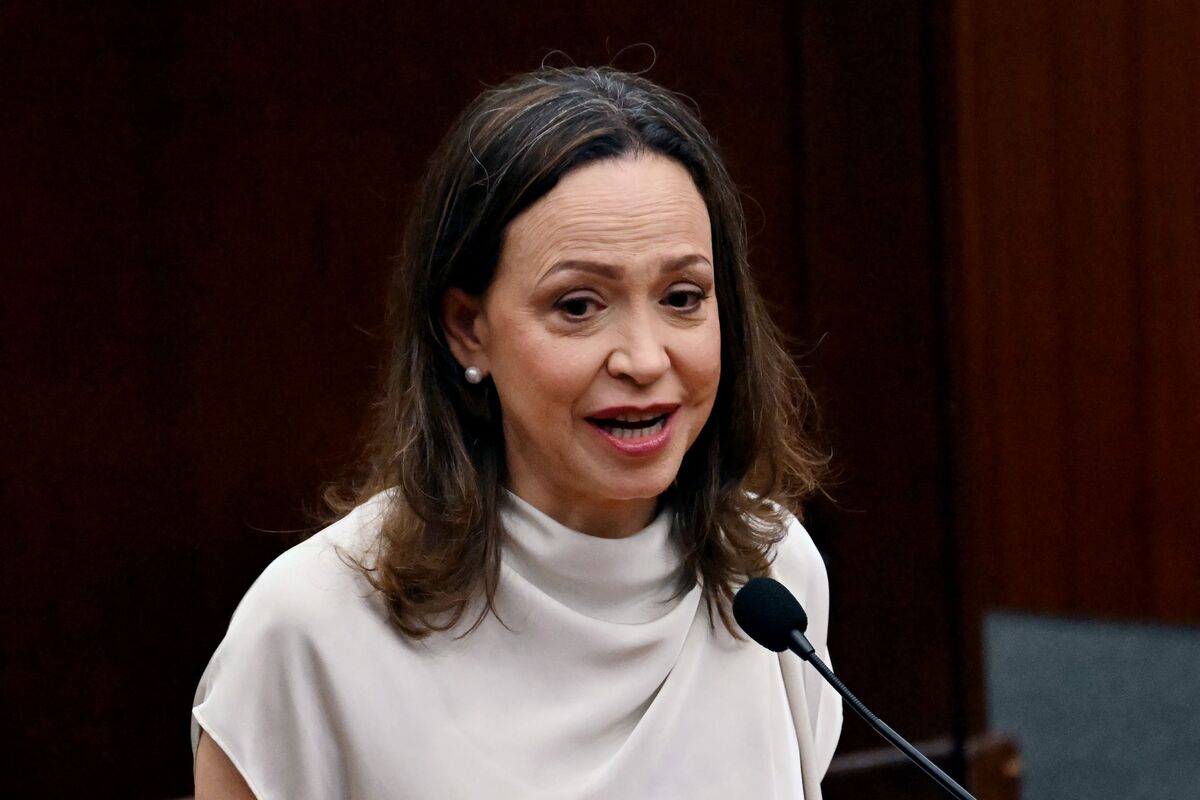
Venezuelan opposition leader María Corina Machado made three unsuccessful attempts within 24 hours to return from Panama to Venezuela, underscoring political and travel-access constraints. The developments coincided with acting President Delcy Rodríguez's meeting with US President Donald Trump at the UN General Assembly in New York, adding uncertainty around Venezuela's political trajectory and US engagement.
Analysis
The investable variable is not the opposition leader’s travel outcome but whether Washington shifts from a transactional oil-access framework toward renewed enforcement. A tighter sanctions posture would most directly impair Chevron’s (CVX) Venezuelan cash generation and remove a modest source of heavy crude for Gulf Coast refiners; the broader crude-price effect should remain limited unless enforcement also curbs third-party cargoes. Canadian heavy producers, particularly MEG Energy (MEG) and Cenovus (CVE), would be relative beneficiaries if constrained Venezuelan supply widens the heavy-sour crude differential.
Over the next days, headlines are likely to create noise without durable equity implications absent changes to OFAC licenses, secondary-sanctions language, or export-loading data. In a 1-3 month window, any political arrangement that preserves production/export continuity is mildly positive for CVX and negative for heavy-oil differentials; a breakdown would favor CVE/MEG versus CVX rather than justify a broad long-oil position. The key falsifier is physical flow: if Venezuelan exports remain stable despite tougher rhetoric, refinery substitution and global-balance concerns are overstated.
The contrarian view is that markets may overread political visibility as imminent regime change. Venezuela’s oil infrastructure, service constraints, and payment/logistics bottlenecks cap near-term production responsiveness under either outcome, so a large move in USO, XLE, or CVX would likely be an opportunity to fade unless accompanied by formal policy action. Structural upside for Canadian heavy crude is more credible over 6-18 months only if enforcement persists while TMX-enabled egress remains available.
AllMind Terminal
AI-powered research, real-time alerts, and portfolio analytics for institutional investors.
Request TrialMarket Sentiment
Overall Sentiment
mildly negative
Sentiment Score
-0.20
Key Decisions for Investors
- No directional Venezuela trade on this headline alone; set an event alert for an OFAC general-license revision, explicit secondary-sanctions action, or a sustained decline in reported Venezuelan crude loadings over 30 days.
- Conditional 1-3 month pair: long CVE or MEG / short CVX if US policy formally restricts Venezuelan exports. The thesis is widening heavy-crude differentials and CVX-specific volume/cash-flow risk; exit if export data remain stable for 4-6 weeks after the policy announcement.
- Avoid broad USO or XLE longs unless disruption evidence is large enough to alter global balances. Venezuelan supply losses are more likely to redistribute heavy barrels than create a material global shortage; a >5% oil-price spike without verified loading disruptions is a potential fade.
- For Gulf Coast refining exposure, monitor PBF and DINO for margin pressure only if heavy-sour replacement costs rise materially; do not short preemptively because product cracks and domestic crude discounts can offset feedstock headwinds.
More News
- China's AI chip blitz arms Xi with a message for Trump: 'You can't choke us off'
- Oil falls on report Asia will import highest volume of crude since start of Iran war
- America’s Asian allies want a Trump-Xi truce — but not at their expense
- Trump evalúa prohibir exportaciones de diésel de EE.UU.
- ASPI's Cutler on Trump-Xi Summit, Trade Relations
- US aviation sanctions disrupt Iran flights, push travellers overland
From AllMind Research
- Anthropic IPO Preview: Valuation, Timing, and What to Watch
- Shein After the IPO: Venue, Valuation, and What Must Be Proved
- What AI Research Tools Should a Small Hedge Fund Buy First?
- Can Hedge Funds Use ChatGPT? A Control Framework
- Palantir (PLTR) Q4 2025 Earnings: 70% Revenue Growth, Then an 11% Single-Day Crash