
Swelling Bets Against Treasuries Are Fueling Repo Borrowing Cost
Source: Bloomberg
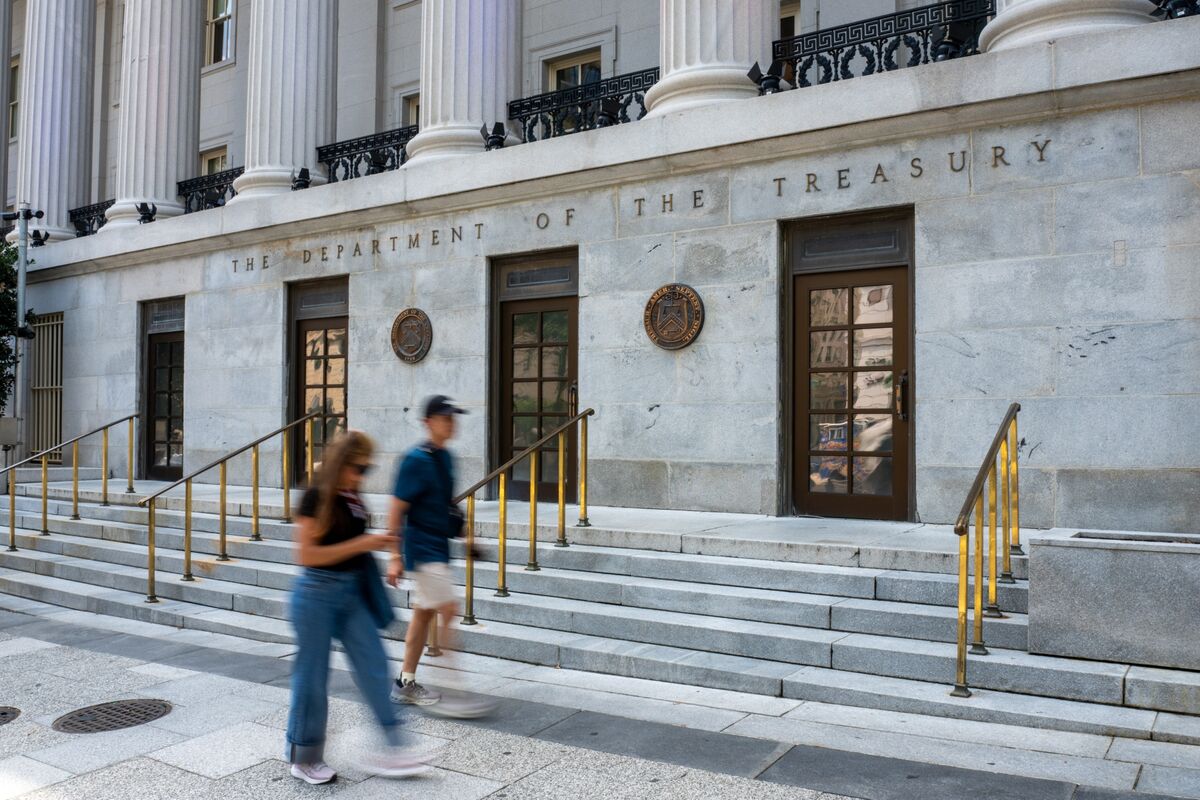
Growing short positions in US Treasuries are increasing demand to borrow specific securities through the overnight repo market, as traders position for further rises in Treasury yields. The resulting decline in repo rates for heavily shorted bonds—known as trading "special"—could create funding-market disruptions if positioning continues to build.
Analysis
The key transmission channel is not directional rates alone but collateral scarcity: persistent specialness can turn a seemingly cheap Treasury short into a negative-carry position and force position reduction independent of the macro outlook. That creates asymmetric downside in yields over days to weeks if an auction, CPI surprise, geopolitical risk-off move, or dealer balance-sheet constraint triggers a buy-in. The vulnerability is greatest in recently issued benchmark securities, where cash-market short interest, futures delivery optionality, and basis-trade hedging can concentrate demand for the same collateral.
A repo dislocation would tighten effective leverage across relative-value funds before it becomes a broad banking event. Primary dealers may widen Treasury bid/offer and repo haircuts, impairing liquidity in off-the-run issues and potentially spilling into agency MBS and swap spreads; this favors volatility venues and custody banks with securities-lending franchises more than rate-sensitive regional banks. The 1-3 month catalyst path is quarterly balance-sheet reporting and Treasury refunding/auction supply, when dealer intermediation capacity is most visibly tested.
Consensus is likely treating higher yields as a clean macro short rather than a financing-sensitive crowded trade. The contrarian position is not structurally bullish duration; it is long convexity against an abrupt short-covering rally. Falsification would be a sustained normalization in benchmark repo specialness alongside stable auction tails and rising Treasury futures open interest, which would indicate that dealer balance sheets are absorbing supply rather than forcing deleveraging.
AllMind Terminal
AI-powered research, real-time alerts, and portfolio analytics for institutional investors.
Request TrialMarket Sentiment
Overall Sentiment
mildly negative
Sentiment Score
-0.25
Key Decisions for Investors
- Establish a tactical 1-3 month long-duration hedge via TLT calls or TY futures call spreads rather than outright cash Treasuries; target a 50-100 bp rally in 10-year yields from a positioning unwind, with premium at risk capped at 25-35 bp of underlying notional.
- Run a relative-value expression long IEF versus short HYG for 1-2 months: a funding-driven Treasury squeeze should benefit duration while tighter dealer liquidity and wider risk premia pressure high-yield credit. Exit if HY OAS tightens materially while 10-year yields continue rising, signaling a benign growth repricing.
- Avoid adding leveraged Treasury-basis exposure until daily SOFR-repo dispersion, benchmark-security specialness, and Treasury futures basis are confirmed stable through month-end; these are the missing data needed to distinguish routine short demand from a deleveraging risk.
- Watch STT and BK as second-order beneficiaries of elevated collateral turnover and securities-lending activity, but do not initiate on this signal alone; require evidence of higher custody balances, lending revenue guidance, or persistent repo-market stress before allocating.
- Set an event alert around Treasury refunding, major auctions, and month/quarter-end. A large auction tail combined with further specialness argues for market-function risk and retaining TLT convexity; normal auction coverage and easing specialness argue for taking profits.
More News
- Dollar at 17-month high as global bond rout hits euro
- Can Trump Oust Powell From the Fed Board? What to Know
- US borrowing costs hit 24-year high as global bond sell-off intensifies
- Fed’s Cook sees AI buildup as top inflation risk for 2027
- The September jobs report will be released Friday. Here's what to expect
- U.S. stock futures drift higher with nonfarm payrolls in focus