
Texas Builds Securities Fraud Unit as Wall Street Heads to ‘Y’all Street’
Source: Bloomberg
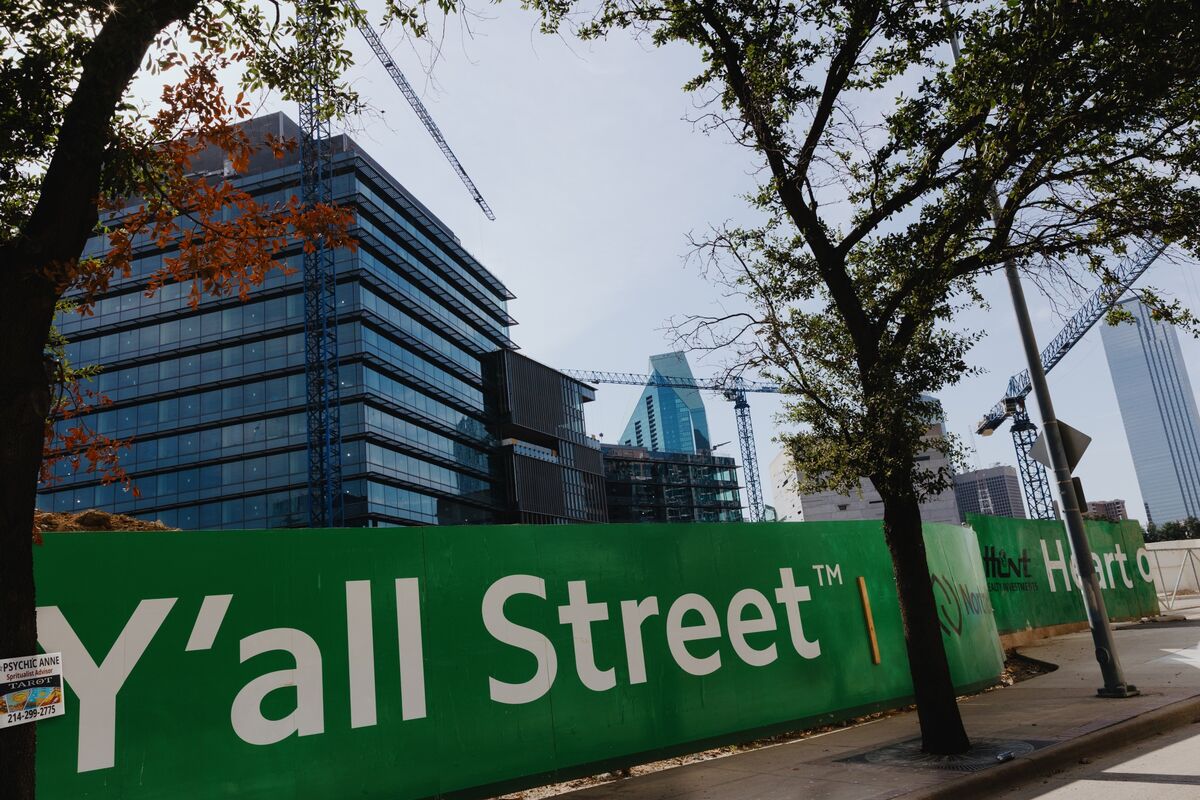
The US Attorney's Office in Dallas is establishing a securities-fraud unit as financial firms relocate to and expand in Texas, strengthening federal enforcement capacity outside New York. The move could increase scrutiny and litigation risk for finance companies operating in the Lone Star State, though the article provides no specific enforcement action, penalties, or company targets.
Analysis
The investable implication is not a broad financials de-rating; it is a geographic redistribution of enforcement risk. SCHW, GS and JPM have meaningful Texas operating footprints, but securities-fraud exposure is driven by supervision, communications retention, disclosures and transaction activity rather than employee location. Near term, this increases the value of documented compliance controls and could modestly raise legal/professional-fee expense for firms expanding regional trading, wealth-management and capital-markets teams; the earnings effect should be immaterial absent a named investigation.
The more consequential 6-18 month effect could be forum competition. A credible Texas enforcement pipeline may reduce the historical assumption that financial misconduct is principally investigated and litigated through New York, increasing parallel-investigation risk and settlement uncertainty for issuers with Texas headquarters or finance operations. This is marginally supportive for compliance and e-discovery spending, but there is no clean public pure-play. The contrarian view is that a new unit initially targets highly visible, easily provable cases; investors should not extrapolate to a sector-wide regulatory crackdown until subpoenas, staffing levels, or coordinated SEC actions become observable.
For markets, the first tradable signal would be an enforcement action involving a public company with a disclosure, accounting, crypto, private-credit or retail-brokerage nexus—not the administrative formation itself. A sequence of cases could widen perceived litigation discounts for Texas-based financial firms and favor larger banks with more mature surveillance infrastructure over regional platforms and fast-growing alternative-asset managers. Until then, this is an event-risk monitor rather than a directional catalyst.
AllMind Terminal
AI-powered research, real-time alerts, and portfolio analytics for institutional investors.
Request TrialMarket Sentiment
Overall Sentiment
mixed
Sentiment Score
-0.10
Key Decisions for Investors
- No immediate sector trade: maintain existing financials exposures; the current information does not support a measurable EPS revision or multiple change.
- Create a 1-3 month alert basket of SCHW, GS, JPM and regional Texas financial employers for DOJ/SEC subpoenas, accounting-restatement disclosures, or litigation-reserve increases; reassess only if a named action creates a company-specific 5%+ drawdown.
- If enforcement activity begins to target retail brokerage, digital assets or communications-surveillance failures, favor long JPM versus short SCHW as a defensive relative-value expression; falsify if SCHW reports stable legal expense and no adverse compliance commentary while JPM’s capital-markets outlook weakens.
- Monitor public compliance-adjacent beneficiaries such as Thomson Reuters (TRI) and Wolters Kluwer (WKL.AS) for accelerating legal-workflow demand, but require evidence in bookings or guidance before adding exposure; generalized enforcement headlines alone are insufficient.
More News
- Xencor reports phase 1 data for cancer drug XmAb819
- UK immigration crackdown threatens £15 billion care sector
- Ukraine says Starlink and Starshield high speed restrictions have been lifted
- Thousands of Israelis rally against Netanyahu gov’t days before election
- How This County Made the Data Center Boom Pay Off
- Fact vs. fiction: Doctors share whether peptides are safe and effective