
Tencent Games Central Tech Makes Its gamescom Debut, Accelerating Game Industry Innovation with Full-Pipeline Proprietary AI Technologies
Source: PR Newswire
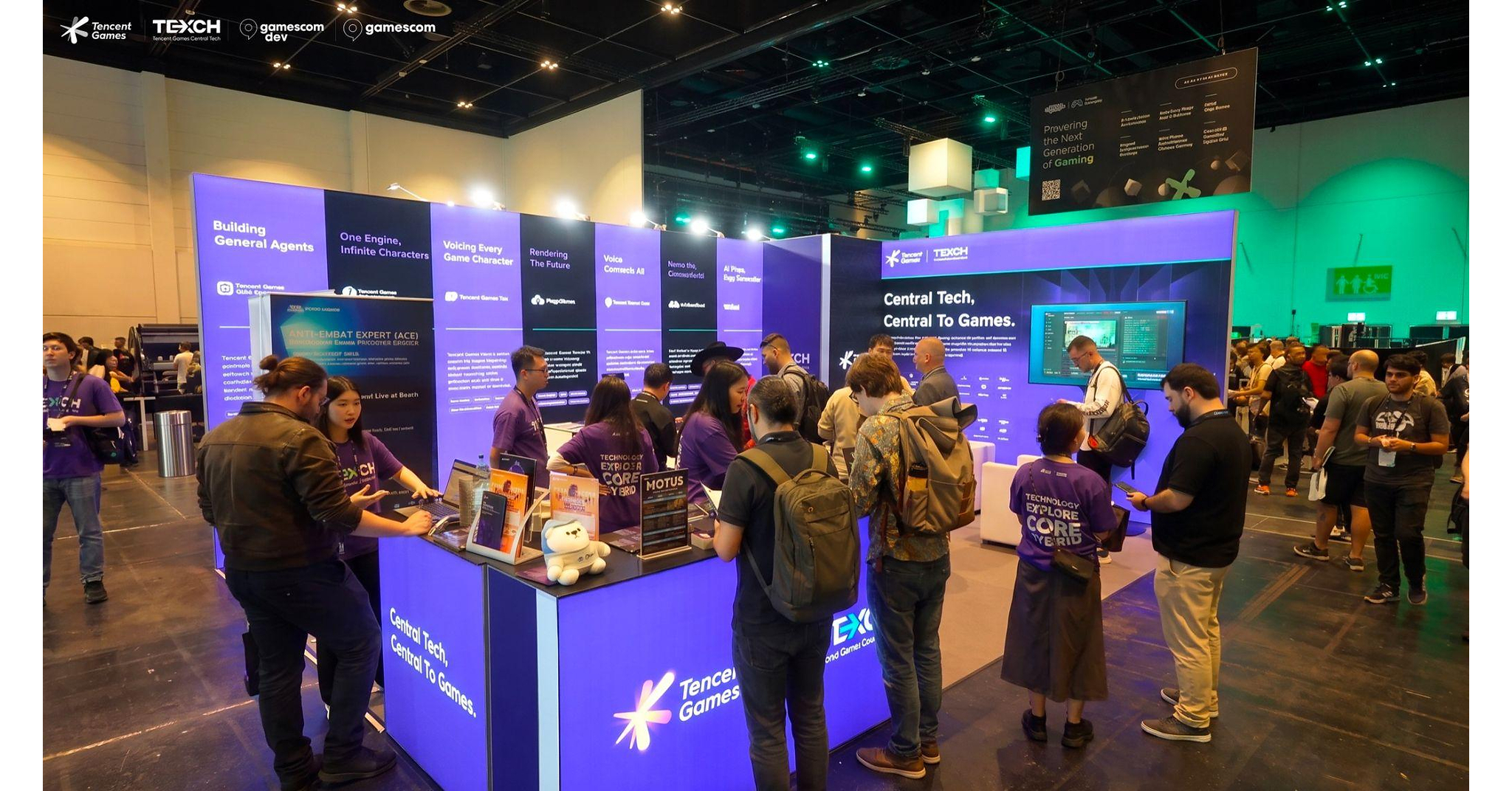
Tencent Games Central Tech debuted as a unified brand at gamescom, highlighting a full-pipeline proprietary AI portfolio spanning content production, gameplay experiences, and long-term live operations. The program emphasized integrated, workflow-ready AI systems (e.g., Motus digital character animation pipeline, GIGA agent-driven gameplay in virtual worlds) plus supporting infrastructure like AI testing (WeTest) and game security/anti-cheat (ACE). Overall, the news signals steady investment in AI-enabled game production capabilities, but without any specific financial metrics suggesting near-term stock or sector repricing.
Analysis
Tencent is trying to convert AI from a marketing narrative into embedded production infrastructure, which matters more for margin than for headline revenue. If the workflow integration is real, the first-order benefit is lower labor intensity in animation, testing, localization, and live-ops support; the second-order benefit is faster content cadence, which is the real moat in a hit-driven category. That advantage should accrue more to Tencent than to third-party tool vendors because proprietary pipelines are harder to displace than standalone models.
The losers are the labor-heavy edges of the ecosystem: outsourced art houses, QA shops, and middleware vendors that get squeezed when developers internalize more of the stack. Competitors like NetEase, EA, and Roblox face a higher content bar if Tencent can ship more personalized live-service updates and better anti-cheat controls, but there is also an industry-wide supply expansion risk: when everyone produces content faster, monetization can get diluted and user attention becomes the constraint. In that sense, the near-term winner may be Tencent’s operations team, while the medium-term winner is less clear unless the tools actually translate into superior engagement per dollar spent.
The consensus risk is overrating monetization timing. This is a multi-quarter operating efficiency story, not an immediate revenue re-rating, and the key bottlenecks are model reliability, moderation, and regulatory scrutiny around AI-driven interactions and data usage. The thesis is falsified if the next 1-2 earnings prints fail to show either better game gross margin, lower content opex, or clearer cadence on AI-enabled launches; over 6-18 months, the upside is structural only if Tencent proves repeatable title-level lift rather than one-off demos.
AllMind Terminal
AI-powered research, real-time alerts, and portfolio analytics for institutional investors.
Request TrialMarket Sentiment
Overall Sentiment
mildly positive
Sentiment Score
0.25
Ticker Sentiment
Key Decisions for Investors
- Hold off on an outright long until Tencent quantifies financial impact; treat this as a watch item into the next earnings call, with the thesis requiring evidence of margin expansion or lower content spend.
- If buying the equity on weakness, prefer TCEHY with a 1-2 quarter horizon and use a 3-5% pullback as entry; thesis breaks if game gross margin or bookings guidance does not improve after the AI rollout.
- Pair trade: long TCEHY / short U over 2-6 months to express the view that proprietary in-house game AI compresses the pricing power of external game development tools and workflow software.
- Watch for downside in outsourced QA/art services and small-cap game support vendors globally; if Tencent’s tools start spreading, those businesses face margin compression before it shows up in publisher P&Ls.
More News
- Musk says Terrafab chip factory could outperform rivals despite challenges
- CBO chief warns it’s ‘probably not plausible’ that a strong economy alone can steady U.S. debt as 5%-6% growth is needed—more than Bessent’s 3% view
- Stocks saw new highs and big declines: How the volatile AI trade moved last week's market
- Will Warner Bros. kill Skydance — or will David Ellison kill Warner Bros?
- Nvidia GPUs are everywhere. Here are the ways companies are accessing them
- Cerebras Is About as Big as Nvidia's Data Center Business Was Nearly a Decade Ago. The Similarities Mostly End There.