
CDTL met en avant ses technologies E-Drive et EMB pour les véhicules utilitaires lors du salon IAA Transportation 2026
Source: PR Newswire
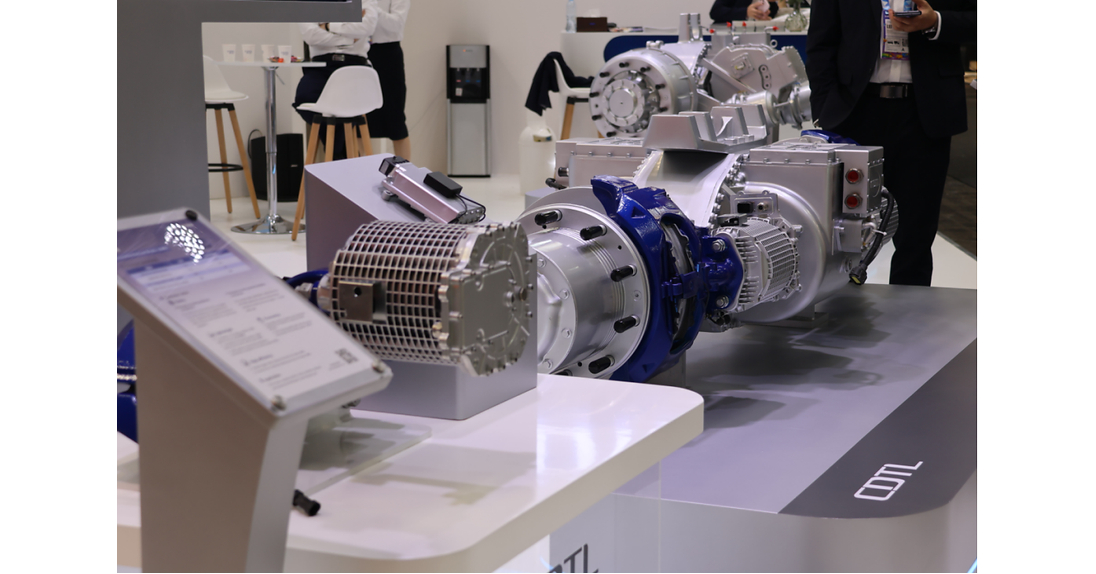
CDTL showcased electric-drive axle and electromechanical braking technologies for commercial vehicles at IAA Transportation 2026, highlighting an 800V EA5000NP axle with up to 660 kW rated and 900 kW peak output; its underlying platform has been deployed in more than 3,000 vehicles. Its EMB braking system has entered small-series vehicle use and is claimed to cut vehicle weight by over 100 kg, reduce braking distance by about 10%, and lower brake-system energy consumption by up to 85.4%. The company cited growing engagement from global OEMs as commercial-vehicle markets shift toward electrification, intelligent systems, and autonomous driving.
Analysis
This is not yet an investable demand signal: trade-show engagement and small-series deployment do not establish OEM nominations, warranty economics, or a scalable European service footprint. The more consequential implication is that electrified commercial-vehicle architectures are shifting value from traditional mechanical driveline content toward integrated e-axle, software, power-electronics, and redundant actuation systems. That creates medium-term content risk for axle and conventional braking suppliers with limited software/control capability, while favoring scaled system integrators such as ZF (private), Knorr-Bremse (KBX.DE), and Brembo (BRE.MI) if they can monetize safety-certified brake-by-wire platforms.
The near-term bottleneck is certification rather than hardware performance. Heavy-duty brake-by-wire requires redundant power, fail-operational controls, homologation, fleet validation, and OEM liability acceptance; these processes make 6-18 month order conversion materially more relevant than exhibition visibility. A credible low-floor bus or autonomous-shuttle deployment could accelerate demand for integrated corner modules, but it may also pressure incumbent suppliers' pricing as Chinese component makers use domestic production scale to enter Europe.
Consensus may overestimate how quickly reduced component weight translates into fleet adoption. For truck operators, payload, uptime, repairability, residual value, and charging economics matter more than theoretical efficiency; any field failure could delay platform adoption across an entire OEM program. The key falsifiers are disclosed European OEM production awards, independently verified fleet reliability data, and evidence that service/parts networks can support commercial fleets outside the supplier's home market.
AllMind Terminal
AI-powered research, real-time alerts, and portfolio analytics for institutional investors.
Request TrialMarket Sentiment
Overall Sentiment
moderately positive
Sentiment Score
0.42
Key Decisions for Investors
- No directional trade on CDTL-related claims until named OEM awards, annual unit volumes, and warranty/service terms are disclosed; treat IAA visibility as an alert rather than a catalyst.
- Monitor KBX.DE over the next 1-3 months for OEM commentary on electromechanical braking and commercial-vehicle order intake. A disclosed loss of brake-by-wire content or pricing pressure from Asian entrants would support a tactical underweight; absent that evidence, the installed-base aftermarket remains a meaningful offset.
- Watch BRE.MI as a liquid listed proxy for brake-by-wire valuation sensitivity over 6-18 months. Consider accumulating only after confirmation that its technology roadmap wins commercial-vehicle or autonomous-platform content; the thesis is invalidated if adoption remains confined to low-volume pilots.
- For broader electrified truck exposure, prefer OEMs with identifiable platform volume and service networks over component-technology narratives. Track Daimler Truck (DTG.DE) and Volvo (VOLV-B.ST) order books and total-cost-of-ownership guidance; weakening fleet economics or delayed charging deployment would reverse the electrification-content thesis.
More News
- Italy to deploy warships to protect shipping through Bab al-Mandeb
- Oil prices fall for 3rd day as supply concerns ease, diplomacy in focus
- Saudi Pivots Oil Routes After Pipeline Attack
- This AI-picked stock jumps 18% on Amazon’s $8 billion power deal
- Asian stocks rise as oil retreat eases inflation fears, BOJ in focus
- How record diesel prices will rip through the U.S. economy. Trucks and rails are only the start