
Leopard Imaging® and Lumotive Introduce "Sirius Max" -- A Long-Range Software-Defined 3D Perception Platform for Robotics and AI
Source: PR Newswire
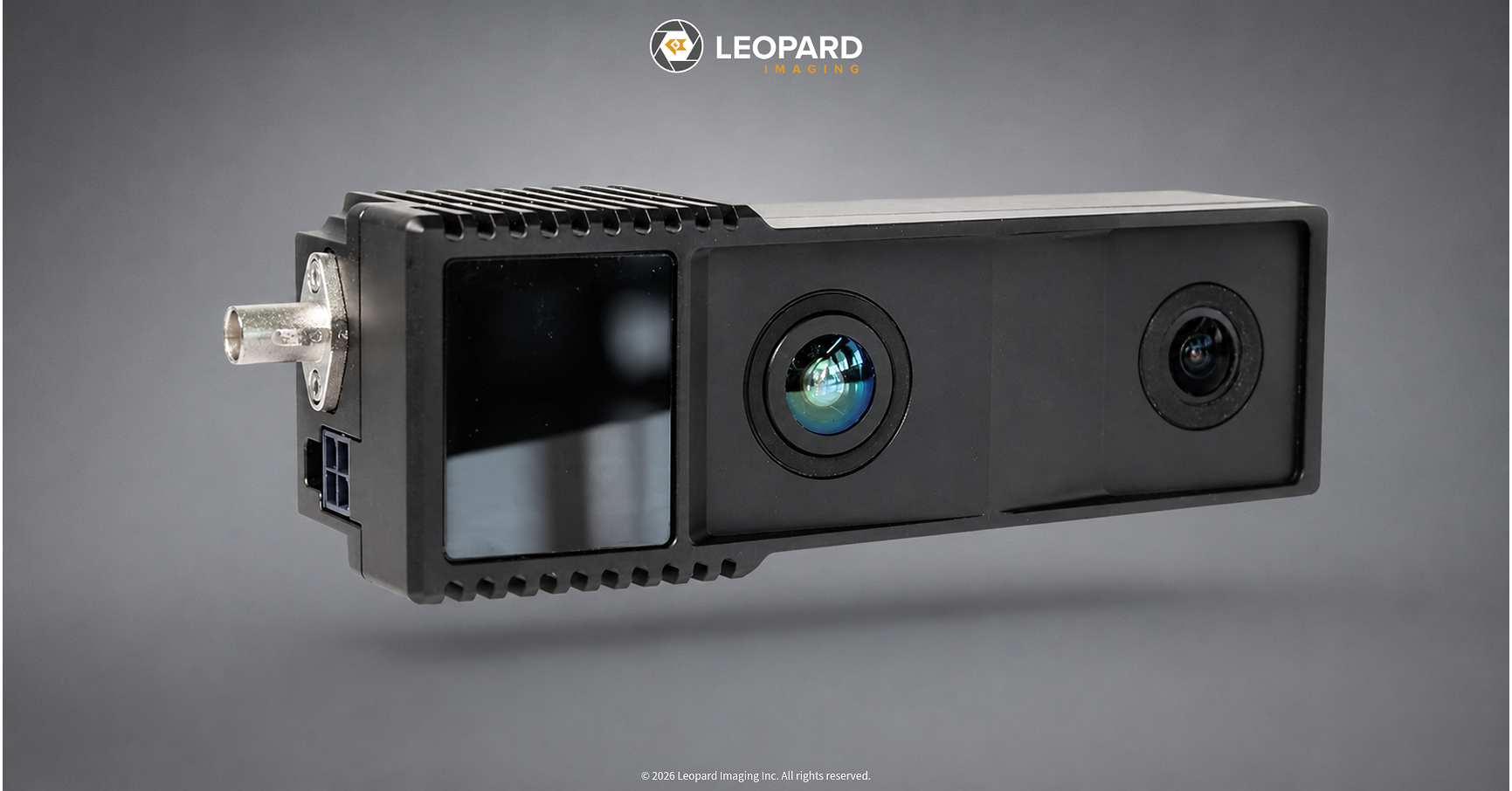
Leopard Imaging and Lumotive launched Sirius Max, a solid-state RGB-plus-depth 3D LiDAR camera platform for robotics, industrial automation, autonomous machines and edge-AI systems. The platform combines Lumotive's TX10 programmable beam steering with an onsemi AF0130 depth sensor, delivering 1MP depth resolution and iToF sensing beyond 20 meters indoors and outdoors. Software-defined scanning, region-of-interest control and single-cable GMSL2 connectivity are intended to consolidate functions such as SLAM, collision avoidance and navigation into one low-power sensor platform.
Analysis
This is not yet a public-equity earnings event: the vendors are private, no design win, unit pricing, automotive qualification status, or production ramp has been disclosed. The investable read-through is therefore limited to component-content optionality rather than a near-term revenue estimate. The listed depth imager points to onsemi (ON): a successful shift from fixed-field time-of-flight toward programmable illumination could raise depth-sensing ASPs and attach rates in industrial/robotics modules, but the initial revenue base will be immaterial against ON's automotive and power-semiconductor exposure.
The more consequential second-order issue is sensor consolidation. If a combined RGB/depth module can reliably replace separate stereo cameras, flood-illuminated ToF units, and portions of short-range lidar coverage, it pressures commodity camera-module and conventional VCSEL/flood-illumination suppliers while favoring edge-compute vendors able to process fused sensor streams. NVIDIA (NVDA) and Qualcomm (QCOM) are indirect beneficiaries only if deployments convert into higher compute content; at this stage, the bottleneck remains OEM validation, functional safety, outdoor performance, and total system cost rather than sensing capability.
Near term, treat this as a private-market technology validation signal, not a reason to chase public lidar beta such as LAZR, INVZ, AEVA, or OUST. The product's claimed >20m range sits in the robotics/industrial perception category, where purchase cycles are typically 6-18 months and customers require field reliability data; it does not establish competitiveness in long-range automotive lidar. The thesis improves only with named OEM/robotics design wins, volume commitments, ASP disclosure, and evidence that programmable scanning reduces system BOM rather than merely adding optical complexity.
AllMind Terminal
AI-powered research, real-time alerts, and portfolio analytics for institutional investors.
Request TrialMarket Sentiment
Overall Sentiment
moderately positive
Sentiment Score
0.45
Key Decisions for Investors
- No directional trade on the release; avoid using LAZR, INVZ, AEVA, or OUST as proxies, since their valuation drivers are automotive program awards, cash runway, and production execution rather than this architecture.
- Place ON on a 1-3 month watchlist for confirmation of AF0130 depth-sensor content in production programs. Upgrade the read-through only if a named customer, annualized module volume, or incremental industrial-imaging guidance emerges; otherwise the likely revenue impact is below disclosure materiality.
- For robotics exposure, prefer established compute/platform beneficiaries NVDA or QCOM only after evidence of commercial deployment. A practical trigger is two or more named OEM integrations or a production-design-win announcement; absent that, sensor innovation is unlikely to change their revenue trajectory.
- Monitor private-company funding, automotive functional-safety certification, and independent outdoor-range testing over 6-18 months. Failure to demonstrate performance in sunlight, contamination, and vibration would falsify the sensor-consolidation thesis and preserve the incumbent multi-sensor architecture.
More News
- Saudi, Turkish, Pakistani chiefs plan urgent talks amid Yemen fighting
- Trump Versus Xi: How Their High-Stakes Summits Compare
- SEBI Allows Portfolio Managers to Invest Overseas, Short Equity Options
- Trump, Xi Address AI, Taiwan During State Visit
- Oracle Japan shares surge 7% after record fiscal first quarter, bucking selloff of U.S. parent
- China's Xi urges U.S. to cooperate on AI