
Howmet Rises 21.4% in Past Year: Should You Buy the Stock?
Source: zacks.com
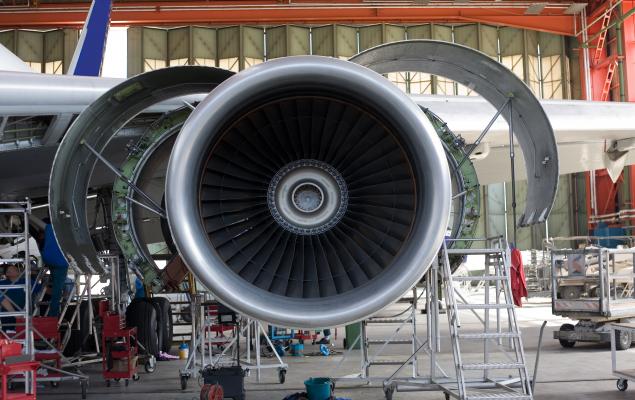
Howmet shares gained 21.4% over the past year, and the company raised its 2026 revenue outlook to $10.00–$10.10 billion, with adjusted EPS guidance of $5.23–$5.31. Second-quarter commercial aerospace revenue rose 28% year over year and defense aerospace revenue increased 11%; first-half free cash flow was $838 million, up 75%. Growth and shareholder returns are offset by $4.1 billion of long-term debt and a 37.73x forward P/E, above the 28.37x industry average.
Analysis
The stronger underwriting case is aftermarket mix, not simply higher airframe build rates: sustained utilization can support component replacement demand even if OEM deliveries remain constrained. That makes HWM less exposed than an OEM to near-term delivery slippage, but it does not eliminate production risk—accelerating build rates can strain supplier capacity and working capital before revenue converts to cash. The key 1–3 month test is whether commercial growth and free-cash-flow conversion persist, rather than whether guidance is raised again.
At a premium valuation, execution has little room for disappointment. The acquisition-funded debt increase also changes the capital-return calculus: continued repurchases may support EPS near term, but would be less accretive to equity value than deleveraging if financing costs or integration demands rise. The article’s TXT/LHX valuation comparison is not a clean relative-value signal; their business mixes differ, so their lower multiples do not establish HWM as mispriced.
Contrarian point: production bottlenecks could prolong high fleet utilization and spare demand, cushioning HWM if aircraft delivery recovery is slower than expected. Conversely, that benefit is vulnerable if airline utilization softens or engine spare demand normalizes. Over 6–18 months, monitor acquisition integration, debt reduction, and whether aftermarket growth remains broad-based. Falsifiers: a cut to 2026 outlook, sustained deceleration in commercial aerospace growth, or weakening free-cash-flow conversion.
AllMind Terminal
AI-powered research, real-time alerts, and portfolio analytics for institutional investors.
Request TrialMarket Sentiment
Overall Sentiment
moderately positive
Sentiment Score
0.40
Ticker Sentiment
Key Decisions for Investors
- Do not chase the momentum at a premium multiple. Consider a staged long only after the next results confirm aftermarket demand and cash conversion; use a defined-risk call spread rather than an unhedged position if exposure is desired.
- Keep the position modest until the acquired business’s contribution, integration costs, and post-deal leverage trajectory are independently clear. Favor debt reduction over buybacks as the thesis strengthens.
- Set a thesis review trigger on any guidance reduction, sequential deterioration in commercial aerospace growth, or falling free cash flow despite reported earnings growth; those would undermine the aftermarket-quality premium.
- No TXT/LHX pair trade on headline P/E differences alone: business mix and earnings drivers are insufficiently comparable for that spread to isolate HWM valuation.
More News
- Cramer is closely watching Nvidia's massive buyback. Here's what he wants to see
- These stocks could benefit from a midterm election shake-up, JPMorgan says
- CH Robinson to Buy RXO for $5.8B in Bet on AI Model
- Nike’s China troubles: What are the implications for other sportswear brands?
- SpaceX stock climbs to highest since June, returning Musk to trillionaire status
- Schneider Electric drops $22.6B on PTC as datacenter boom rains money on infra companies