
ASUS Advances AI Factories with Integrated Infrastructure and Operational Governance
Source: PR Newswire
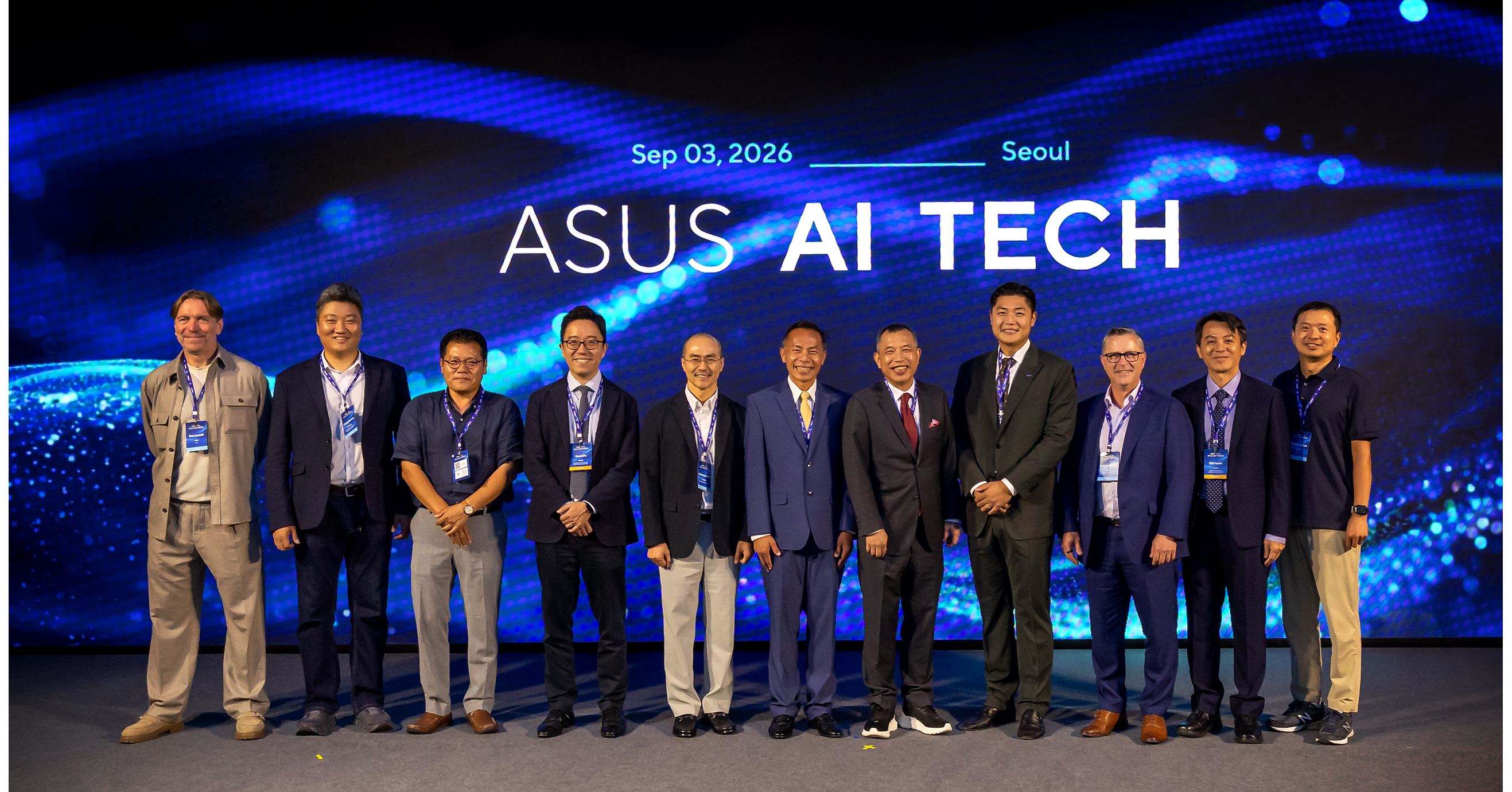
ASUS at AI Tech 2026 positioned an “AI factory” platform that unifies accelerated computing, simulation-validated deployment, and AI governance, aiming to shorten time to first token and accelerate time to revenue. The company highlighted 10X performance-per-watt for its ASUS AI POD (NVIDIA Vera Rubin NVL72-based) and showcased dedicated systems for agentic AI, edge/visual computing, and AI-native storage. While this is a strategic product/platform announcement rather than financial guidance, it signals strong demand for integrated AI infrastructure and operational control features.
Analysis
This is less a new AI-demand signal than a bargaining shift in where the economics accrue. If AI factories become validated, governed production systems rather than ad hoc hardware buys, the incremental margin pool migrates from raw compute toward rack integration, power, cooling, storage, and orchestration. That is structurally supportive for NVDA as the anchor platform, but the second-order winner set broadens to infrastructure enablers like SBGSY and, to a lesser extent, IBM if they can monetize the operations layer.
Near term, the headline is mainly sentiment support for NVDA rather than a revenue catalyst. Over the next 1-3 months, the key test is whether this language converts into enterprise backlog, deployment wins, and attach rates; if not, the market will likely fade it as another ecosystem PR and rotate back to names with harder proof of demand. AMD and INTC face a subtle but important issue: the more AI deployments standardize around a full-stack NVIDIA reference architecture, the harder it becomes for alternative silicon to win sockets on performance-per-watt and time-to-deploy rather than raw price.
The contrarian view is that consensus still overweights chips and underweights the operational bottleneck. In practice, AI monetization is gated by facility readiness, power density, compliance, and workflow integration, so the best risk-adjusted upside may sit in the picks-and-shovels around data centers and governance, not in the most crowded GPU trade. Falsifiers are straightforward: slower data-center capex, weaker enterprise AI conversion, or no follow-through in partner backlog and margins over the next 1-2 quarters.
AllMind Terminal
AI-powered research, real-time alerts, and portfolio analytics for institutional investors.
Request TrialMarket Sentiment
Overall Sentiment
mildly positive
Sentiment Score
0.20
Ticker Sentiment
Key Decisions for Investors
- Long SBGSY / short INTC for 1-3 months: express the view that AI factory spend increasingly monetizes through power, cooling, and facility gear rather than legacy CPU share; target 8-12% relative outperformance, invalidated if Schneider data-center order growth slows or Intel shows unexpected AI infrastructure share gains.
- Hold NVDA, but do not chase the headline. Use any 2-3% post-news pullback as an add point ahead of the next earnings cycle; the trade works only if management confirms broader enterprise/rack-scale demand and backlog conversion.
- Avoid initiating a fresh AMD long on this release. The announcement reinforces NVIDIA as the default enterprise architecture; if already long AMD, consider trimming versus NVDA until AMD proves it can win meaningful share outside price-sensitive or edge workloads.
- Treat IBM as a watchlist name, not an immediate trade. Buy only on evidence that governance/MLOps attach is becoming monetizable in reported bookings or services growth; otherwise the AI governance story remains too abstract for near-term P&L.
More News
- ‘How many canaries have we killed in the coal mine?’ — Wall Street debates if the latest AI bubble warnings are another head fake or the real thing
- Semiconductor market to remain solid ‘at least through next year,’ South Korea finance minister says
- Nasdaq Index: AI Selloff Deepens as Chips and CoreWeave Break
- Chip Stocks Just Fell 8 Days in a Row, Their Longest Losing Streak Since 2008
- Neocloud Stock Collapse: Buying Opportunity or Run for the Hills?
- PLTR Unique Value in Volatile AI Trade, New NVDA & NBIS Partnerships
From AllMind Research
- Anthropic IPO Preview: Valuation, Timing, and What to Watch
- Shein After the IPO: Venue, Valuation, and What Must Be Proved
- What AI Research Tools Should a Small Hedge Fund Buy First?
- AI Vendor Landscape for Institutional Investment Teams
- AllMind Fixed Income Compass for October 2025: Navigating Policy Divergence and Political Risk