
Hanwha Power Obtains ABS Approval in Principle for 22,000 CBM LNG Bunkering Vessel Concept Design
Source: PR Newswire
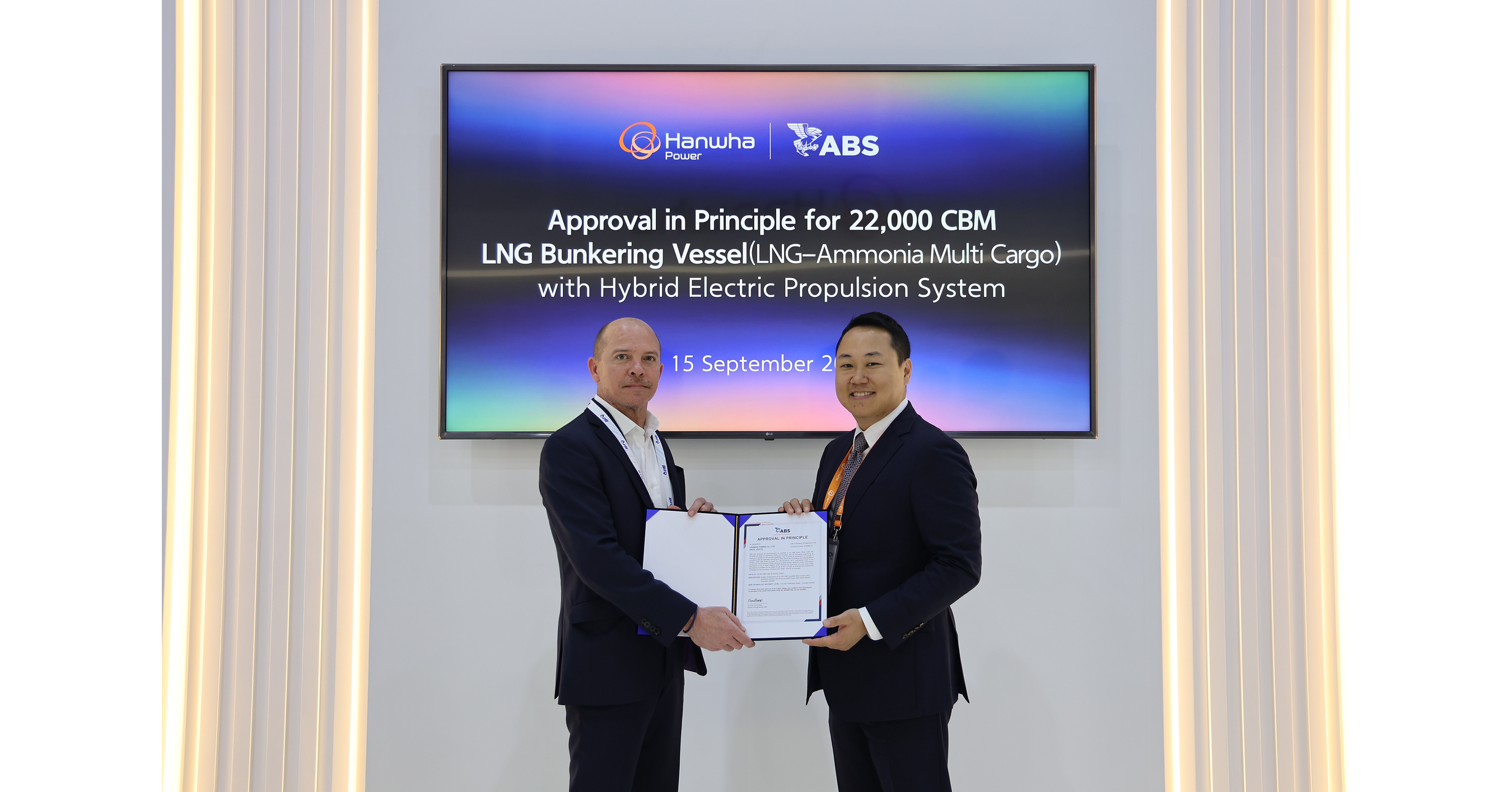
Hanwha Power received ABS Approval in Principle for a 22,000-CBM LNG bunkering-vessel concept, completing its medium- and large-scale LNG bunkering lineup spanning 7,500 to 22,000 CBM. The design can carry both LNG and ammonia and combines high-manganese-steel containment with hybrid electric propulsion, onshore power supply and energy storage. Hanwha is positioning the integrated engineering and procurement package, incorporating group technologies from Hanwha Ocean and Hanwha Engines, for demand tied to lower-emission marine transport.
Analysis
The commercial signal is modest: an AiP lowers design-validation friction but does not create an order backlog, advance payments, or margin recognition. The relevant equity sensitivity is therefore concentrated in Hanwha Ocean (042660 KS) and Hanwha Engine (082740 KS) only if the certification converts into a bundled vessel-equipment contract; integrated packages can raise content per ship and reduce price competition versus standalone equipment vendors, but also concentrate execution and warranty risk within the group.
The more investable second-order issue is fuel optionality. A vessel able to serve LNG today and ammonia later is valuable only if port infrastructure, ammonia safety standards, and charterer willingness to pay converge; until then, shipowners may favor lower-capex conventional LNG bunker tonnage. This favors established LNG containment, tank, and marine-engine suppliers in the near term, while limiting the immediate revenue relevance of ammonia optionality. Competitors HD Hyundai Heavy Industries (329180 KS) and Samsung Heavy Industries (010140 KS) are likely to respond through comparable integrated designs, reducing any durable technology premium.
Over the next 1-3 months, monitor tender announcements, contract value, delivery slots, and whether customers commit to the multi-cargo specification rather than merely accepting it as an option. Over 6-18 months, a sustained order cycle would support higher-margin systems content and aftermarket revenues, but the thesis is falsified if no commercial order emerges by the next major maritime contracting season, or if ammonia regulations and bunkering commitments slip. Consensus may overvalue certification milestones in a capital-goods cycle where shipowner financing, charter coverage, and yard capacity—not concept approval—determine conversion.
AllMind Terminal
AI-powered research, real-time alerts, and portfolio analytics for institutional investors.
Request TrialMarket Sentiment
Overall Sentiment
moderately positive
Sentiment Score
0.42
Key Decisions for Investors
- No immediate directional trade on the approval alone; treat it as an alert for Hanwha Ocean (042660 KS) and Hanwha Engine (082740 KS). Upgrade only after a named contract with disclosed vessel count, delivery dates, and group-content value, since AiP without backlog has limited earnings sensitivity.
- For a 6-12 month marine-transition basket, prefer a small long Hanwha Ocean (042660 KS) versus short Samsung Heavy Industries (010140 KS) only if Hanwha discloses a bundled LNG/ammonia bunker-vessel award. The pair isolates integrated-systems conversion; exit if Samsung matches the order flow or Hanwha's award economics imply low-margin turnkey pricing.
- Watch HD Hyundai Heavy Industries (329180 KS) as the likely competitive read-through rather than a beneficiary of this specific development. A broad increase in LNG-bunkering tenders would be sector-positive, but a single Hanwha design win could pressure peers' pricing and should not be extrapolated into industry-wide volume growth.
- Require evidence of customer-funded ammonia-capable orders before assigning strategic-option value to alternative-fuel exposure. Key falsifiers are delayed port-bunkering standards, weak charter-rate premiums for dual-fuel vessels, or orders reverting to LNG-only designs; any of these would compress the valuation premium attached to future-proofing.
More News
- Japan’s corporate leaders sound alarm over weak yen — even dollar-earners are voicing concerns
- US official says upcoming spectrum auctions could generate more than $100 billion
- 'Science fiction': Transport companies — the backbone of economy — are sounding alarm on fuel prices
- Investors react to Fed hike and market sell-off: Brace for 'higher for longer' rates
- Oil Extends Slump as Saudi Arabia Moves to Restore Key Pipeline
- AI Buildout Hits Inflation as Fed Hikes Rates