
Hedge Funds Are Rebuilding Short Bets Against Japan’s Yen
Source: Bloomberg
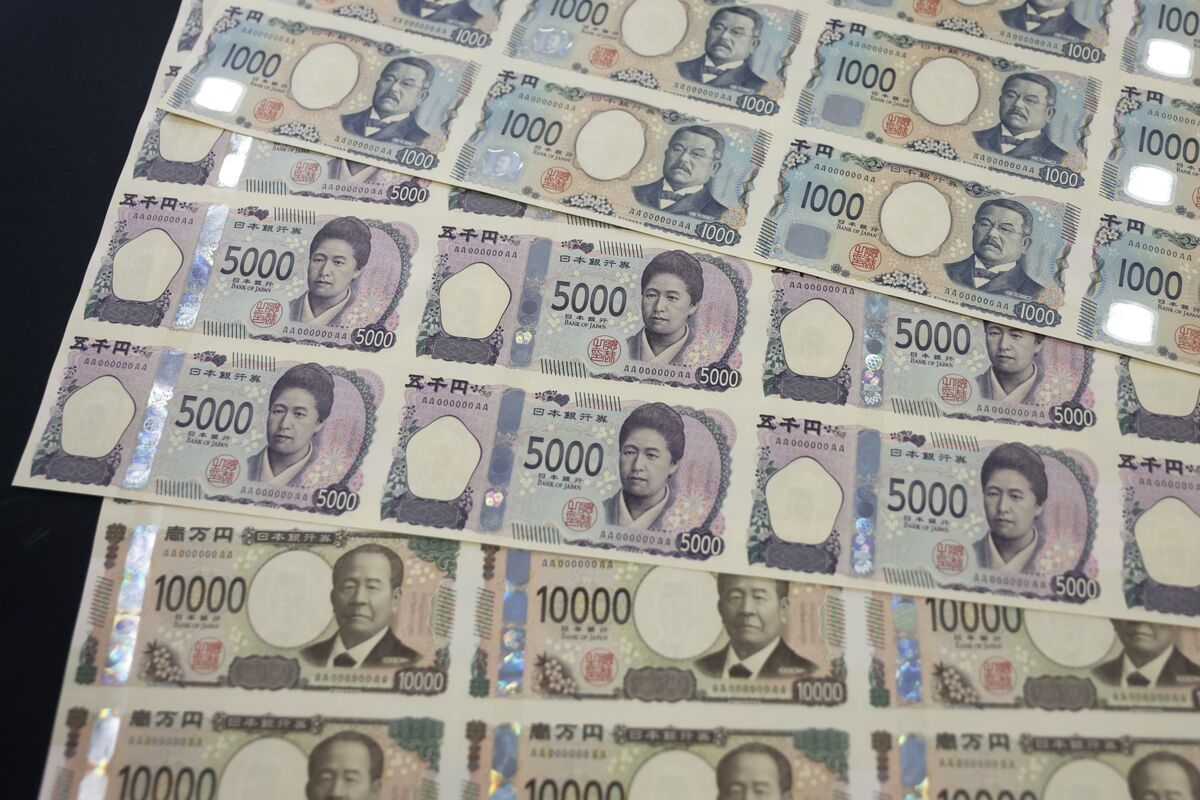
Leveraged hedge funds held roughly ¥210 billion ($1.3 billion) in net bearish yen positions for the week ended Sept. 29, according to CFTC data compiled by Bloomberg. Traders reversed the prior two weeks' bullish positioning, signaling renewed speculative pressure on the Japanese currency. The data indicates negative near-term sentiment toward the yen but is unlikely by itself to drive broad FX markets.
Analysis
The positioning reversal is directionally supportive of USD/JPY, but the disclosed futures exposure is too small to establish a crowded carry trade on its own; it excludes much of the institutional spot, swap and options market. The more important mechanism is whether renewed short-yen demand coincides with a widening US-Japan front-end rate differential and suppressed USD/JPY implied volatility. If so, systematic carry strategies can add momentum over days to weeks, pressuring unhedged Japanese equity returns for foreign investors while supporting exporters’ translated earnings.
The asymmetry remains unfavorable for outright yen shorts over a 1-3 month horizon: BoJ normalization surprises, a softer US payroll/CPI sequence, or a risk-off equity shock can trigger rapid short-covering because the yen retains its funding-currency role. USD/JPY downside moves of 3-5% can occur faster than carry accrual, and official Japanese rhetoric becomes materially more market-relevant as spot approaches prior intervention zones. The key falsifier for a bearish-yen thesis is a sustained decline in US 2-year yields or a BoJ communication shift toward a clearly defined next hike rather than gradual normalization.
Second-order equity implications favor Japan exporters with limited dollar hedging—Toyota (TM), Honda (HMC), Sony (SONY), and machinery names in EWJ—but the cleaner expression is exporter-heavy DXJ versus currency-hedged alternatives only if USD/JPY is breaking higher alongside Japanese earnings revisions. A weaker yen is not uniformly bullish for Japan: domestic retailers, utilities and import-dependent consumer names face renewed input-cost pressure, limiting the broad-market benefit. Consensus may be over-reading a modest futures signal; absent confirmation from risk reversals, cross-currency basis and US-Japan rate spreads, this is a tactical flow indicator rather than a structural FX regime call.
AllMind Terminal
AI-powered research, real-time alerts, and portfolio analytics for institutional investors.
Request TrialMarket Sentiment
Overall Sentiment
mildly negative
Sentiment Score
-0.25
Key Decisions for Investors
- Tactical only: maintain a small long USD/JPY position for 2-6 weeks, preferably via USD/JPY call spreads rather than outright spot. Enter only on confirmation from higher US 2-year yields and a breakout above the prior 20-day high; target 2-3% upside with a 1% spot stop, as intervention/BoJ headline risk creates poor convexity for unhedged shorts.
- Use FXY put spreads or YCS selectively as listed-equity proxies for yen weakness; cap premium at 25-50bp of NAV and use 1-3 month maturities. Do not add merely on CFTC positioning—require USD/JPY options skew to remain bid for calls, indicating broader demand beyond futures.
- If USD/JPY rises while earnings revisions turn positive, pair long DXJ against short FXY over a 1-3 month horizon. Exit if USD/JPY falls below its 50-day moving average or Japanese authorities escalate from verbal warnings to explicit intervention language.
- Avoid a broad EWJ long solely on yen weakness. Prefer exporter baskets or DXJ, and monitor Japanese CPI/import-cost data: renewed imported inflation could force a more hawkish BoJ response and reverse both the FX and equity-expression thesis.
More News
- Traders Waver on Fed Hike Bets After Jobs Report
- EM Assets Find Relief as US Jobs Data Eases Rate Fears
- The next weak link in Europe’s bond market? UBS has a new short position
- Trump vs Europe as US presses for release of emergency diesel stocks
- US Stocks Rise Despite Soft Jobs Report
- U.S. to send third carrier group to Mideast as Trump warns of new Iran strikes
From AllMind Research
- Anthropic IPO Preview: Valuation, Timing, and What to Watch
- Shein After the IPO: Venue, Valuation, and What Must Be Proved
- What AI Research Tools Should a Small Hedge Fund Buy First?
- AllMind Discusses Ontario's AI Economy with Minister Stephen Crawford and Supply Ontario CEO James Wallace
- AI Research Tools for SEDAR+, UK and ASX Filings