
Hisense présente la couleur fidèle au réel, le confort oculaire et un divertissement immersif à l'IFA 2026
Source: PR Newswire
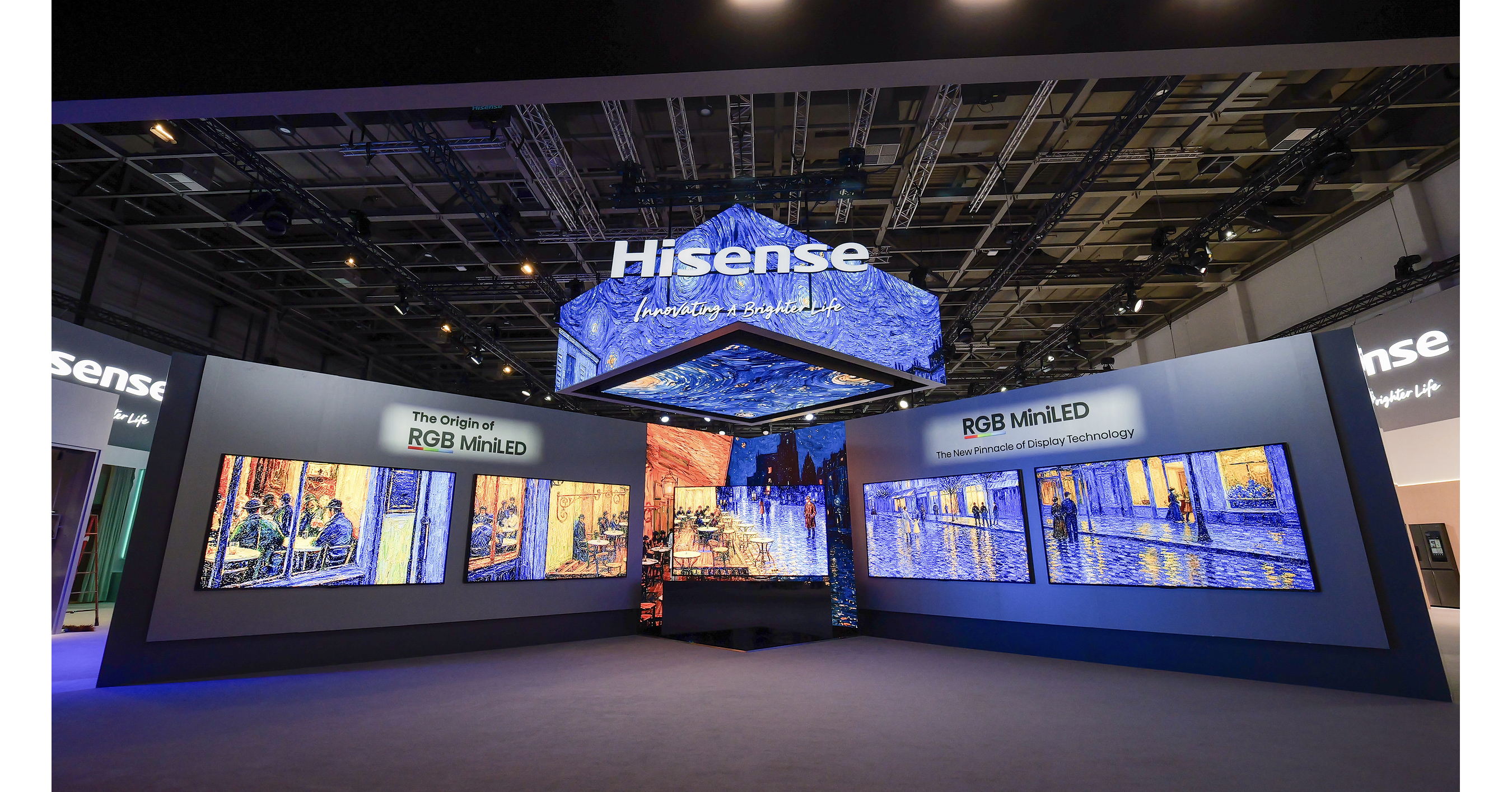
Hisense annonce à l’IFA 2026 (Berlin) une gamme TV/audio et laser centrée sur le confort oculaire et les couleurs. Le modèle européen 116UXS inaugure une nouvelle génération MiniLED RGB avec rétroéclairage quadrichromique et atteignant 110% de la gamme BT.2020, avec une luminosité max de 10 000 nits et une réduction de la lumière bleue certifiée TÜV Rheinland (Low Blue Light). La société met aussi en avant la technologie Field Sequential Display (FSD) avec des fréquences jusqu’à 360 Hz et propose des récompenses IFA Innovation Awards (barre de son UX1 winner; plusieurs TV/projection laser honorees), signalant un positionnement produit en amélioration plutôt qu’un changement financier immédiat.
Analysis
This is more a positioning event than a hard earnings catalyst. The incremental signal is that Hisense is pushing premiumization in large-format LCD and home-theater categories, which matters most for peers whose mix is already exposed to aggressive promotional activity: Samsung, Sony, TCL, and to a lesser extent Best Buy on retail margin mix. The near-term effect is likely narrative-driven share rotation, not a step-function in fundamentals, because certifications and awards do not by themselves prove sell-through or pricing power.
The second-order issue is margin structure. If this feature set becomes table stakes, competitors will likely respond with rebates, bundles, and channel subsidies, which can hold unit share but compress gross margin for 1-2 quarters. The structural winners are the component suppliers behind larger panels, backlights, and optics; the losers are brands trying to defend mid-tier LCD ASPs. The risk is that premium TV demand remains niche outside China, so the revenue uplift may be smaller than the marketing spend required to defend it.
Contrarian takeaway: the market may be overrating the pace of global adoption for RGB MiniLED and adjacent display features, while underestimating how quickly rivals can copy headline specs. A reversal would come if channel data show ASP declines faster than unit growth, or if competitors match the feature set within one product cycle. Until then, this looks like a watch item rather than a high-conviction long/short, with the cleanest expression being relative underperformance in premium TV names if pricing pressure shows up in upcoming channel checks.
AllMind Terminal
AI-powered research, real-time alerts, and portfolio analytics for institutional investors.
Request TrialMarket Sentiment
Overall Sentiment
mildly positive
Sentiment Score
0.25
Key Decisions for Investors
- No immediate directional trade; treat this as a 1-3 month channel-check event and wait for sell-through or promotional data before taking risk.
- If premium-TV pricing in North America/Europe starts softening, initiate a tactical short on SONY or use SONY calls/puts around the next earnings window; target 5-8% downside if margins miss on mix.
- Watch AUO and other display-supply proxies as conditional beneficiaries; if large-format panel design wins confirm, add on confirmation rather than on press-release momentum.
- Use BBY as a retail-margin tell: if TV promotions intensify into the holiday build, consider a short-term short or underweight versus XLY, with downside tied to gross-margin compression rather than unit demand.
- Set an alert for competitor response within 1 product cycle; if Samsung/LG/TCL match the feature set at lower price points, the thesis on Hisense-led share gains is likely overdone.
More News
- 'Cannot play hide and seek': Singapore minister's warning over haze sends agricultural stocks lower
- BlackRock, GIC among investors chasing Indian telecom major Jio's IPO as anchor bids top $26 billion
- Nscale, Anthropic Eye $45 Billion Cloud Deal as AI Trade Rebounds
- Volkswagen bet on Xpeng to save its China business. It’s not going to plan
- Gartner analyst behind tech rout: AI returns are not yet large enough to justify neocloud build-out
- Elice shares plunge 28% on debut as investor doubts over AI trade deepen