
Revize hodnoty sítí pro nový růst v éře umělé inteligence
Source: PR Newswire
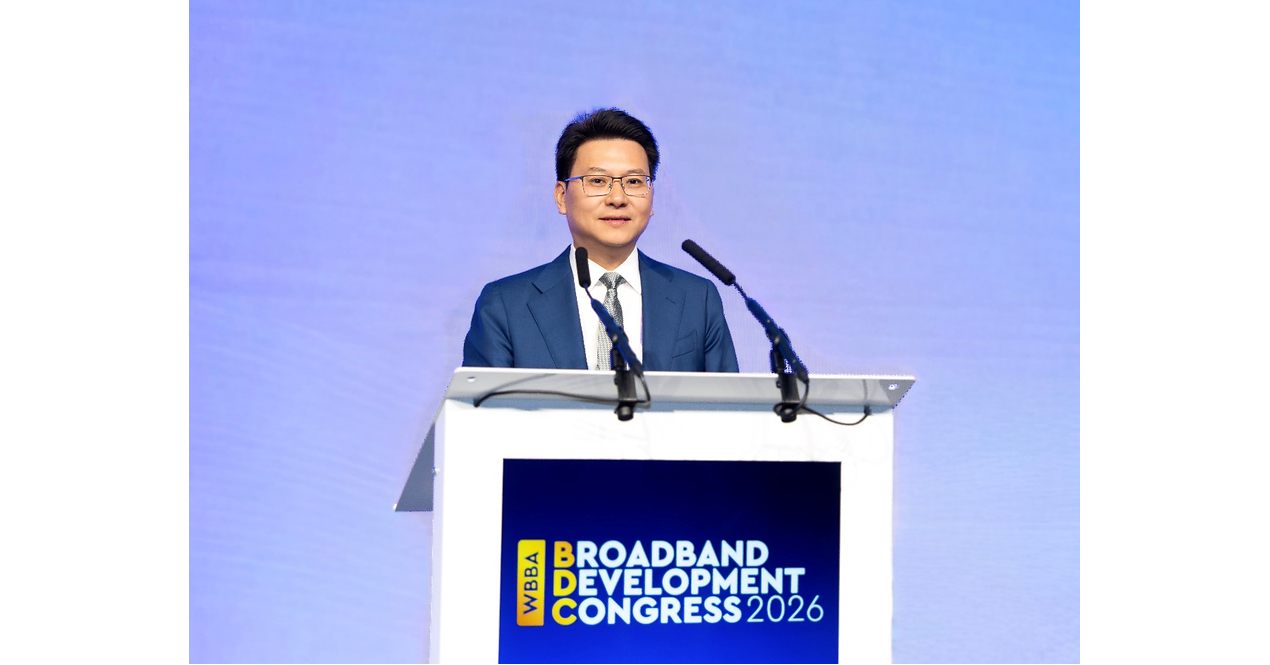
At Vienna’s Network X 2026, Huawei Optical Business president Bob Chen urged operators to rebuild network architecture around AI data centers, reshape offerings to bundle bandwidth with latency and reliability, and use AI to automate network operations. He cited nearly 50-fold growth in token consumption over the past year and said AI Wi-Fi tuning can raise speeds by about 20%, while AI-based power management can reduce equipment energy use by more than 20%. The article is a promotional industry outlook and reports no financial results or market reaction.
Analysis
Network AI: capex opportunity, monetization still unproven. The investable read-through is not that AI traffic automatically creates telecom pricing power. It is that traffic concentration around compute sites may redirect spending toward optical transport, data-center interconnect and fiber routes—and away from parts of legacy, region-centric networks. That creates potential order upside for optical vendors such as Ciena, Nokia and Ericsson, but also raises stranding and utilization risks for operators with poorly placed assets. Hyperscalers can capture much of the value themselves through private backbones and bargaining power, limiting operator returns.
The more consequential claim is premium pricing for latency and reliability. It works only where customers can verify service-level performance and have a business-critical reason to pay; otherwise, “bandwidth plus” risks being a repackaging of connectivity. AI-led network operations could improve operator costs, but vendor-reported efficiency gains are not evidence of consolidated margin expansion until replicated in operator disclosures. Home AI services look longer-dated and face weak differentiation.
Near term, this is low-signal promotional news, not a standalone catalyst. Over 1–3 months, monitor telecom capex guidance, optical order commentary and hyperscaler network spending. Over 6–18 months, the test is whether operators report paid enterprise SLA uptake and lower network operating costs. The thesis weakens if capex shifts to captive hyperscaler infrastructure, optical orders fail to convert into revenue, or operators report no pricing uplift despite traffic growth.
AllMind Terminal
AI-powered research, real-time alerts, and portfolio analytics for institutional investors.
Request TrialMarket Sentiment
Overall Sentiment
mildly positive
Sentiment Score
0.25
Key Decisions for Investors
- No immediate trade on the announcement. Treat Huawei’s performance and market-size claims as unverified; seek corroboration in vendor order disclosures and operator capex plans.
- Watch for evidence before expressing a long bias in optical networking (including Ciena, Nokia and Ericsson): sustained order growth and backlog conversion would support the case; weakening orders or delayed deployments would falsify it.
- For telecom operators, favor evidence over traffic narratives: look for disclosed enterprise SLA revenue, pricing uplift and network opex improvement. If these fail to appear over the next several reporting cycles, avoid paying for an AI-network monetization premium.
- Key risk alert: track hyperscaler build-versus-buy decisions and network capex. Greater use of private backbones could divert both traffic and returns from public operators, even as aggregate AI traffic rises.
More News
- Why did CoreWeave stock get crushed this week? Look to this corner of the debt market for clues
- AI stock sell-off ramps up over debt-fueled data center spending fears: ‘Full-blown crisis of confidence'
- Dow falls 189 points as AI stocks slide and oil prices surge
- Wall Street Anxiety Spreads as AI Rout Meets $110 Oil Shock
- Wall Street's fear gauge is ripping. Traders see it going even higher
- All the news about the iPhone Duo