
Australia Property Stocks, Oil Prices,
Source: Bloomberg
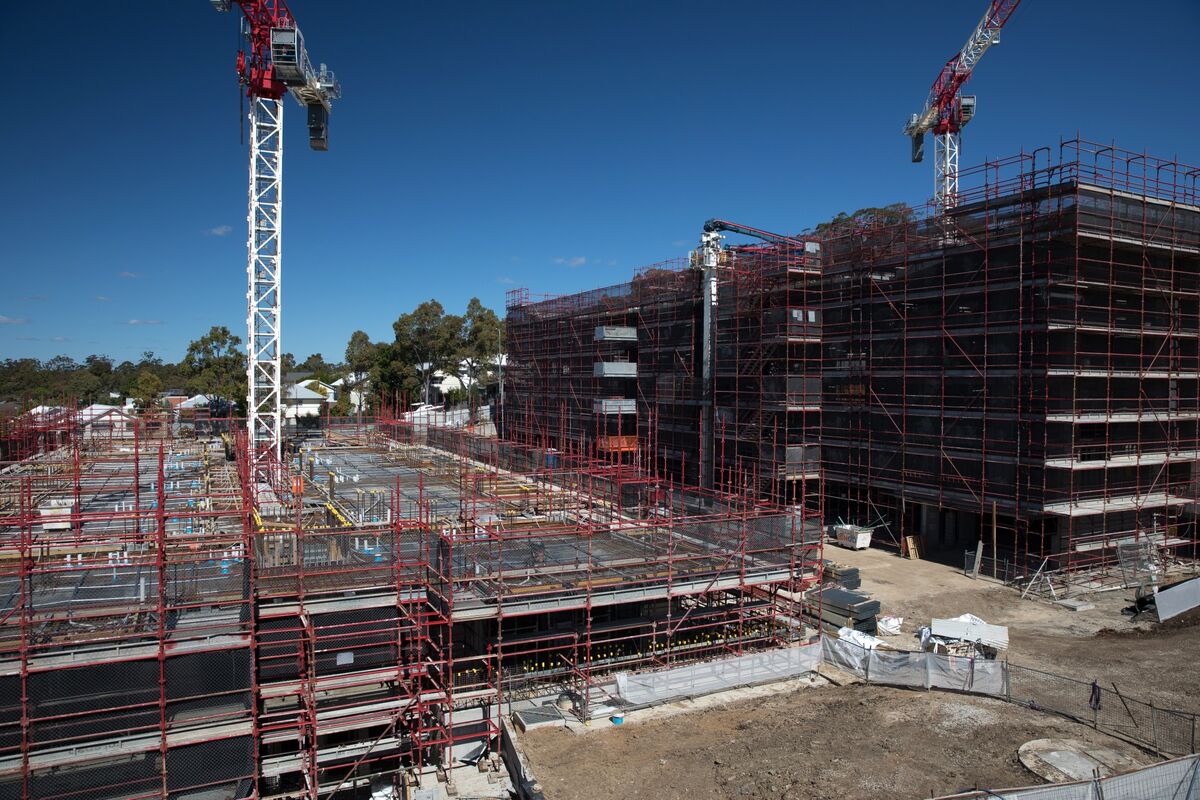
Australian listed property stocks are headed for their worst annual underperformance versus global peers since 2010, pressured by the Reserve Bank of Australia’s aggressive rate-tightening cycle and higher borrowing costs. Developers have already reported profit impacts, while the collapse of private developer Bathla has heightened investor concerns over financial stress across the debt-dependent sector. Analysts expect further downside as construction challenges and funding pressures persist.
Analysis
The market is likely over-generalizing private-development stress across listed real estate. The key differentiation is funding structure: SGP, MGR and LLC retain meaningful development-cycle exposure and are vulnerable to valuation write-downs, settlement delays and higher incentives, while GMG's earnings are more tied to logistics development management and third-party capital. A widening discount for all property securities would create relative value rather than a sector-wide short, particularly where recurring rent and low near-term refinancing needs protect distributable earnings.
The more important second-order risk is credit availability, not simply the policy rate. If bank and non-bank lenders retrench from construction finance, land values can reset before housing demand weakens; this pressures developers' book values, contractors and building-material volumes, while favoring well-capitalized operators able to acquire distressed sites. Watch CBA, NAB, WBC and ANZ for disclosed commercial-property impairment charges or tighter developer-lending standards: a move in provisions would turn an idiosyncratic failure into a broader earnings-risk event over the next 1-3 reporting periods.
Near-term sentiment can remain negative until companies quantify project-cost inflation, presales conversion and debt maturities. Over 6-18 months, a reduced pipeline could support rents and the value of completed housing/logistics assets, making indiscriminate bearish positioning dangerous if yields stabilize. The contrarian catalyst is a faster-than-expected easing cycle or evidence that listed developers are taking market share from undercapitalized private peers; that would drive NAV-discount compression before reported earnings recover.
AllMind Terminal
AI-powered research, real-time alerts, and portfolio analytics for institutional investors.
Request TrialMarket Sentiment
Overall Sentiment
strongly negative
Sentiment Score
-0.58
Key Decisions for Investors
- Establish a 3-6 month relative-value position: long GMG versus short an equal beta-weighted basket of SGP and MGR. GMG offers less direct residential-settlement and construction-finance sensitivity; exit if GMG's development-management fee guidance is cut or its industrial leasing spreads materially decelerate.
- Avoid adding outright long exposure to SGP, MGR or LLC before their next results disclose presales cancellation rates, project impairment assumptions, net debt/asset values and debt-maturity schedules. Upgrade only where interest coverage remains resilient under a further 100bp funding-cost stress.
- Use Australian bank results as a sector-risk trigger: buy downside protection on the S&P/ASX 200 A-REIT Index, or reduce listed-property beta, if any major bank raises commercial-property provisions or flags tighter construction-lending appetite. This is a 1-3 month contagion watch rather than a confirmed short thesis.
- For longer-horizon capital, monitor listed developers for distressed-land acquisitions rather than chasing a policy-rate bounce. A credible acquisition funded without meaningful leverage expansion could be a 6-18 month positive catalyst, whereas equity issuance below stated NTA would falsify the balance-sheet-quality thesis.
More News
- France’s latest debt warning describes a country where governance is breaking down — and even doing too little, too late is barely possible
- Here’s the ‘core economic flaw’ in the AI bull case as stock and bond trades unravel, according to a top economist
- How Pepsi fell behind in the cola wars—and then lost KFC
- 5 big analyst AI moves: ’Uniquely catalyst-rich’ months ahead for SpaceX
- Braskem creditors, shareholders near deal on $11bn debt restructuring
- Xencor reports phase 1 data for cancer drug XmAb819
From AllMind Research
- Anthropic IPO Preview: Valuation, Timing, and What to Watch
- Shein After the IPO: Venue, Valuation, and What Must Be Proved
- What AI Research Tools Should a Small Hedge Fund Buy First?
- Can Hedge Funds Use ChatGPT? A Control Framework
- Palantir (PLTR) Q4 2025 Earnings: 70% Revenue Growth, Then an 11% Single-Day Crash