
WISeQey, SEALSQ, SEALCOIN and Eco Wave Power Sign Three-Year MoU and Demonstrate Trusted Energy Transactions for AI Data Centers
Source: PR Newswire
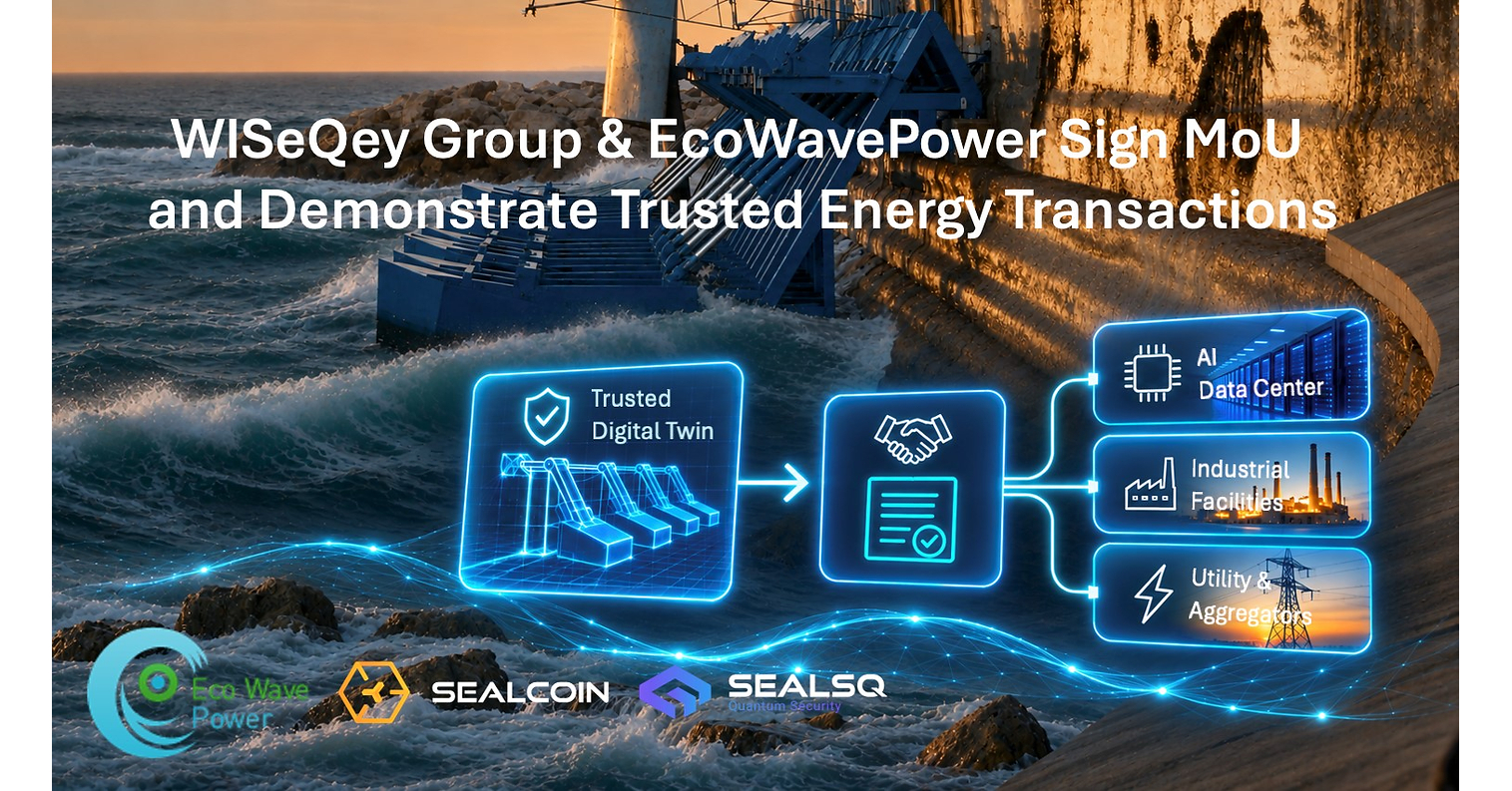
Eco Wave Power’s wholly owned U.S. subsidiary signed a three-year MOU with WISeQey, SEALSQ and SEALCOIN to develop and evaluate secure digital identities and automated transactions for renewable-energy assets, following a proof of concept at Eco Wave Power’s Jaffa Port wave-energy installation. The parties will explore potential applications for AI data centers and other energy buyers, but the demonstration is not an electricity supply agreement or completed financial settlement; commercialization remains subject to validation, regulation and separate agreements.
Analysis
The economic bottleneck is not authenticated metering: it is deliverable, competitively priced power with grid access, dependable output and a bankable offtake contract. A digital twin may reduce verification friction, but it does not turn site-dependent wave generation into firm data-center supply. That limits near-term earnings relevance for WAVE and makes the announcement more useful as ecosystem positioning than as evidence of commercial traction. LAES has possible application-level optionality for secure energy devices, but this single proof of concept does not validate product demand, qualification or revenue conversion.
Near term, the Nov. 19 demonstration is a sentiment catalyst, not a settlement or customer milestone; a promotional price move could fade. Over 1–3 months, watch for a named buyer, definitive supply agreement, independently verifiable generation data and disclosed price/volume terms. Over 6–18 months, the thesis needs repeatable deployments and evidence that wave power can meet buyer reliability and cost requirements. Main reversal risk is that AI power procurement favors established grid, storage and generation solutions while wave projects remain bespoke. The contrarian point: secure machine transactions sound strategically relevant, but likely sit downstream of the harder project-finance and interconnection constraints. Shell's prior collaboration on a WAVE pilot does not establish a role in this MOU or a supply commitment.
AllMind Terminal
AI-powered research, real-time alerts, and portfolio analytics for institutional investors.
Request TrialMarket Sentiment
Overall Sentiment
mildly positive
Sentiment Score
0.20
Ticker Sentiment
Key Decisions for Investors
- WAVE: Do not chase an announcement-driven rally; no position is warranted on this MOU alone. Reassess only on a definitive offtake or development agreement with disclosed capacity, delivery profile, pricing and funding responsibility.
- If WAVE gaps materially higher without those commercial details, consider a tactical fade only after confirming the move is not accompanied by a separate project or financing announcement; thesis is falsified by a binding data-center contract and credible delivery economics.
- LAES: Treat the collaboration as a watch item, not a revenue catalyst. Seek evidence of customer qualification, security-product selection and paid deployments before assigning commercial value; the Nov. 19 demo alone is insufficient.
- Monitor interconnection progress, project financing and independently measured WAVE output alongside any buyer announcement. Failure to advance those fundamentals over the next 6–18 months would undermine the AI-power narrative regardless of transaction-technology progress.
More News
- Magnificent 7 loses $1 trillion. The most eye-popping stats from Thursday's tech stock plunge
- Tech stocks are suffering their biggest selloff since Covid, as investors see premature end to AI datacenter boom
- Wall Street’s best post-midterm rally in 44 years lasted just one day—then $3 trillion vanished as chip stocks plunged over AI fears
- How Wall Street's postelection rally got obliterated — and what's next
- Elon Musk's Tesla and SpaceX lose over $420 billion in combined market cap after midterms
- AI stocks plunge after election, driving down US markets
From AllMind Research
- AllMind Platform Feature Updates - Fall 2026
- AI Credit Covenant Monitoring: From Clause to Review
- AI-Led Expert Interviews vs. Transcript Libraries
- Run Cost-Controlled Financial Research in AllMind Agent Studio
- AllMind Discusses Ontario's AI Economy with Minister Stephen Crawford and Supply Ontario CEO James Wallace