
Indonesia’s MSCI Downgrade Threat – What It Means for Investors: Podcast
Source: Bloomberg
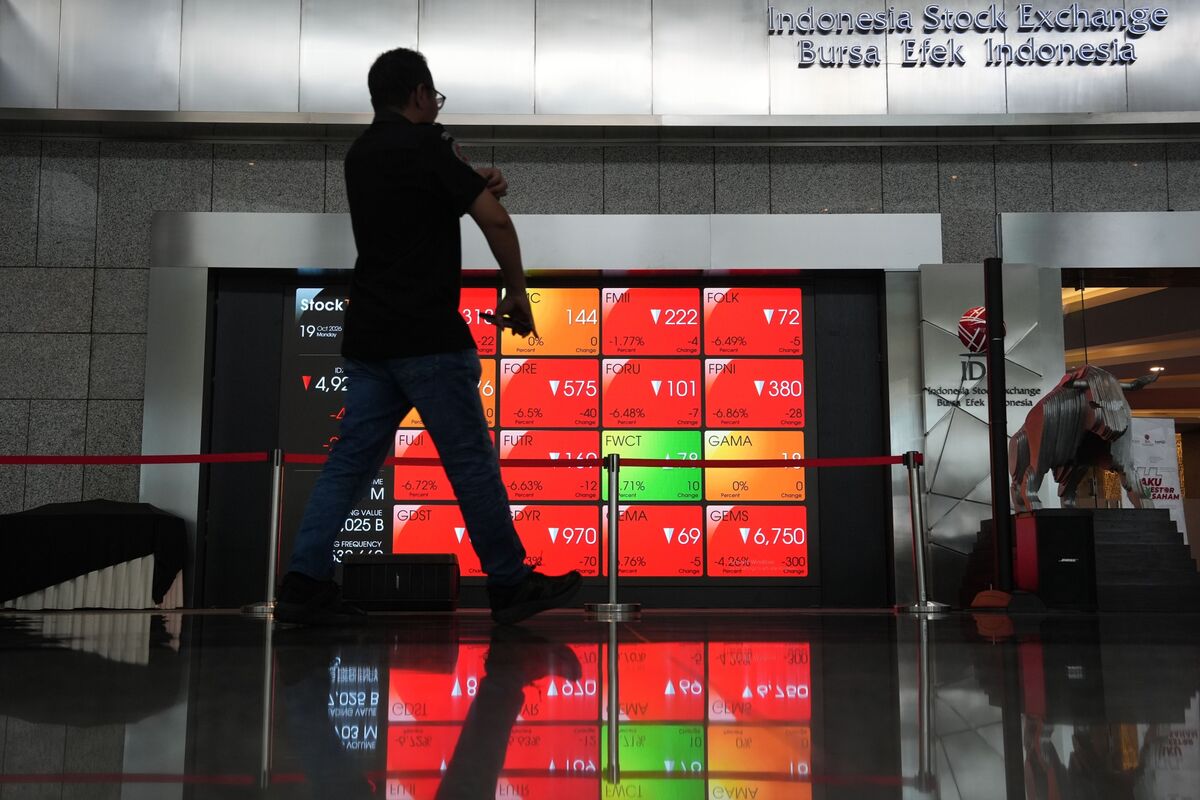
An MSCI double-downgrade warning preceded Indonesia’s sharpest stock-market selloff in nearly 30 years. The warning puts billions of dollars in foreign capital at risk; the article does not say a downgrade has occurred.
Analysis
The key risk is a flow-and-liquidity loop, not necessarily a deterioration in Indonesian company fundamentals: a downgrade or reduced index weight could prompt benchmarked investors to sell, while discretionary investors front-run those outflows. In a market already under stress, that can widen price impact and pressure the rupiah, making local assets less attractive to foreign holders. The scale is unquantifiable from the available information; the warning is not proof that a final classification change or a specific amount of forced selling will occur.
Over days, positioning and liquidity may dominate. Over 1–3 months, the catalyst is MSCI’s final decision and its implementation details—especially eligibility criteria, index weights, and timing. Over 6–18 months, sustained exclusion risk could raise the perceived cost of capital for Indonesian issuers and divert regional allocations toward other emerging markets, but that requires persistent rather than episodic outflows.
The contrarian case is that the downgrade warning may already be substantially reflected in prices after an unusually sharp selloff; forced selling could therefore be smaller than feared or create a rebound once uncertainty resolves. There is no clear fundamental read-through to MSCI Inc.’s earnings from this episode alone; treating the event as a short thesis in MSCI would be poorly grounded. Verify the final MSCI notice, passive assets tracking affected indices, actual foreign flows, and market liquidity before sizing exposure.
AllMind Terminal
AI-powered research, real-time alerts, and portfolio analytics for institutional investors.
Request TrialMarket Sentiment
Overall Sentiment
moderately negative
Sentiment Score
-0.45
Ticker Sentiment
Key Decisions for Investors
- Keep Indonesian equities on a tactical underweight/watch status rather than adding into weakness until MSCI publishes a final decision and implementation timetable. The thesis weakens if the warning is withdrawn or the final change is materially less restrictive than feared.
- If the downgrade is confirmed and foreign outflows persist, consider a relative-value short in Indonesian equities versus a diversified emerging-markets basket; size only after checking index exposure and liquidity. Reassess if foreign flows stabilize and the relevant benchmark weights are unchanged.
- Avoid a directional short in MSCI Inc. absent evidence of client losses, revenue sensitivity, or a change in guidance; the article establishes an index-policy event, not a material earnings impact.
- Set an alert for the final methodology notice, affected securities and weights, foreign portfolio-flow data, and rupiah behavior. These missing details determine whether the selloff is a temporary technical dislocation or a sustained cost-of-capital shock.
More News
- MSCI Fallout Widens With Indonesian Corporate Bond Sale Shelved
- Indonesia bond auction raises $1.14bn, falls short of target
- Big Take Asia: Indonesia Races to Avert MSCI Downgrade (Podcast)
- Asian currencies mixed as dollar holds firm, yen retreats ahead of Fed decision
- Anthropic's IPO could be 'speculative fiction' or a 'generational moment' — investors are split
- Fed expected to hold rates steady, but Warsh may point way to more hikes