
Dollar Heads for Worst Week in Over a Month as Warsh Stays Quiet
Source: Bloomberg
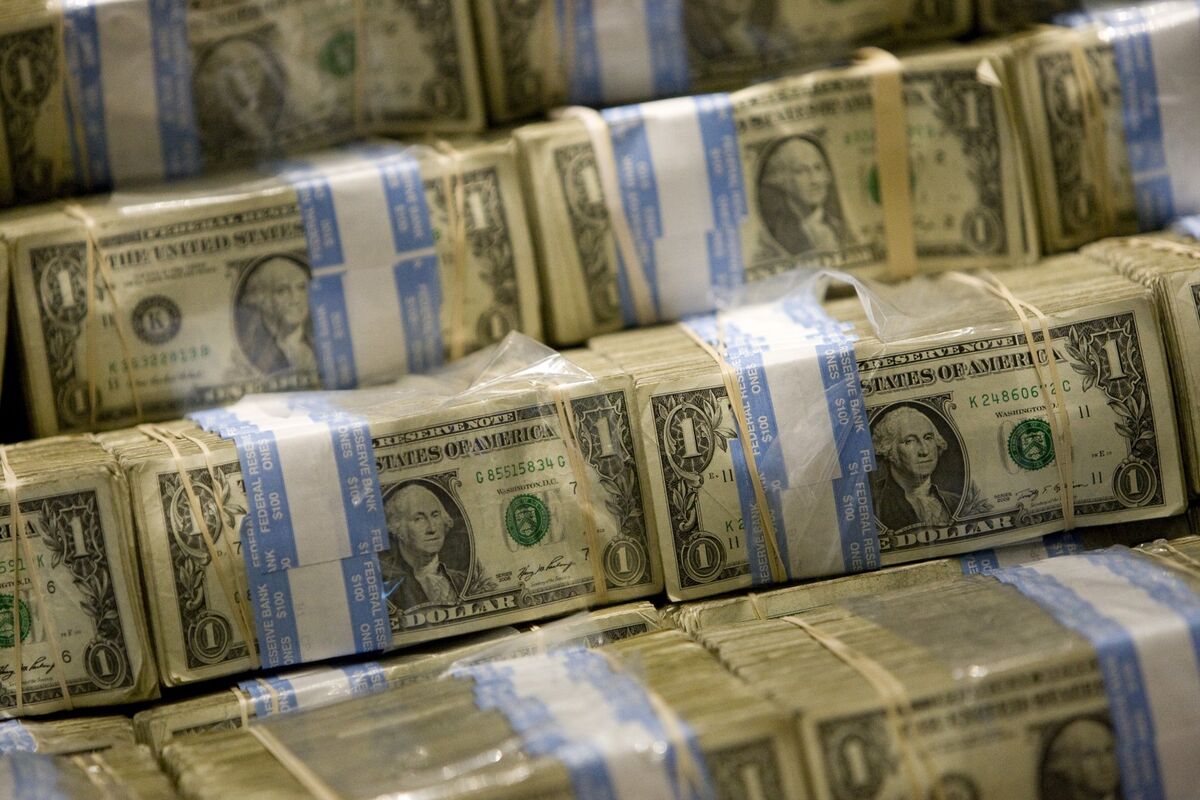
The Bloomberg Dollar Spot Index fell as much as 0.4% Friday, putting the dollar on track for its worst week since Sept. 4 and ending a four-week winning streak. The dollar weakened against most major peers as remarks from Federal Reserve Chairman Kevin Warsh failed to lift it; the euro advanced and was poised to snap a five-week losing streak.
Analysis
The signal is a failure of Fed-chair remarks to produce a fresh hawkish repricing—not evidence, by itself, of a durable change in relative policy. That makes the dollar move vulnerable to reversal if US data or subsequent Fed communication lifts rate expectations. The near-term market mechanism is likely rates and positioning; without confirmation in US yields and rate differentials, a one-week dollar decline is a weak basis for extrapolation.
Over 1–3 months, sustained dollar softness would ease translation pressure on US multinationals with overseas earnings and reduce the local-currency burden of dollar liabilities for non-US borrowers. The offset: a stronger euro can weigh on euro-area exporters’ translated earnings, while cheaper dollar-priced imports may benefit European importers. These are exposure-level effects, not uniform sector calls. Over 6–18 months, the structural question is whether relative growth and monetary-policy expectations shift persistently; this article alone does not establish that.
Contrarian view: the move may be under-signaling rather than a new trend. A quiet chair is not a policy commitment, and the euro’s rebound after a prolonged losing run can reflect positioning as much as fundamentals. Confirmation would require persistent weakness alongside narrowing US-versus-peer rate expectations. A renewed rise in US yields, hawkish Fed guidance, or broad risk aversion would challenge the bearish-dollar case.
AllMind Terminal
AI-powered research, real-time alerts, and portfolio analytics for institutional investors.
Request TrialMarket Sentiment
Overall Sentiment
mildly negative
Sentiment Score
-0.20
Key Decisions for Investors
- Avoid chasing the dollar lower on this headline alone. Treat it as a short-term watch signal until FX weakness is corroborated by US yields and relative rate pricing.
- Tactical idea: consider a defined-risk EUR/USD call spread only if the pair extends its current advance and US rate differentials continue to move against the dollar. Keep risk limited; exit the thesis if the dollar recovers the week’s losses or US yields reprice higher.
- For equity books, review currency sensitivity rather than buying a broad basket: dollar weakness can support overseas-earnings translation for US multinationals, while euro strength can be a headwind for euro-area exporters. Verify company-level hedging and reported FX sensitivities before acting.
- Catalyst watch over the next 1–3 months: US inflation, labor-market releases, and Fed communication versus comparable European data and central-bank signals. If the dollar weakens without corresponding rate-differential moves, reduce conviction; the move may be positioning-led.
More News
- Yields continue to rattle investors. These sectors are most at risk if rates stay elevated
- Indonesia stocks suffer biggest daily slump since 1998 as MSCI weighs downgrade
- 4 reasons why Bank of America is in 'risk-off' mode for the next month
- Why is Strategy stock sliding today?
- Tesla's Roadster reveal, Apple and Meta team up, Nike's India push and more in Morning Squawk
- Thomas Hoenig on Rate Hikes, Inflation Outlook
From AllMind Research
- Anthropic IPO Preview: Valuation, Timing, and What to Watch
- Shein After the IPO: Venue, Valuation, and What Must Be Proved
- What AI Research Tools Should a Small Hedge Fund Buy First?
- Weekly Update: New Reporting Features and More Sources for Document Search
- How to Evaluate AI Report Writers for Financial Analysis