
Viettel Group and Vietnam's Government Cipher Committee Unveil Security Chip Embedding Vietnamese Cryptography in Silicon
Source: PR Newswire
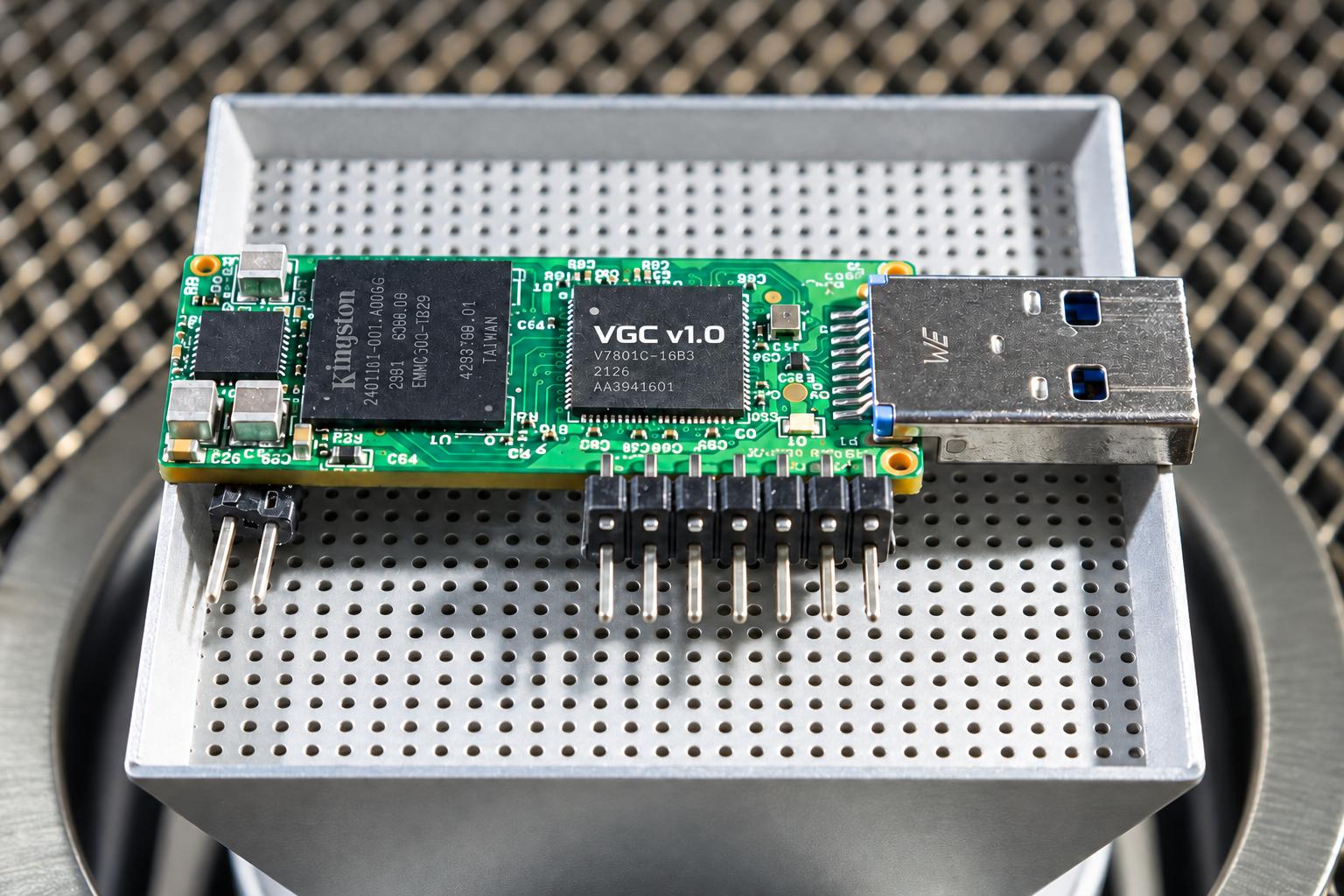
Vietnam's Government Cipher Committee and Viettel Group unveiled VGC v1.0, a domestically designed security chip built on a 28-nanometre CMOS process, with 300 million transistors in a 10 × 10 mm package. Tests found encryption and decryption were approximately 15 times faster than a software-only solution; the first batch passed technical tests and received certification for socio-economic applications in Q1 2026. The chip has initially been deployed in secure USB storage for government and defence agencies, while volume production and additional applications are planned; products protecting state secrets require further testing and certification.
Analysis
The investable signal is capability-building, not near-term chip displacement. A domestically controlled security design could give Viettel a foothold in government procurement and create reusable verification expertise; if procurement becomes recurring, the strategic value may exceed the chip’s initial revenue. But the disclosed deployment is narrow, and certification for socio-economic applications should not be treated as approval for state-secret systems. The stated 15x result is against software performing the same tasks, not evidence of superiority to competing hardware.
At 28nm, the design uses a mature process suitable for many security functions, but it does not establish a competitive leading-edge manufacturing capability. The planned Hoa Lac plant is a separate execution risk: validate its funding, equipment, yield ramp, and actual role in producing this chip before pricing in domestic fab economics. RISC-V may reduce dependence on proprietary processor IP, while still leaving exposure to imported fabrication equipment, tools, and other parts of the supply chain.
Over 1–3 months, the key catalyst is evidence of production volumes, customer adoption beyond initial government devices, and certification progress. Over 6–18 months, broader use in digital signatures or critical infrastructure could support a domestic security ecosystem, but integration and procurement cycles may be slow. Incumbents such as NXP, Infineon, and Microchip are only potential competitive reference points; no material revenue displacement is established. The contrarian read: strategic-sovereignty headlines may invite investors to overstate commercial scale. With no listed Viettel exposure identified and limited evidence of customer economics, this is a watch item rather than a directional trade.
AllMind Terminal
AI-powered research, real-time alerts, and portfolio analytics for institutional investors.
Request TrialMarket Sentiment
Overall Sentiment
moderately positive
Sentiment Score
0.45
Key Decisions for Investors
- No direct trade on the announcement alone: the article provides no listed Viettel security-chip exposure, production volumes, pricing, or revenue contribution to underwrite an earnings revision.
- Track Viettel’s follow-through over the next 1–3 months: verify volume-production timing, actual chip fabrication location, third-party or government certification scope, and deployments beyond secure USB devices.
- Treat NXP, Infineon, and Microchip as watchlist competitors, not shorts; revisit only if procurement data shows repeatable substitution of their products or other imported security components.
- Falsify the constructive long-term thesis if production is delayed, certification for intended applications stalls, or announced deployments fail to expand; strengthen it only with disclosed shipment scale, repeat orders, and credible yield or manufacturing evidence.
More News
- What Wall Street billionaires are saying about Democrats' midterm sweep
- NextDC shares surge 43% after Goodman, Digital Realty stake purchases
- A blue wave sends futures into the green
- Asian chip stocks slide as disappointing Qualcomm, Arm earnings weigh
- China Blocks SoftBank Acquisition of ABB Robot Unit, FT Says
- ‘Seismic’ blue wave triggers the sinking of oil prices, energy stocks, and the chances of power permitting reform