
Target's Retail Media Growth Highlights an Expanding Profit Lever
Source: zacks.com
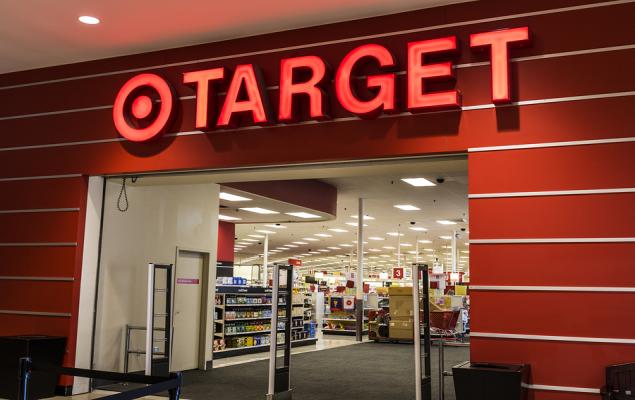
Target's Roundel retail-media gross billings rose nearly 20% year over year in fiscal Q2 2026, while advertising revenue increased to $279 million from $217 million; first-half advertising revenue reached $525 million versus $379 million. Higher-margin advertising and other non-merchandise sales helped lift Q2 gross margin by roughly 100bps year over year, excluding tariff refunds. Target shares have gained 12.6% over three months, and consensus EPS estimates rose $0.16 to $10.43 for the current fiscal year and $0.09 to $9.38 for the next.
Analysis
Retail-media monetization matters less as a standalone revenue line than as a structural offset to promotional intensity. For TGT, incremental ad dollars carry materially higher contribution margins than merchandise and can fund sharper pricing in discretionary categories without fully sacrificing EBIT; that is strategically important against WMT, whose scale and closed-loop data make it the preferred platform for national CPG budgets. The second-order risk is that supplier-funded advertising becomes a transfer from trade-promotion spend rather than net-new spend, limiting the aggregate category profit pool during a soft consumer backdrop.
Near term, TGT's margin narrative can improve faster than comparable-store sales because mix, markdown normalization and ad monetization are reported together. However, the market should not capitalize this as a durable multiple re-rating until Roundel growth persists while vendor participation broadens and digital fulfillment costs improve; advertising remains too small to independently absorb a renewed discretionary-sales or shrink-driven gross-margin setback. The relevant 1-3 month catalyst is the next earnings call's disclosure on Roundel growth, gross-margin bridge and FY guidance; over 6-18 months, WMT's superior audience scale and measurement stack could widen its advertiser-share advantage.
Contrarian view: TGT's valuation discount already recognizes much of its operating volatility, while consensus may underappreciate the earnings quality improvement if high-margin non-merchandise revenue continues compounding. But the stock's recent relative strength leaves limited tolerance for a deceleration: a return of Roundel growth toward low-teens or gross-margin expansion below management's implied cadence would undermine the thesis quickly.
AllMind Terminal
AI-powered research, real-time alerts, and portfolio analytics for institutional investors.
Request TrialMarket Sentiment
Overall Sentiment
moderately positive
Sentiment Score
0.48
Ticker Sentiment
Key Decisions for Investors
- Maintain a tactical long TGT versus short DG pair for the next earnings cycle (1-3 months): TGT has a cleaner path to margin upside through mix and ad monetization, while DG remains more exposed to low-income consumer stress and execution costs. Target 8-12% relative upside; exit if TGT's next reported gross-margin rate fails to expand year over year or Roundel growth falls below 15%.
- Do not chase WMT on this datapoint; retain WMT as the higher-quality 6-18 month retail-media compounder, but add only on a 5-8% pullback or after evidence that advertising growth is sustaining above 30% excluding acquired-media effects. The principal risk is premium-multiple compression if core retail sales slow.
- Use TGT downside protection rather than outright incremental beta: buy 3-6 month put spreads around the next print if implied volatility is below its prior earnings range. The hedge is warranted because a modest advertising revenue base cannot offset a broad discretionary demand miss or tariff/markdown pressure.
- Set an alert for advertiser-budget signals from major CPG suppliers and retail-media growth disclosures at WMT, AMZN and KR. Broad deceleration across platforms would indicate ad spend is being reallocated rather than expanded, invalidating the margin-mix thesis for TGT and DG.
More News
- Meta debuts new handheld device dedicated to using Muse
- Why McDonald's is following Walmart and Amazon into the advertising business
- Investor Stephanie Link looks for strong brands making a comeback. This retailer fits the bill
- Meta's camera-free AI glasses look like regular Ray Bans
- Big Retail Courts the Discerning Consumer
- Retail CEOs see a holiday paradox: shoppers are anxious but still willing to spend