
Magazyn przyszłości: Geekplus i LPP Logistics zmieniają oblicze logistyki handlu detalicznego dzięki inteligentnej automatyzacji
Source: PR Newswire
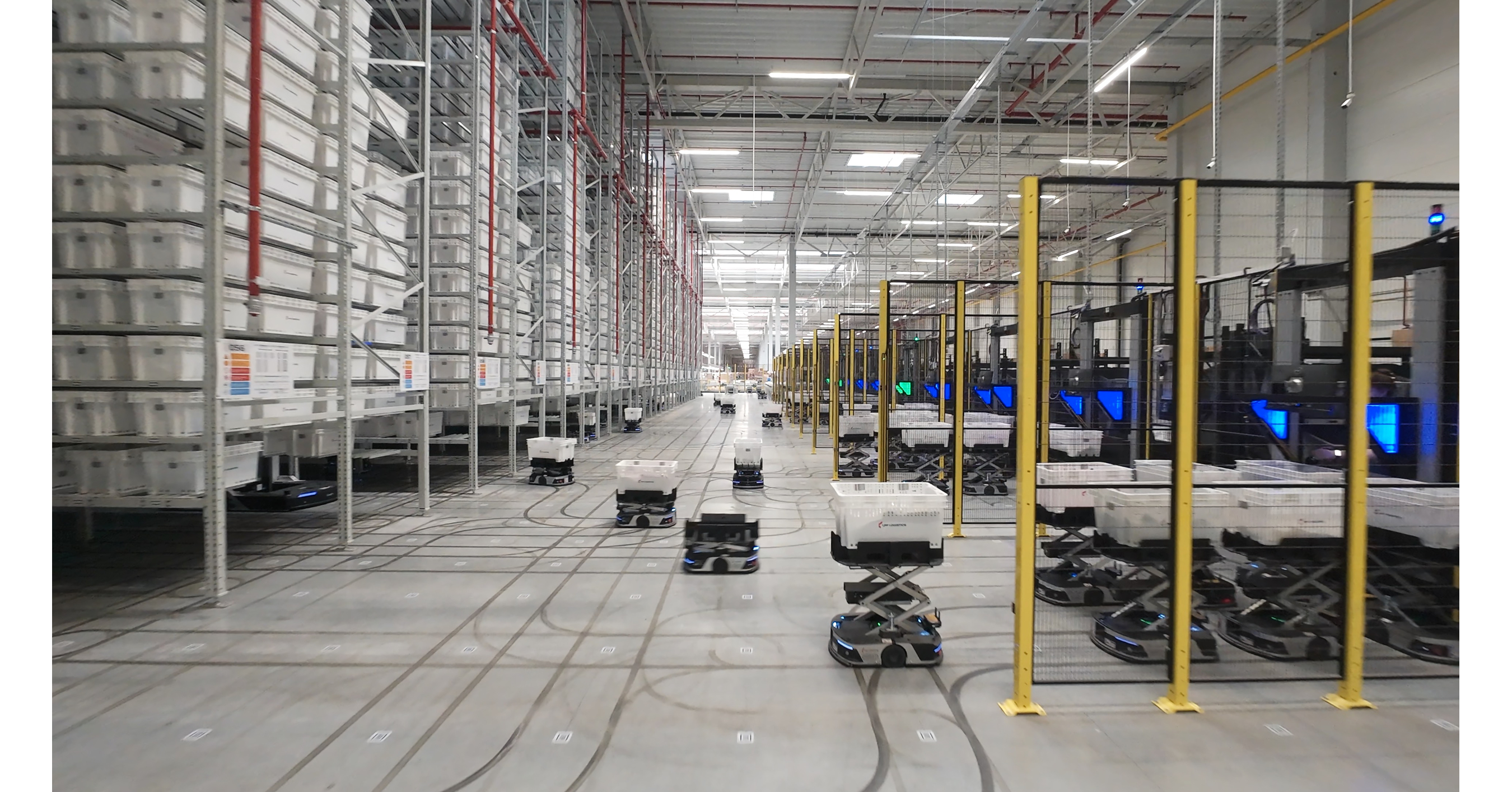
LPP Logistics deployed Geekplus warehouse automation across two Polish fulfillment centers, using more than 1,600 autonomous robots and 1.4 million automated high-bay storage locations. The company reported a measured 99% efficiency improvement, with storage heights of roughly 12 meters and capacity designed to scale for seasonal fashion demand and expanding SKU complexity. The phased rollout is intended to improve throughput and reliability while reducing repetitive manual work, though the announcement provides no financial investment or earnings impact figures.
Analysis
For LPP, the relevant earnings lever is not headline warehouse productivity but the ability to decouple fulfillment capacity from peak-season labor availability. If the installed fleet reduces outsourced labor, overtime and mis-picks during 4Q seasonal volumes, it can protect gross margin and reduce markdown risk by improving inventory availability across Reserved, Sinsay and Cropp. The greater strategic value is modular capacity: incremental robots can defer fixed building expansion, supporting inventory turns and working-capital efficiency as the SKU base grows.
The announced efficiency figure is vendor-reported and cannot yet be translated into EBIT; investors need evidence in LPP’s fulfillment-cost-to-sales ratio, inventory days, capex intensity and peak-season delivery/service metrics. Over the next 1-3 months this is unlikely to move consensus estimates, but it modestly lowers execution risk around e-commerce growth. Over 6-18 months, successful replication would widen LPP’s cost-to-serve advantage versus less-automated Central European apparel peers, while potentially pressuring incumbent conveyor and fixed-automation vendors; listed mobile-automation exposure is limited, with KION and AutoStore more liquid proxies.
Contrarianly, automation does not guarantee margin expansion in fashion retail: higher throughput can simply enable a larger, lower-margin online mix, while depreciation, maintenance and software costs replace variable labor. The thesis fails if inventory turns deteriorate despite higher fulfillment investment, if fulfillment capex rises faster than sales, or if management guides to material disruption or elevated operating costs during further rollout. A weaker Polish/EU consumer demand backdrop would also leave capacity underutilized, turning operational leverage negative.
AllMind Terminal
AI-powered research, real-time alerts, and portfolio analytics for institutional investors.
Request TrialMarket Sentiment
Overall Sentiment
moderately positive
Sentiment Score
0.58
Ticker Sentiment
Key Decisions for Investors
- Maintain LPP as a watch-list long rather than adding solely on this announcement; reassess after the next results for evidence that logistics/fulfillment costs grow below e-commerce revenue and inventory days remain stable or improve.
- For a 6-18 month position, consider a modest long LPP versus short an EU discretionary retail basket only after verifying automation-linked margin or working-capital improvement; target 300-500 bps relative outperformance, with exit on a guidance cut or two consecutive periods of deteriorating inventory turns.
- Set an earnings alert for disclosed logistics capex, depreciation and warehouse utilization. A material capex step-up without a corresponding improvement in EBIT margin or delivery metrics is a negative signal and argues against treating the rollout as value-accretive.
- Do not infer a directly investable benefit for Geekplus from this release; for public-equity read-through, monitor KION and AutoStore order intake and margins, but this single deployment is insufficient to establish a sector demand inflection.
More News
- In photos: China's Xi hardens Taiwan warning as country celebrates week-long National Day holiday
- Tencent leases 100,000 chips from Oracle for $7 bln- FT
- California Gov. Gavin Newsom bans AI 'robo bosses' in landmark state law, reversing his earlier veto
- RAM supply set to worsen, says Micron, as CEO celebrates ‘much higher’ prices
- Why is Nidec stock plunging today?
- Why is Kioxia stock rallying today?
From AllMind Research
- Anthropic IPO Preview: Valuation, Timing, and What to Watch
- Shein After the IPO: Venue, Valuation, and What Must Be Proved
- What AI Research Tools Should a Small Hedge Fund Buy First?
- Document Search Enhancements, AI Enhancements, AI Actions, & Chat Export
- AI Vendor Landscape for Institutional Investment Teams