
What Wendy's (WEN) Said on Its Q3 Earnings Call
Source: marketbeat.com
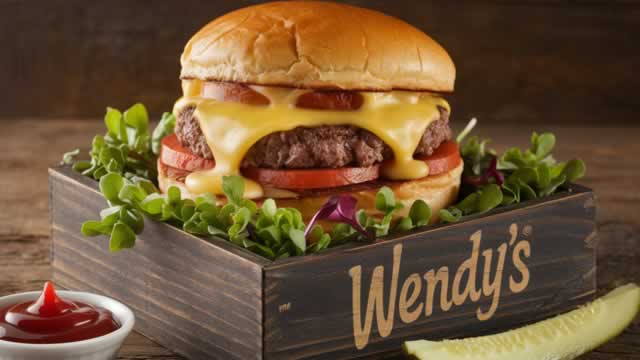
Wendy’s reported a 5.7% decline in U.S. same-restaurant sales in fiscal 2026 Q3, with falling traffic pressuring results. Its turnaround plan would make breakfast optional at U.S. restaurants and could include acquiring up to 163 locations from bankrupt franchisee Meritage Hospitality Group.
Analysis
The key issue is whether Wendy’s can restore traffic without buying sales through discounts or adding fixed-cost exposure. Making breakfast optional could improve franchisee labor and operating flexibility, but it also risks reducing daypart availability and weakening a traffic-building occasion; the test is franchisee adoption and whether lunch/dinner traffic improves, not the policy change itself. Acquiring up to 163 locations could prevent system disruption after a franchisee failure, yet shifts operating, refurbishment, and working-capital risk toward Wendy’s. It is not automatically a positive merely because the restaurants remain in the system.
Near term, persistent traffic weakness raises the risk that value promotions pressure restaurant-level economics before they deliver durable visits. Competitors including McDonald’s, Burger King, and Taco Bell could capture value-seeking customers if Wendy’s execution falters; conversely, industry-wide traffic softness would weaken that share-shift thesis. Over 1–3 months, verify transaction trends, franchisee participation in breakfast changes, acquisition terms, and any update to capital-spending or restaurant-level plans. Over 6–18 months, the structural question is whether a larger company-operated footprint improves execution or dilutes returns.
The contrarian opportunity is that optional breakfast and distressed-store acquisition may be operational triage rather than a credible traffic-led turnaround. But without valuation, share-price reaction, acquisition economics, or guidance detail, the signal supports cautious relative underweighting—not an unconditional outright short. Falsify the bearish view with sustained traffic stabilization, improving restaurant-level performance, and evidence the acquired stores earn acceptable returns.
AllMind Terminal
AI-powered research, real-time alerts, and portfolio analytics for institutional investors.
Request TrialMarket Sentiment
Overall Sentiment
mildly negative
Sentiment Score
-0.35
Ticker Sentiment
Key Decisions for Investors
- Avoid adding to WEN on the turnaround announcement alone; wait for the next traffic and operating update to establish whether visits are stabilizing rather than being purchased with discounting.
- Consider a modest relative underweight in WEN versus diversified quick-service peers such as McDonald’s, Burger King, or Taco Bell, subject to valuation and relative-performance review. Do not initiate a large outright short without checking the current price reaction and positioning.
- Treat the potential restaurant acquisition as a diligence catalyst: verify purchase price, required refurbishment and capital spending, financing, and expected store-level returns before assigning value to retained locations.
- Reassess the bearish thesis if traffic stabilizes across reporting periods, restaurant-level economics improve without heavier promotions, or management demonstrates attractive returns from acquired stores; persistent traffic declines or weaker guidance would strengthen it.
More News
- BMO raises Wendy’s stock price target on turnaround plan
- Stephens raises Wendy’s stock price target on turnaround strategy
- Further turmoil could be in store for tech stocks. What to watch in the week ahead
- Tech stock rout, driven by US AI fears, continues in Asian trading
- Elon Musk once said the Cybertruck would be Tesla’s ‘best product ever.’ Now he’s winding down production
- AI stocks hammered by midterm shock as data center buildout becomes a 'war of attrition'