
DUVA stellt auf der IFA 2026 das DUVA ONE vor: Personalisierte Schlaf-Ohrhörer, die in Echtzeit reagieren
Source: PR Newswire
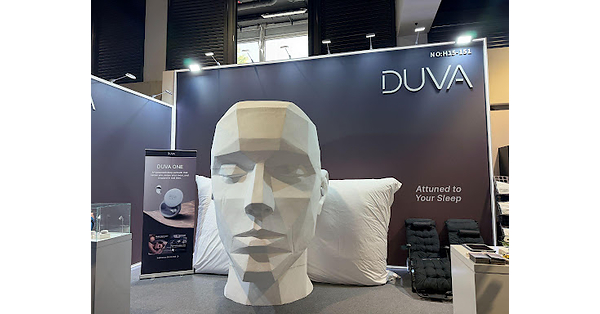
Fitnexa's DUVA unveiled DUVA ONE at IFA Berlin 2026, a $349.99 AI-enabled sleep-earbud system scheduled to launch in October 2026 across the US, Canada, UK, EU and Australia. The device combines in-ear PPG and motion sensing with environmental sensors to adapt audio and ANC in real time, offering up to 42dB noise reduction and up to 16 hours of battery life. Privacy features include no recording or uploading of ambient conversations, with users able to disable sensors and erase historical data.
Analysis
This is not a listed-equity catalyst: Fitnexa's scale, channel access, return rates, and customer-acquisition economics are undisclosed, so the launch should not be extrapolated into a meaningful near-term revenue threat for AAPL, SONY, GRMN, PHG, or RMD. The relevant competitive signal is product-category convergence: sleep audio is moving from passive content and post-sleep analytics toward closed-loop intervention, which raises the strategic value of validated biometric data, comfort engineering, and recurring software engagement. Hardware differentiation alone is unlikely to sustain premium pricing unless independent testing validates sleep-stage accuracy, comfort durability, and real-world battery performance.
Over 6-18 months, a credible entrant could modestly pressure standalone sleep-tracking and white-noise products, while strengthening the case for ecosystem incumbents that can bundle sleep features into existing health, hearing, and subscription platforms. The principal commercial risk is that nighttime earbud use produces elevated fit-related returns and support costs; this would impair gross margin before it meaningfully affects larger competitors. Privacy positioning may aid European conversion, but it also limits data monetization and AI-model iteration relative to cloud-centric consumer-health platforms.
Consensus should not treat this as evidence of an investable AI-health hardware wave. The category remains constrained by willingness to sleep with in-ear devices, medical-claim boundaries, and the absence of reimbursement; a strong launch would be more likely to prompt feature copying by AAPL and SONY than to create a durable independent-device franchise.
AllMind Terminal
AI-powered research, real-time alerts, and portfolio analytics for institutional investors.
Request TrialMarket Sentiment
Overall Sentiment
mildly positive
Sentiment Score
0.38
Key Decisions for Investors
- No directional trade on the launch. Reassess only after 60-90 days of sell-through, verified review volume, return-rate indicators, and evidence of retail distribution; these data are currently missing.
- Maintain AAPL as the most credible listed ecosystem beneficiary to monitor over 6-18 months, not because of immediate revenue exposure but because sleep intervention can increase retention across AirPods, Apple Watch, and Health services. Falsifier: no material sleep/hearing feature expansion in the next major product cycle.
- Set a competitive-product alert for SONY and AAPL: independently validated closed-loop sleep audio, especially if priced below premium earbuds, would be a signal of category commoditization rather than a reason to buy the smaller entrant.
- Avoid using PHG or RMD as shorts on this development. Their sleep-apnea franchises depend on clinically validated diagnosis and therapy pathways, creating a substantially different demand base; only regulatory claims or clinical validation that shifts consumers away from formal testing would alter that view.
More News
- Are global oil reserves sufficient to withstand renewed US-Iran war?
- OpenAI Trims Target Value & Volvo Cars Cuts 2,500 Jobs
- PG&E’s CEO says AI is ‘the best thing that could’ve ever happened to the grid’
- The mobile ambitions of SpaceX see telecom stocks get hit again. What the latest developments mean.
- Wake up! The long bond’s up two points!
- US tech stocks tumble as investors fret over AI spending